EV charging is advertised at The Well Coconut Grove, but an ownership decision requires more detail. Here is what buyers should request on charging capacity, electricity billing, parking rights, and future allocation before relying on the amenity.
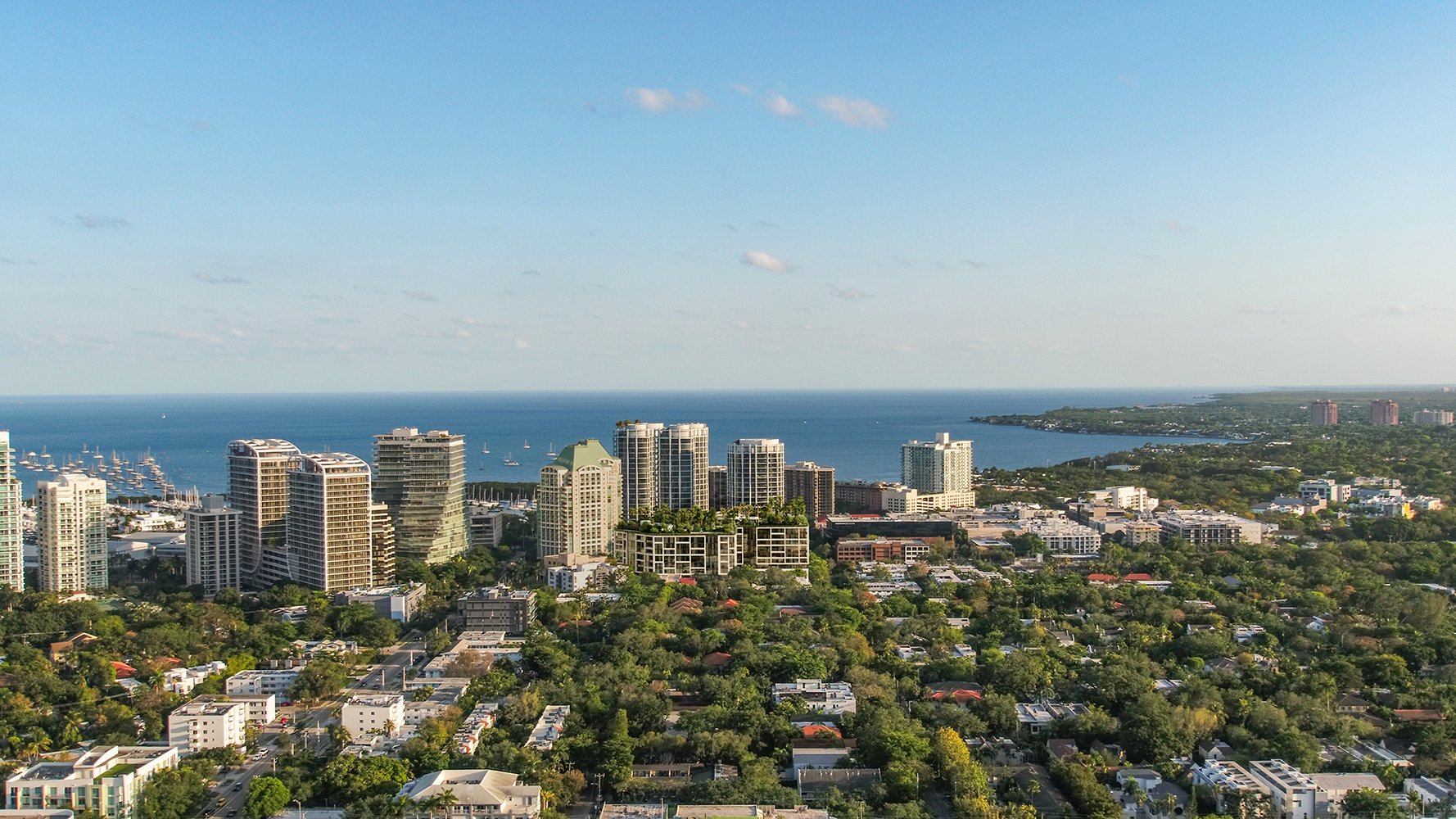
For a buyer who expects an electric vehicle to be ready each morning, charging belongs in the ownership file-not simply on the amenity checklist. At The Well Coconut Grove, EV charging is advertised as a resident amenity. That establishes its place in the offering, but does not establish a dedicated charger, guaranteed availability, or included electricity for every residence.
The condominium is marketed with 194 residences across eight floors in Coconut Grove, with Terra, Arquitectonica, and Meyer Davis comprising the development, architecture, and interiors team. Those details frame the property but do not answer the operational questions that determine charging convenience. Residence count is not a measure of charger capacity.
The distinction is straightforward: an amenity describes an offering; the governing documents and operating terms should explain how an owner can use it. Details absent from public descriptions may already be addressed in private purchase materials. Buyers should request those answers rather than interpret silence as either a guarantee or a deficiency.
The first request should distinguish three things: the number of installed chargers, the number of vehicles that can charge at once, and the electrical capacity available when several vehicles are connected. Publicly disclosed information does not establish those figures, charging speeds, the equipment manufacturer, or transformer capacity.
Ask for written confirmation of the proposed charging arrangement, including any load-management system. The useful question is not merely whether a vehicle can connect, but what charging service is available when demand overlaps. If performance depends on shared electrical capacity, request an explanation of how that affects individual sessions.
A practical capacity schedule should identify:
Charger count and the number of simultaneously supported vehicles.
Equipment specifications, connection compatibility, and stated charging output.
Aggregate electrical capacity and any operational load limits.
Responsibility for outages, repairs, and resident support.
These are requests for clarification, not descriptions of an established system. Do not translate the advertised amenity into an expectation of overnight charging until the relevant specifications and access rules are documented.
Assigned, garage, and valet parking are described for the property; valet service and 24-hour security are also advertised. None of those descriptions independently establishes which parking rights carry EV access. Nor does valet service establish that personnel will connect, move, or manage charging vehicles.
Buyers should establish whether charging spaces are individually assigned, shared, reservation-based, first-come, or valet-managed. Ask whether a charging entitlement attaches to a residence, a particular parking space, or a separate service agreement. Public details do not establish that distinction.
For a purchaser also considering Four Seasons Residences Coconut Grove, the same document-first comparison is useful: compare written access terms rather than assume similar arrangements across properties. This is a diligence framework, not a claim about that property's charging provisions.
Eligibility deserves equal attention. Charging is described as available to residents, but separate rules for owners, tenants, guests, and service vehicles are not publicly established. A household expecting to charge more than one vehicle should request explicit confirmation of any vehicle limits and scheduling restrictions.
The electricity bill is only part of the question. Publicly disclosed terms do not identify whether charging consumption will be billed through individual unit meters, the association, a charging platform, or another operator. They also do not establish a charging rate, connection charge, monthly access fee, idle fee, or electricity markup.
Request a written explanation that follows a session from connection to payment. Who measures consumption? Who sets the rate? Who collects the charge, and where does it appear? Ask whether the rate reflects actual electricity costs, a stated formula, or a separately determined service price. Do not assume any of these models applies.
Next, distinguish user charges from ownership expenses. Confirm who owns the equipment and who pays for maintenance, software, repairs, and eventual replacement. Ask whether any costs are included in association expenses or charged separately to participating users.
Review the estimated operating budget and any utility schedules alongside the EV policy. A useful ownership file makes clear what is included, what depends on usage, and what remains subject to change. No specific charging cost should be treated as established without supporting written terms.
An installation's initial configuration and its future expansion are separate questions. Publicly disclosed information does not establish a formal procedure for adding chargers, upgrading electrical capacity, or reallocating charging spaces. It also does not establish private-installation rights or capacity reserved for future expansion.
Ask who has authority to approve additional equipment and what documentation an owner must submit. Clarify whether approvals involve the association, another operator, or other parties identified in the governing documents. The allocation of upgrade costs should be addressed expressly, including infrastructure beyond an individual charging device.
For shared access, request any reservation policy, waitlist procedure, priority criteria, session limits, and rules for releasing an unused space. Ask how allocations can change and how residents receive notice. These questions matter whether the intended use is daily commuting or occasional stays.
A buyer weighing Park Grove Coconut Grove alongside this purchase can apply the same questions without presuming the buildings share equipment, policies, or ownership rights. Consistent diligence makes comparisons more meaningful than amenity labels alone.
Before relying on charging as part of the purchase decision, request the declaration and exhibits, parking documents, purchase contract, rules, estimated operating budget, utility schedules, and any EV policy. Ask which document governs if a sales description and an operating rule appear to differ.
The file should also clarify whether charging equipment is treated as common elements, limited common elements, part of individual parking rights, or a separately managed amenity. That classification is not publicly established here and should be reviewed with counsel rather than inferred from a parking assignment.
Public descriptions use both 2835 and 2855 Tigertail Avenue. Confirm the address applicable to the residence and its purchase documents, together with the parking identification. The objective is a coherent record connecting the home, the parking right, the charging entitlement, and the associated costs.
The luxury is dependable use, not merely the presence of equipment. A complete ownership file should make access, billing, responsibility, and future allocation clear before a buyer relies on them.
For a considered approach to your next South Florida residence, explore MILLION.
If branded residences are on your mind — as a home or as an allocation — we would be glad to share what we are seeing, privately.
Begin a quiet conversationYes, EV charging is advertised as a resident amenity. That does not establish a dedicated charger or guaranteed access for every residence.
Publicly disclosed information does not establish the charger count or how many vehicles can charge simultaneously. The 194-residence count is not a charger-capacity figure.
The public details do not establish charging speeds, total electrical capacity, or transformer capacity. Buyers should request equipment specifications and any load-management limits.
Assigned, garage, and valet parking are described, but their relationship to charging rights is not established. Confirm the entitlement associated with the specific parking assignment.
Valet parking is advertised, but that does not establish a valet-operated charging service. Request written confirmation of any vehicle-handling and charging responsibilities.
The billing arrangement is not publicly established. Buyers should confirm metering, rate calculation, collection, and whether charges come through the association or another operator.
No specific charging rate, connection fee, monthly access fee, idle fee, or markup is established in the supplied facts. Request a written fee schedule before assuming electricity is included.
Private-installation rights and the applicable approval process are not publicly established. Review the governing documents and request confirmation of electrical capacity and cost responsibility.
A formal expansion or reallocation procedure is not publicly established. Request reservation rules, waitlist priorities, approval requirements, and responsibility for upgrade costs.
Request the declaration and exhibits, parking documents, purchase contract, rules, estimated operating budget, utility schedules, and any EV policy. Review how those documents connect charging access to the residence and parking rights.