The Village at Coral Gables presents a private-retreat amenity setting, but children's access, caregiver permissions, and liability terms require a separate ownership-document review. Here is what family buyers should resolve before relying on those spaces in daily life.
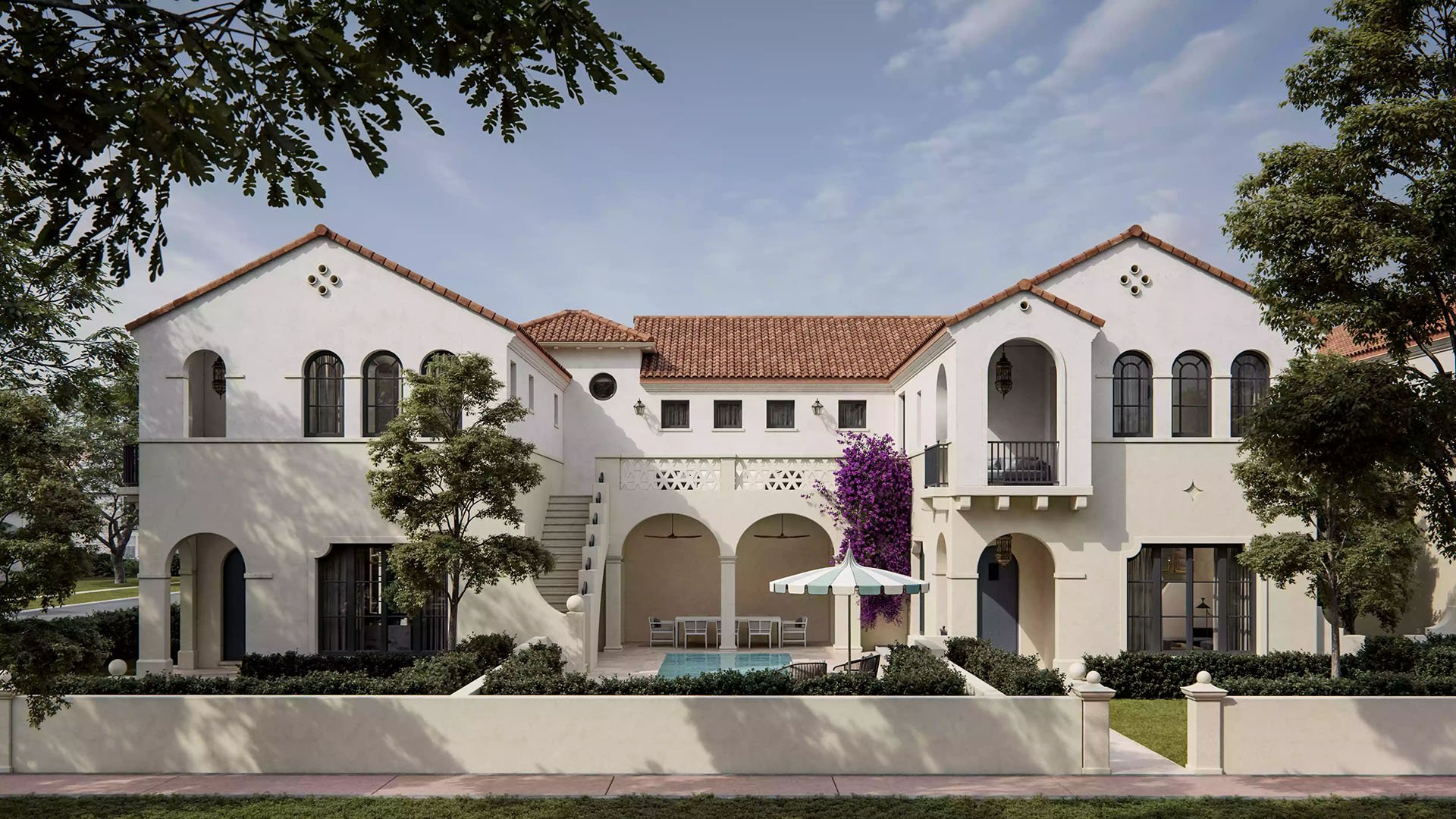
For a family purchasing in Coral Gables, the most valuable amenity may be the one that works effortlessly on an ordinary afternoon. A courtyard pool, a quiet lounge, and a clubhouse can support that rhythm. Whether children may use them with a nanny, however, is a separate question from whether those spaces appear in the amenity offering.
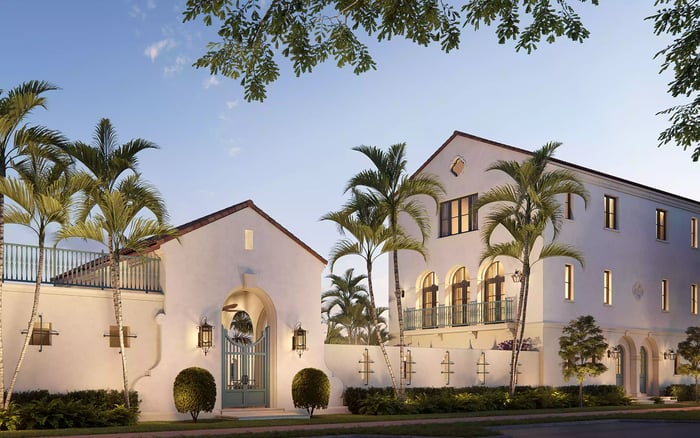
The Village at Coral Gables is an MG Developer project at 535 Santander Avenue, Coral Gables, FL 33134, listed as 48 residences across three stories. Its public presentation emphasizes a resort-style private retreat, not a dedicated children's recreation program.
The distinction matters. Public amenity materials do not specify minimum ages for unaccompanied minors, caregiver access arrangements, or project-specific liability waivers. Those questions remain open until the applicable documents and written policies resolve them. For buyers organizing school-day routines around household help, that clarity belongs alongside the residence itself in the purchase decision.
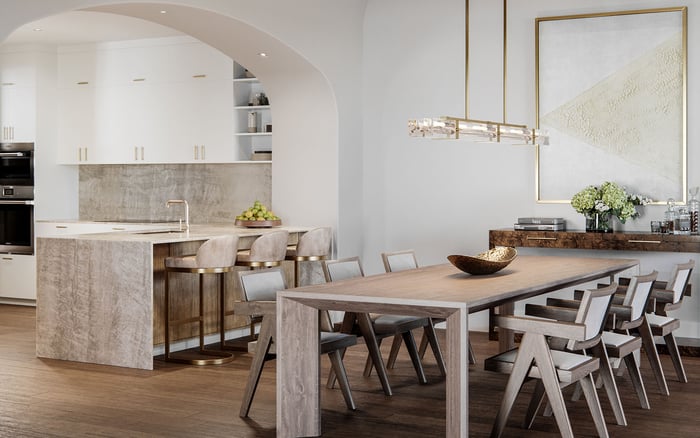
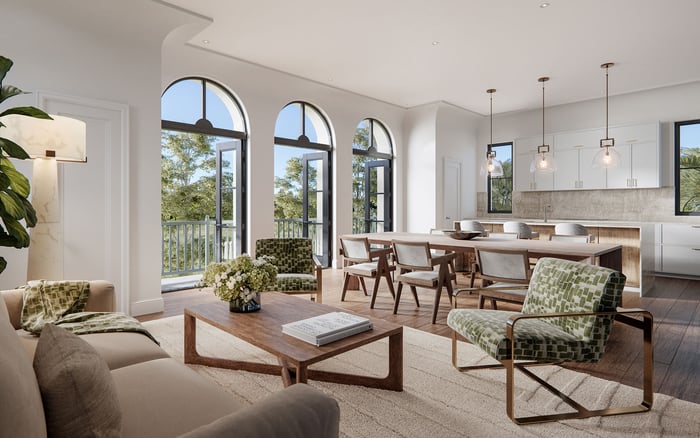
The amenity offering includes a pool house with courtyard pool, a multipurpose clubhouse, a fitness center, and a residential lounge. Garden courts, courtyards, and fountains extend the shared setting outdoors. Planned amenities have also included a wellness clubhouse, plunge pool, library, conference room, and high-speed Wi-Fi. These descriptions do not confirm that every facility is currently operational.
The public materials do not disclose a dedicated children's room, splash pad, or playground. That does not mean children are unwelcome. Nor does the absence of adults-only language for the pool or clubhouse establish children's access rights.
Descriptions of the clubhouse as suitable for family events and social gatherings are lifestyle positioning, not permission for a particular activity. Before planning birthday gatherings or regular after-school visits, ask which spaces permit those uses, whether reservations are required, and what supervision and guest conditions apply. Treat availability, permitted use, and supervision as three separate questions.
Start with the pool, where the practical questions are specific. Ask for the minimum age, if any, for unaccompanied use; who qualifies as an accompanying adult; and whether that adult must remain in a particular area to supervise. None of those thresholds is established in the reviewed public amenity materials.
Lifeguard coverage also remains unresolved. Do not infer staffing from the resort-style description. Even confirmed staffing would not answer the separate question of parental supervision. Ask about operating hours, guest limits, swim-diaper rules, and whether different pool areas carry different conditions.
The fitness center needs its own written policy. Permission to enter is not necessarily permission to use equipment. Request clarification on minimum ages, accompanying-adult requirements, and any restrictions for younger residents. If a teenager's exercise routine matters to the household, frame the inquiry around that intended use rather than asking broadly whether the building is family-friendly.
A nanny's ability to enter the property does not confirm permission to accompany children independently into every amenity. The public materials do not define caregiver registration, guest status, access credentials, or permission to supervise without a resident parent present.
Ask management to address a concrete scenario: a registered caregiver arrives with the resident's child while both parents are away. May they enter the pool, lounge, and clubhouse? Does the caregiver count toward a guest limit? Must a parent provide advance authorization, and must that authorization be renewed?
Request clarification on recurring and substitute caregivers separately. Ask whether credentials, if issued, are personal, time-limited, or restricted by amenity. These are questions to resolve, not established features of the project. Permission to use amenities should not be confused with permission for a caregiver to live in the residence.
For a household also considering Cora Merrick Park, the useful comparison begins with the same written daily-use scenario submitted independently to each property. A familiar neighborhood does not make access policies interchangeable.
The public amenity materials do not provide project-specific waivers, hold-harmless clauses, or parental-responsibility language. It is therefore premature to describe what an owner must sign, whose conduct a document covers, or how responsibility is allocated after an incident.
Request every form applicable to the intended use, including any separate pool, fitness, guest, or event paperwork. If forms exist, identify who must sign: the owner, a parent or legal guardian, the caregiver, or another participating adult. Ask whether authorization to accompany a child is documented separately from any acknowledgment of risk.
Have counsel review the actual wording and its relationship to the governing documents. Enforceability and risk allocation cannot be determined from a generic example or another property's waiver. Do not assume that signing a form eliminates every potential claim, or that the absence of a publicly posted form means no obligations exist. The review should clarify the applicable terms, not replace them with a reassuring label.
Request the applicable declaration, articles, bylaws, rules and regulations, and pool and fitness policies. Add any caregiver-registration procedures, guest rules, amenity authorization forms, and event-use conditions that apply. Request current versions and identify their effective dates to avoid mixing proposed arrangements with adopted requirements.
Written answers should identify the relevant provision wherever possible. If an explanation appears inconsistent with a document, seek clarification rather than treating an informal assurance as an amendment. Confirm which advertised facilities are open and which policies govern their present use.
A buyer weighing Ponce Park Coral Gables alongside The Village should build a separate file for each. Compare documented permissions and unresolved questions without borrowing either property's rules to fill gaps in the other.
The strongest ownership review translates attractive shared spaces into a workable household routine. Can the intended caregiver accompany the children without a parent? Which activities require supervision? What signatures and reservations, if any, are necessary? Resolve those points in writing before relying on the amenities in daily family life.
At The Village, the retreat-oriented setting is the invitation. The governing documents and applicable policies allow buyers to evaluate how that invitation works for their household.
For a considered approach to South Florida ownership, explore MILLION.
If branded residences are on your mind — as a home or as an allocation — we would be glad to share what we are seeing, privately.
Begin a quiet conversationThe MG Developer project is at 535 Santander Avenue, Coral Gables, FL 33134. It is listed as 48 residences across three stories.
The reviewed public amenity materials do not disclose a dedicated children's room, splash pad, or playground. That does not establish whether children may use other shared spaces.
The offering includes a pool house with courtyard pool, multipurpose clubhouse, fitness center, residential lounge, and landscaped shared spaces. Marketing descriptions do not confirm that every facility is currently operational.
The reviewed public materials do not specify a minimum age. Request the applicable pool policy and written clarification of supervision requirements.
Children's equipment access and age thresholds are not established in the reviewed public amenity materials. Ask separately about entry to the fitness center and permission to use its equipment.
That permission is not defined in the reviewed public materials. Obtain written confirmation for each intended amenity before relying on caregiver-only supervision.
The reviewed public materials do not define caregiver registration, guest status, or credential arrangements. Ask about recurring caregivers and substitutes separately.
Lifeguard coverage remains unresolved in the supplied amenity information. Confirm coverage directly and request the separate adult-supervision requirements.
The reviewed public amenity materials do not provide project-specific waiver or parental-responsibility language. Request any applicable forms and have counsel review their terms.
Request the applicable declaration, articles, bylaws, rules and regulations, and pool and fitness policies. Include any caregiver procedures, guest rules, authorization forms, and event-use conditions that apply.