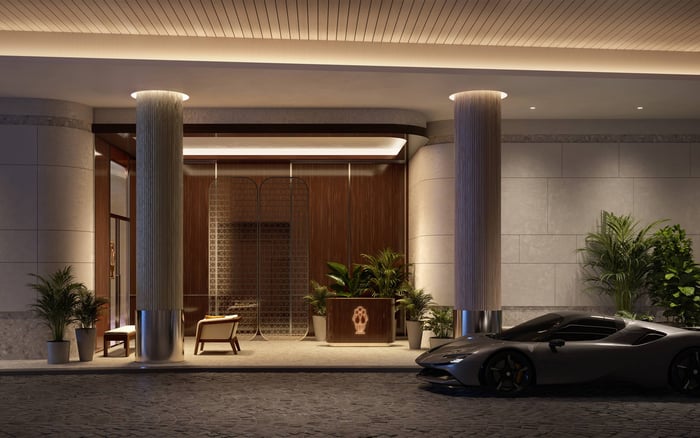
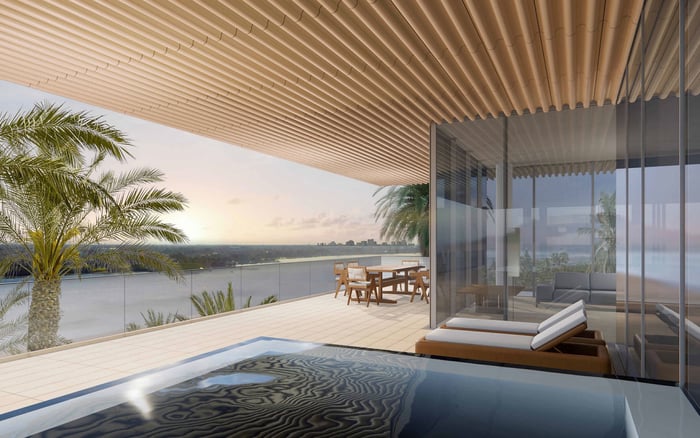
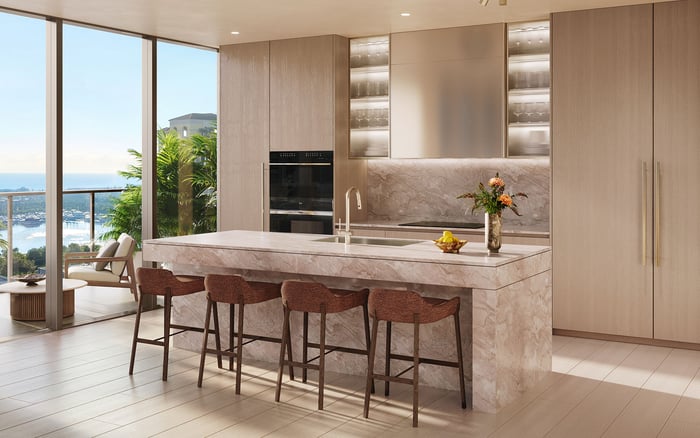
For seasonal owners, privacy depends on more than an elevator designation. Compare the advertised arrival features at Kempinski and The Ritz-Carlton Residences® West Palm Beach, then identify the guest, staff and access policies that deserve written confirmation.
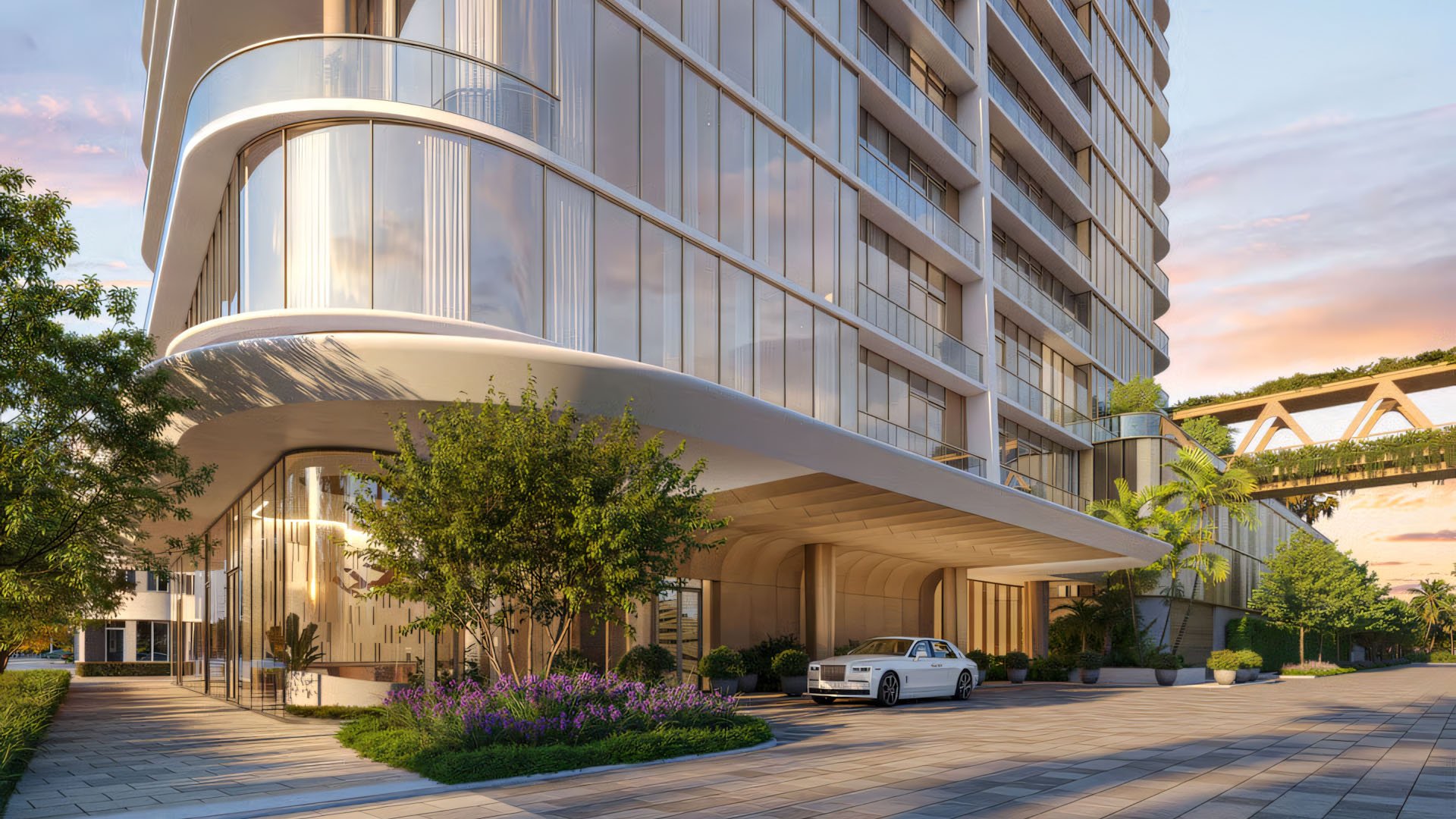
For a seasonal owner, a discreet arrival is only part of residential privacy. Just as important is what happens when the apartment is empty: a housekeeper arriving before the family, an adult child visiting independently, or a delivery requiring access beyond the lobby. The question is not simply whether an elevator is private, but who can reach each threshold-and who authorizes that access.
Kempinski Residences Miami Design District and The Ritz-Carlton Residences® West Palm Beach offer different advertised arrangements. Kempinski's features include semi-private tower elevator access, private vestibules and resident-exclusive guest suites. The West Palm Beach property's specifications include private elevator access for every residence, keyless entry and staffed services. These distinctions are useful, but neither description alone establishes a complete operating protocol for resident-only circulation, guest separation or secure arrivals.
At Kempinski Residences Miami Design District, the advertised development comprises two towers, 132 private residences and six townhomes at 3801 and 3883 Biscayne Boulevard, at the gateway to the Design District. It is marketed as a standalone residential development rather than a hotel-condominium project.
That residential positioning matters, but the elevator terminology warrants close reading. Tower access is advertised as semi-private, shared by only two residences per floor, with private elevator vestibules providing direct residence entry. A private vestibule is not the same as a household-exclusive elevator. The former describes the arrival space; the latter would require a different, explicit specification.
Buyers should request a plan showing the elevator landing, vestibule boundaries and doors between shared and private areas. Ask how a visitor is granted access to the residence, whether access can be restricted by destination, and how authorization changes when the owner leaves for the season. None of these procedures can be inferred from the floor layout alone.
Kempinski's advertised features include 17 guest suites reserved exclusively for residents, offering accommodation within the development for owner-hosted overnight stays. For a household that values proximity without sharing its own bedrooms, this is a relevant feature. It does not, however, establish independent guest elevators, separate corridors or distinct amenity zones.
The critical distinction is between who may reserve accommodation and where an occupant may circulate. Resident-exclusive availability answers only the first question, and only in broad terms. It does not settle whether a guest can stay while the owner is absent, receive independent credentials or bring additional visitors into shared spaces.
Before relying on these suites for a seasonal routine, request written reservation rules, occupancy limits, owner-presence requirements and check-in procedures. Ask which amenities guests may use and how their access expires. The objective is a comfortable visit for invited family, without unexpected access to residential areas or uncertainty over who authorizes entry.
Kempinski's six townhomes are marketed with private street-level entrances and full access to approximately 70,000 square feet of amenities within the complex. Their arrival arrangement therefore differs from that of the tower residences. A street-level entrance may suit an owner who prefers a direct threshold, but it is not evidence of a particular security protocol.
Onsite structured parking is also advertised for the townhomes. The garage-to-residence access-control sequence is not specified, making that route an important focus of the plan review. Trace the journey from the parking space to the front door and, separately, from the residence to shared amenities.
For a seasonal buyer, both routes matter. Ask where visitors wait, how household staff enter and whether packages can be received without residential access. A direct street entrance and access to the wider complex create distinct thresholds to examine, not one self-explanatory arrival system.
At The Ritz-Carlton Residences® West Palm Beach, at 1717 N. Flagler Drive, the advertised specifications include private elevator access for all units, smart-home technology with keyless entry, and 24-hour security, valet and concierge services. These features address both the physical approach to a residence and the staff support involved in an arrival.
They do not establish how those components work together. Keyless entry alone does not confirm floor-specific elevator permissions, temporary visitor credentials or access logs. Nor does private elevator access prove a separate route for deliveries, contractors or household staff. Those details belong in written procedures and circulation diagrams.
The absence of an explicit hotel component in the available description should not be taken as confirmation of a residence-only configuration. Buyers should establish the permitted uses and shared-space arrangements directly. Keep the inquiry specific to this address rather than transferring expectations or specifications from another Ritz-Carlton residential property, such as The Ritz-Carlton Residences® Miami Beach.
The most useful review follows people, not amenity labels. Ask for diagrams tracing an owner from valet or garage to the residence; an invited guest from check-in to the approved destination; and a service provider from loading or service access to the work area. Any overlap should be visible and explained.
Then test the proposed arrangements against an ordinary seasonal absence. Can housekeeping enter on a recurring schedule? Who authorizes an unscheduled repair? What happens when an unaccompanied guest arrives outside the expected window? Request written answers covering identity checks, staff credentials, deliveries, access revocation and emergency entry. Do not presume that a particular technology or procedure is provided.
For buyers also considering Mr. C Residences West Palm Beach, the same questions provide a consistent basis for comparison. They are diligence criteria, not a claim that different properties share the same systems. A useful comparison records the advertised feature, the confirmed procedure and any point still requiring clarification.
The distinction between these two offerings is more precise than a simple privacy ranking. Kempinski's advertised features include a standalone residential setting, semi-private tower access, private vestibules, resident-exclusive guest suites and a separate townhome arrival arrangement. The Ritz-Carlton Residences® West Palm Beach's specifications include private elevator access throughout, keyless entry and round-the-clock security alongside valet and concierge.
For an owner who regularly hosts family, guest-suite eligibility and absent-owner permissions may matter most. For a household coordinating frequent staff visits, authorization and service routes may carry greater weight. Neither preference can be resolved by the word private alone.
Treat the advertised features as a starting point, then seek written confirmation of the arrangements that make seasonal ownership comfortable. The strongest fit is the residence whose documented access policies align with how your household actually arrives, hosts and leaves.
Explore South Florida residences with MILLION to refine your seasonal-ownership shortlist.
If branded residences are on your mind — as a home or as an allocation — we would be glad to share what we are seeing, privately.
Begin a quiet conversationIt is marketed as a standalone residential development rather than a hotel-condominium project. That designation alone does not establish separate circulation for residents, guests and staff.
The project specifies two towers, 132 private residences and six townhomes.
The advertised arrangement is semi-private elevator access shared by two residences per floor, with private vestibules providing direct residence entry. It is not described as an elevator reserved for one household.
Kempinski specifies 17 guest suites reserved exclusively for residents. Reservation terms and absent-owner hosting permissions require confirmation.
Separate guest elevators, corridors and amenity zones are not established by the advertised guest-suite provision. Buyers should request circulation plans and access policies.
The townhomes are marketed with private street-level entrances. Onsite structured parking is advertised, but the garage-to-residence access-control sequence is not specified.
The property at 1717 N. Flagler Drive advertises private elevator access for all units, smart-home technology with keyless entry, and 24-hour security, valet and concierge services.
No. The advertised keyless entry feature does not establish elevator permissions, temporary visitor credentials or logged arrivals.
The available description does not explicitly establish a hotel component or confirm a residence-only configuration. Buyers should verify permitted uses and shared-space arrangements.
Request arrival diagrams and written policies for unaccompanied guests, absent-owner access, staff credentials, deliveries, housekeeping and emergency entry. At Kempinski, also confirm guest-suite reservation and access rules.