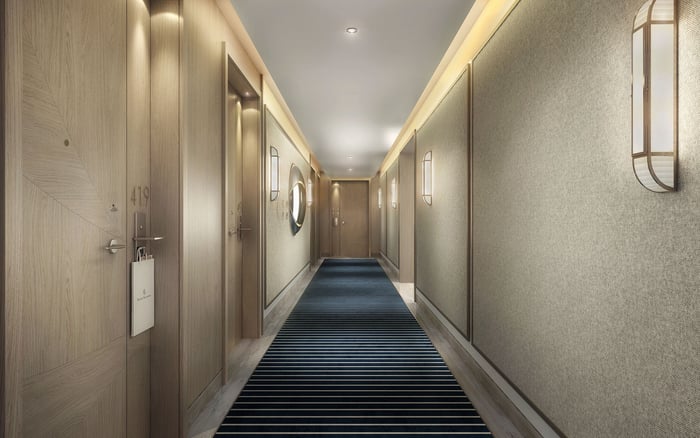
A discreet ownership guide to managing humidity, preparing for extended absences and defining remote-response responsibilities at Shell Bay, with a clear distinction between recommended practices and confirmed residential services.

The most reassuring second residence is not simply ready on arrival. It is cared for during the weeks when no one is there to notice a damp cabinet or condensation on a window. At Shell Bay by Auberge Hallandale, that distinction belongs in the ownership file alongside service agreements and emergency contacts.
The residential program comprises 20 stories and 108 residences and penthouses, with personalized, hospitality-style service from a dedicated Auberge Collection team. Amenities include a Greg Norman-designed championship golf course, private yacht club, destination spa and racquet club. These offerings define the lifestyle, but they do not establish an obligation to inspect vacant residences or prevent mold.
For an owner in Hallandale Beach, the practical objective is straightforward: manage moisture, measure performance and ensure someone can act. A remote reading is useful only when it connects to a response plan.
Separate hospitality expectations from maintenance commitments. The developer-not Auberge Resorts LLC or its affiliates-owns, develops, offers and sells Shell Bay; Auberge is not affiliated with the developer. The ownership file should therefore identify the party responsible for each agreed service rather than rely on the brand name.
Ask residence management to confirm approved vacancy settings, equipment restrictions, inspection arrangements and after-hours responsibilities in writing. Establish who can authorize entry, who holds access credentials and who may approve emergency work when the owner cannot be reached. Agree expressly on an inspection schedule; do not infer one from concierge availability.
Apply the same diligence when comparing Auberge Beach Residences & Spa Fort Lauderdale: ask what the specific service agreement covers rather than treating a shared hospitality name as proof of identical maintenance arrangements.
Indoor relative humidity should remain below 60%, ideally between 30% and 50% where possible. These are general moisture-control recommendations, not documented Shell Bay operating specifications. Measure relative humidity with a suitable meter rather than judge it by how cool or comfortable a room feels.
For discussion with management and the HVAC professional, consider a 45% relative-humidity target and a 40-50% operating band. These are proposed owner-management settings, not requirements or a promise that every residence can maintain them under every condition. Confirm that the installed system can support the agreed approach before leaving it unattended.
Do not substitute an arbitrary thermostat temperature for a moisture plan. Have the HVAC professional establish approved temperature and humidity settings together, then review actual readings before departure. Air conditioning and dehumidification can reduce indoor humidity; neither removes the need to investigate water intrusion.
If central air conditioning cannot bring relative humidity below 60% without additional equipment, arrange to have the system examined for problems. Discuss any supplemental dehumidifier with management, including approval, drainage and unattended operation. Do not treat additional equipment as the automatic solution.
A useful monitoring plan distinguishes an upward humidity trend from an active water event. As an operational proposal, consider a warning at 55% relative humidity and an urgent-response trigger at 60%. Neither threshold is an established Shell Bay alarm setting; tailor the warning structure with the responsible professional.
For a non-emergency humidity warning, consider a two-to-four-hour persistence window to distinguish a brief fluctuation from a sustained condition. This is not general permission to wait. Known leaks, standing water, visible condensation or wet materials call for prompt attention regardless of the room’s humidity reading.
Common molds can take hold when water stands for even 24 hours. That is a reason to act quickly, not a safe waiting period. Repairing the moisture source and addressing water damage should take priority over simply clearing an alert.
A room-level reading below 60% cannot rule out a localized leak or wet material. Keep direct inspection in the plan even when the dashboard appears reassuring.
Do not assume Shell Bay includes installed humidity sensors, remote dashboards, cellular backup, humidity automation or an alarm-response service. Confirm each capability and any installation restrictions with management before selecting equipment or contracting for monitoring.
An owner’s proposed monitoring brief should address three things: reliable readings, notification delivery and access for intervention. Ask an approved specialist to recommend measurement locations and assess whether separate leak detection is appropriate near potential water sources. Treat the resulting arrangement as residence-specific, not a feature automatically supplied by the building.
Request a clear explanation of what happens when power, internet connectivity or a device fails. If backup connectivity or offline alerts are proposed, verify compatibility and permissions. As an acceptance test, send a test notification and confirm that the designated responder receives it and understands the next step.
For buyers also evaluating 2000 Ocean Hallandale Beach, the same due-diligence question applies: what can the owner monitor, and who is authorized to respond? The question is transferable; the answer must remain property-specific.
Before an extended absence, arrange a documented check of the air-conditioning drip pan and drain lines. Pans should be clean, and drains unobstructed and flowing properly. Ask the service professional to confirm that the agreed settings are operating as intended and that any drainage concerns have been resolved.
Inspect for existing leaks, damp areas and condensation on windows, walls or pipes. Address these conditions before departure rather than rely on a lower humidity target to compensate. When bathrooms or kitchens are used during preparation, use appropriate exhaust ventilation for moisture-generating activities.
Record the approved settings, baseline humidity readings, service contacts and emergency-entry instructions in one accessible file. Consider retaining dated inspection notes and photographs so the next authorized visitor can compare conditions. Have management confirm any water-system departure procedures rather than improvise a shutoff arrangement.
The final document should assign a primary responder, a backup and an escalation route. Define who acknowledges an alert, who arranges entry and who confirms that the underlying issue has been addressed. Agree on inspection frequency and response expectations directly with the people providing the service.
Mold prevention during vacancy is not a single thermostat number or a hospitality promise. It combines moisture control, measured conditions and accountable intervention. For an owner who values an effortless return, that quiet discipline is part of protecting the residence itself.
Explore South Florida residences with an ownership-focused perspective at MILLION.
If branded residences are on your mind — as a home or as an allocation — we would be glad to share what we are seeing, privately.
Begin a quiet conversationKeep indoor relative humidity below 60%, ideally between 30% and 50% where possible. These are general recommendations, not Shell Bay specifications.
No. A 45% target and 40–50% operating band are proposed settings to discuss with residence management and the HVAC professional.
Establish approved temperature and humidity settings with management and the HVAC professional. A thermostat temperature alone does not establish adequate moisture control.
The advertised service description does not establish that obligation. Confirm inspection scope, frequency and responsibilities in writing.
Do not assume sensors, dashboards, backup connectivity or alarm-response services are included. Confirm the available capabilities and equipment permissions with management.
A 55% warning and 60% urgent-response trigger are operational suggestions for professional review, not Shell Bay protocols. Known leaks or wet materials require prompt attention regardless of humidity readings.
No. Room-level humidity readings cannot exclude localized leaks, standing water or wet materials, so direct inspections remain important.
Common molds can take hold when water stands for even 24 hours. Treat that as a reason for prompt action, not a safe waiting period.
Check that drip pans are clean and drain lines are unobstructed and flowing properly. Arrange a system examination if central air conditioning cannot reduce humidity below 60% without additional equipment.
Include approved settings, baseline readings, service contacts, entry authorization and primary and backup responders. Define escalation responsibilities and who confirms that the moisture issue has been addressed.