Use the 2026 Fort Lauderdale International Boat Show as a practical test of a Hallandale Beach residence, from staggered family arrivals and staff accommodation to guest circulation, household operations, and privacy.
A residence proves its usefulness when the household runs on different schedules. During the Fort Lauderdale International Boat Show, one family member may leave for a yacht appointment while children stay home, guests arrive with luggage, and staff prepare dinner. For a Hallandale Beach buyer, that overlap offers a revealing test of luxury: can the home accommodate everyone without making private life feel public?
The 67th edition runs Wednesday, October 28, through Sunday, November 1, 2026. Hallandale Beach is not an official show location, so assess the residence as a base for travel to Fort Lauderdale, not as a venue-adjacent address. The purchase question is whether its layout and operating rules support the household you intend to bring.
Set the departure plan before evaluating convenience. Wednesday opens at noon and closes at 7 p.m.; Thursday through Saturday run from 10 a.m. to 7 p.m.; Sunday runs from 10 a.m. to 5 p.m. Wednesday allows a later departure for opening time, but that schedule does not mean crowds will be lighter.
Create separate calendar entries for owners, children, overnight guests, drivers, and household staff. Give each arrival a named contact and a confirmed entry procedure. Avoid making the entire household dependent on one vehicle or one person's return from the show.
For each residence, request written answers on:
Valet and guest-parking arrangements, including simultaneous arrivals.
Loading access and where luggage can wait without blocking circulation.
After-hours entry for guests and household staff.
Driver waiting arrangements and vehicle retrieval procedures.
When considering 2000 Ocean Hallandale Beach, apply this checklist to the specific residence and current building rules. A project name alone cannot establish how a particular family's arrival sequence will work.
The Broward County Convention Center is the recommended starting hub, with connections to show locations by shuttle, golf cart, or water taxi. Convention-center parking offers more than 3,000 spaces at $20 per day; reconfirm pricing and the correct visitor entrance before departure. Do not assume every transport mode is complimentary or included with every ticket.
Show shuttles begin one hour before opening and stop one hour after closing. Plan transfers around those windows, but treat the drive from Hallandale Beach as a separate journey. A general estimate is no substitute for a tested door-to-door itinerary.
The six show locations are the convention center, Bahia Mar Yachting Center, Hall of Fame Marina, Las Olas Marina, Pier Sixty-Six Marina, and Superyacht Village at Pier Sixty-Six South. Give the driver the day's actual destination rather than simply “the boat show.” Confirm advance online ticket requirements and onsite box-office availability before assigning family and staff schedules.
If the search also includes Sixth & Rio Fort Lauderdale, compare the same departure and return scenarios there. The meaningful comparison is the household's complete journey, not an assumed advantage attached to a city name.
A room that can hold a bed is not, by itself, a satisfactory staff arrangement. Request the complete floor plan and identify the proposed sleeping room, bathroom, storage, and route to household work areas. Confirm that the intended overnight use is permitted; do not rely on a room label or verbal assurance.
Ask whether an independent entrance or service elevator exists, who may use it, and during which hours. Then walk the route to laundry, pantry, and kitchen areas. Check whether an early staff arrival would pass sleeping children or evening cleanup would cross the owner's private rooms.
A buyer evaluating Shell Bay by Auberge Hallandale should request the same unit-specific and management-level confirmations. Branding alone is not evidence of staff bedrooms, overnight permissions, or separate service access.
Keep unresolved arrangements on the decision checklist. A workable purchase requires both a suitable physical layout and permission to use it as intended.
Bedroom count is only the beginning. Trace a visitor's path from the entrance to the assigned bedroom, bathroom, living area, and outdoor space. Note every point where that route intersects the owner's suite, children's rooms, or household service areas.
Test an evening scenario: guests return while children are asleep and staff are clearing dinner. Can visitors reach their rooms without crossing a family retreat? Can refreshments be served without reopening the entire residence? Evaluate doors, bedroom separation, and acoustic isolation rather than assuming a generous floor plan ensures privacy.
Walk the route to shared amenities, too. A family member should not have to pass through an active entertaining area simply because the apartment looks orderly during a quiet viewing. Assess the home with the intended guest count in mind.
Privacy depends on procedures as much as architecture. Request written guest-registration rules, temporary staff credential procedures, elevator controls, and service-access policies. Ask how permissions expire and how management handles someone who arrives without prior authorization.
Clarify how resident names and unit numbers are protected during deliveries, guest check-in, and driver inquiries. These are due-diligence questions, not assumptions about any building's security arrangements.
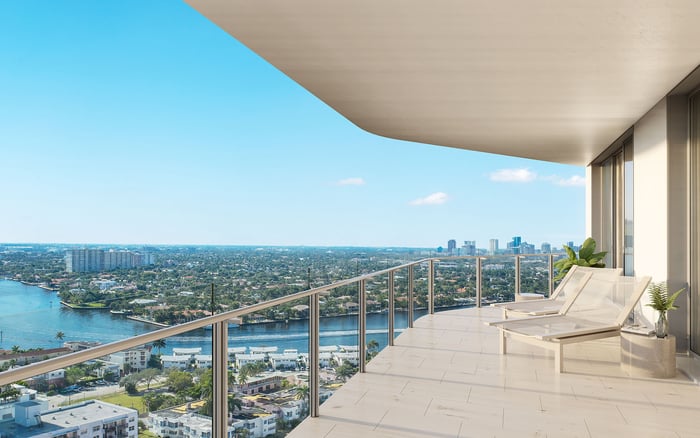
Inspect balcony and terrace sightlines from neighboring buildings and public areas in daylight and after dark. Consider where the household would dine, sit, or leave interior lighting on. Check balcony safety as part of family usability, and distinguish an appealing view from a genuinely private outdoor setting.
Before deciding, inspect luggage staging, linen storage, laundry capacity, refrigeration, and catering circulation. Imagine unpacking several households while preparing a meal: where do suitcases, deliveries, clean linens, and used service items go?
When feasible, test morning departures, an afternoon trip, and a late return between the residence and intended show destinations. Observe the building experience as closely as the journey: entry, vehicle collection, luggage handling, and access after normal daytime activity.
Close the evaluation with a written record of confirmed arrangements, unresolved questions, and changes the household would need. The strongest choice is not necessarily the most theatrical residence. It is the one whose spaces and rules let family, guests, and staff coexist with ease while preserving the owner's ability to withdraw.
Explore your next South Florida residence with MILLION.
If branded residences are on your mind — as a home or as an allocation — we would be glad to share what we are seeing, privately.
Begin a quiet conversationThe 67th edition runs from Wednesday, October 28, through Sunday, November 1, 2026.
Wednesday runs noon–7 p.m.; Thursday through Saturday run 10 a.m.–7 p.m. Sunday runs 10 a.m.–5 p.m.
No. Buyers considering a Hallandale Beach residence should plan travel to the Fort Lauderdale venues.
The Broward County Convention Center is the recommended starting hub, with access to show locations by shuttle, golf cart, or water taxi. Confirm the correct visitor entrance before departure.
Convention-center parking is listed at more than 3,000 spaces and $20 per day, subject to reconfirmation. Show shuttles start one hour before opening and stop one hour after closing.
No. The noon opening allows a later departure for opening time, but the published hours do not establish crowd levels.
Confirm the intended sleeping arrangement is permitted, then inspect the bedroom, bathroom, storage, and routes to work areas. Verify any independent entrance or service-elevator access rather than assuming it exists.
Walk from the entrance to guest bedrooms and shared spaces, noting intersections with family bedrooms and service areas. Test how the layout would function during a late return while children are asleep.
Request guest-registration rules, temporary staff credential procedures, elevator controls, and service-access policies. Clarify how resident names and unit numbers are protected.
Conduct morning departures, an afternoon trip, and a late return to the intended venues when feasible. Evaluate vehicle retrieval and building access alongside the journey itself.