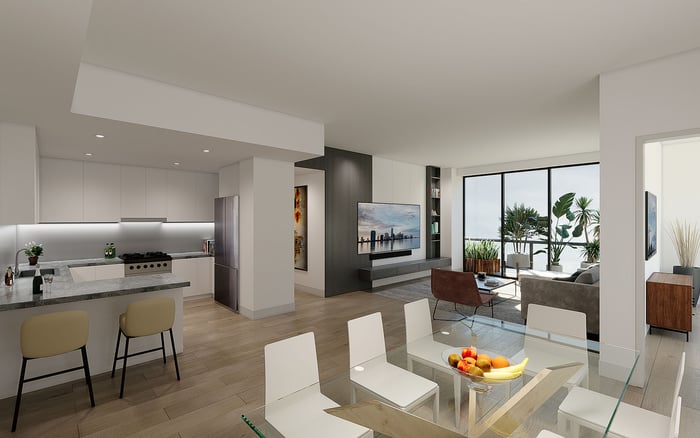
An ownership-focused look at the planned wellness offering at Four Seasons Residences Coconut Grove, separating advertised amenities from the capacity, guest-access, practitioner and service-fee terms buyers should confirm in writing.

At Four Seasons Residences Coconut Grove, the wellness proposition deserves two readings: one architectural, the other operational. The planned gym, dedicated yoga room and spa suggest a daily routine organized around the home. Whether that routine accommodates a visiting daughter, a preferred trainer or a standing treatment appointment depends on terms an amenity description alone cannot establish.
Located at 2699 South Bayshore Drive in Coconut Grove, the project is a standalone residential development, not a conventional Four Seasons hotel with guest rooms. Its amenities are presented for residents, not as a public day spa. That distinction matters, but it does not settle every access question. A residential setting alone guarantees neither unrestricted household use nor immediate availability.
For a buyer, the essential distinction is between an advertised facility and an enforceable right to use it. The ownership file should connect the planned spaces to the people, schedules and services that make them useful.
The planned wellness collection includes a gym, dedicated yoga room and spa, with a cold plunge and hammam identified within the spa offering. Additional advertised features include treatment rooms, a Jacuzzi, water experiences, aquatherapy, sensory showers and a lounge area. Finnish saunas are also advertised, although the final delivered sauna configuration is not established.
The advertised “Caesar Experience” is described as a 10,000-square-foot spa complex adjacent to the fitness center. That figure describes area, not simultaneous occupancy. It does not establish the number of available appointments, private treatment spaces or residents who can comfortably use the facilities at once.
Capacity has several dimensions. A room's physical occupancy limit differs from the number of appointments a staffed treatment room can accommodate. Neither establishes what residents can expect during a popular morning window. Simultaneous-occupancy limits, treatment-room count, resident-to-wellness-area ratios, reservation quotas and peak-hour caps remain unverified.
Ask for final amenity plans alongside operating policies. Plans can clarify the proposed layout; policies should be reviewed for booking procedures, permitted session lengths and peak-period restrictions. Neither substitutes for the other. Even a spacious plan can leave a buyer's preferred routine dependent on scheduling.
Resident-focused positioning does not establish eligibility for visiting family, overnight guests, tenants, minors or other invitees. Nor does it show whether a guest could use the gym independently, attend a resident's training session or book a spa treatment.
Request a written eligibility schedule by user category and amenity. Separate the fitness center, yoga room, treatment rooms, thermal and water facilities, and pool deck. Ask whether accompaniment, age thresholds, visit limits or charges apply. These are questions for review, not confirmed requirements at the property.
Consider the household's actual pattern of use. A couple entertaining adult children for several weeks has different needs from an owner expecting an occasional lunch guest. The advertised full-service pool deck includes food, beverage and towel service; a serviced bar and lounge also form part of the planned offering. Those descriptions establish neither guest privileges nor whether consumption is included in ownership costs.
For buyers also considering The Well Coconut Grove, apply the same document-based test independently. A useful comparison measures access for the intended household rather than treating amenity names as equivalent rights.
Concierge assistance with identifying and booking local trainers and fitness instructors is advertised. Wellness programs and personal trainers are described as available à la carte. In-residence spa services are also advertised, but the treatment menu, provider employment arrangements and charges are not established.
These offerings should not be read as an unrestricted right to bring an independently retained practitioner into a residence or shared wellness space. A concierge-arranged appointment and an owner's longstanding relationship with a trainer are distinct scenarios for the ownership file to address.
Request separate answers for treatments inside the private residence and activities in common areas. Ask whether outside providers may enter, where they may work and whether approval, credentialing, insurance, registration or scheduling conditions apply. None of those conditions is confirmed here as a building requirement. Buyers should resolve these questions before relying on a particular routine.
Put the scenario in writing: can the owner's existing trainer conduct a recurring session in the shared gym, and can an independently selected therapist provide a treatment inside the residence? Request the applicable policy rather than relying on a general assurance that concierge services are available.
The advertised service framework includes a dedicated Director of Residences, concierge, housekeeping, butler services, in-residence dining, valet and wellness programming. It describes service availability, not a complete allocation of costs between condominium dues and individual charges.
The à la carte description of trainers and wellness programs is especially important. Request service fee schedules and distinguish facility access from instruction, treatments and other bookable services. Treatment-room staffing hours, appointment requirements, guest fees and booking-duration limits remain unverified.
For budget planning, build a sample month around the services the household expects to use. Ask management to identify which items are included, separately charged or not yet finalized. The objective is more than a price estimate: it is a clear understanding of which parts of the advertised lifestyle require additional arrangements.
Four Seasons branding alone does not establish reciprocal spa or fitness privileges at other properties. An owner should not assume that ownership here creates access at The Surf Club Four Seasons Surfside or elsewhere within the brand.
If cross-property use matters, request written terms identifying participating properties, eligible users, facilities, charges and limitations. Until those terms are established, evaluate Coconut Grove's wellness proposition on its own. Keep the purchase decision anchored to the residence being acquired, not an assumed wider membership.
Before relying on the wellness offering, obtain the condominium declaration and exhibits, association and guest rules, final amenity plans, wellness operating policies, service fee schedules, outside-practitioner policy and any written reciprocal-access terms. Have counsel distinguish binding provisions from descriptive marketing and identify matters awaiting finalization.
Treat the facilities as planned or advertised, not as proof of delivery or enforceable access rights. Unverified operating details do not mean policies do not exist. They mean the buyer's decision should remain conditional on obtaining the relevant written answers.
The most persuasive wellness proposition fits the owner's real life: the people who visit, the practitioners they trust and the hours they prefer. A complete ownership file makes that fit assessable before purchase.
Explore a more considered approach to South Florida ownership with MILLION.
If branded residences are on your mind — as a home or as an allocation — we would be glad to share what we are seeing, privately.
Begin a quiet conversationThe project is located at 2699 South Bayshore Drive, Coconut Grove, Miami.
No. It is a standalone residential development, with its amenity collection presented for residents rather than as a public day spa.
The planned offering includes a gym, dedicated yoga room and spa, with a cold plunge and hammam. Treatment rooms, a Jacuzzi and additional water experiences are also advertised.
No. The figure describes advertised spa area, not simultaneous occupancy, appointment availability or treatment-room count.
Their eligibility is not established by resident-focused amenity descriptions. Buyers should obtain written guest rules for each facility and user category.
The available amenity descriptions do not establish their access rights. Request the applicable association and wellness policies before assuming eligibility.
Unrestricted access for independently retained trainers is not established. Buyers should confirm permission separately for sessions inside a residence and in shared wellness spaces.
They are advertised as available à la carte, not established as universally included in dues. A service fee schedule should clarify individual charges.
Yes, but the treatment menu, provider employment arrangements and service charges are not established. The offering does not itself confirm permission for an owner's independently selected practitioner.
Reciprocal spa or fitness access is not established by the branding alone. Any such privileges should be supported by written terms.