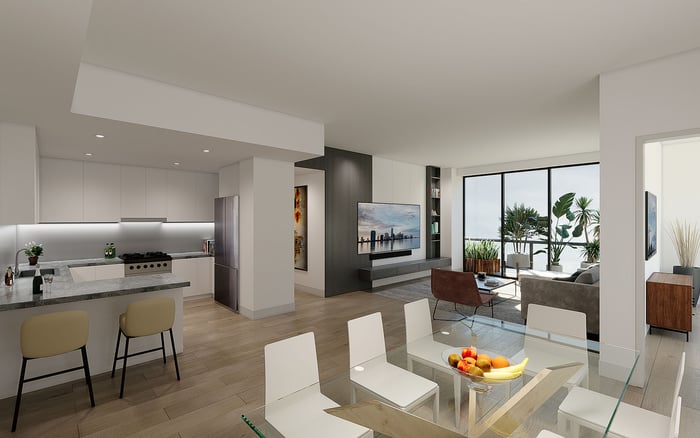
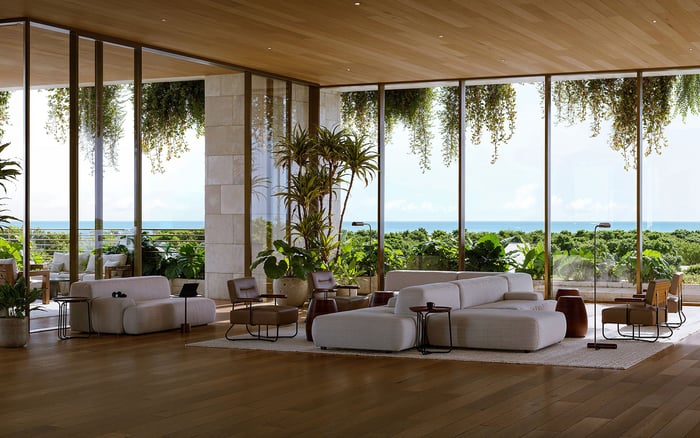
For families planning school-year occupancy at Four Seasons Residences Coconut Grove, the purchase conversation should extend beyond amenities to documented backup loads, onsite staffing and continuity of everyday life.

A residence occupied throughout the school year carries a different brief from one reserved for occasional weekends. The family needs more than an elegant arrival: comfortable bedrooms, devices ready for homework, reliable communications and dependable access. During an interruption, those everyday requirements become central to the purchase decision.
At Four Seasons Residences Coconut Grove, the planned offering is a standalone, Four Seasons-managed residential property without a hotel component. The advertised total of 72 private residences comprises 68 residences and four penthouses. The announced management structure includes a dedicated Director of Residences and concierge support.
For a school-year household, service quality and operational continuity warrant separate evaluation. A considered purchase should establish how the family will be supported on an ordinary afternoon-and what remains available when normal operations are interrupted.
The advertised service program includes doorman, bellman and valet roles, alongside 24/7 security and 24/7 valet service. These are meaningful elements of the planned residential experience, but they do not establish binding hurricane staffing minimums or guaranteed restoration times.
One distinction deserves particular attention: emergency service and repair are advertised as available 24/7 on call. That wording does not confirm an engineer stationed onsite around the clock. The difference matters when a family needs someone to assess a problem immediately rather than arrange assistance remotely.
Ask who receives an urgent request, who can attend the residence and what happens when outside personnel cannot reach the property. Request separate descriptions of normal staffing, reduced-service operations and storm coverage. A dedicated management structure provides a point of accountability; buyers should still establish each role's responsibilities, authority and limitations.
Generator capacity, fuel storage and backup-power runtime remain unconfirmed. It is also unconfirmed whether residential HVAC, elevators, network equipment or individual residence circuits would receive backup power. These are unresolved specifications, not evidence that backup systems are absent.
The most useful request is a written backup-load schedule specifying precisely which equipment and circuits are supported. Have the sales and management teams explain the proposed system in household terms, then request the technical documentation supporting those explanations.
Organize the review around four needs:
Cooling: Would backup power support residential air conditioning, selected spaces or neither? What operating limitations would apply?
Access: Which elevators and entry systems would operate, under what conditions, and with what restrictions?
Daily essentials: Would refrigeration, lighting and selected outlets inside the residence remain powered?
Communications: Would building network equipment receive backup power, and what additional dependencies could interrupt connectivity?
Request any runtime estimate alongside its assumed electrical load, fuel availability and replenishment arrangements. A duration without those conditions is insufficient for planning days in residence. Clarify which specifications are committed and which remain subject to design or operational decisions.
Translate the proposed capabilities into a household scenario: an interrupted afternoon with children at home, a parent working remotely and several devices needing power. Can the residence support a comfortable evening, food storage, charging and communication? Which activities would require an alternative arrangement?
Common-area Wi-Fi is advertised, but that does not establish internet continuity during an outage. Ask separately about power to network equipment and service availability. A library is also among the announced amenities, yet its inclusion does not establish that it could serve as a powered homework or remote-work space during an interruption.
If Park Grove Coconut Grove is also on the shortlist, apply the same occupied-day questions rather than assuming comparable continuity from the amenity offering. The purpose is not to rank unverified systems, but to compare each property's written answers against the family's actual needs.
The planned amenity program includes a signature restaurant with in-residence dining, a children's area and a private event or party room. It also includes a serviced pool deck, gym and yoga room, spa, and serviced bar and lounge. These offerings address the quality of everyday living; they do not establish availability during disrupted operations.
Housekeeping, laundry, grocery provisioning, maintenance and repair, and butler services are advertised as à-la-carte offerings. Do not assume they are included in ownership fees or available without scheduling constraints. Ask for the proposed fee structure, booking procedures and service limitations.
For an occupied school-year home, practical questions include whether provisioning can be arranged ahead of an interruption, how service changes are communicated and which requests receive priority. Treat the answers as items to document, not implied benefits of the brand. Neither a restaurant nor concierge support should substitute for a household contingency plan.
Even a school-year residence may stand empty during family travel. Ask whether unit inspections, leak response, humidity monitoring and owner reporting can be arranged. Identify who is responsible for authorizing access or urgent work. These protocols remain unconfirmed.
Separate routine housekeeping from property oversight. Establish the proposed inspection frequency, reporting format, spending authorization and escalation route if the owner cannot be reached. Ask how these arrangements change before and after a disruption.
A household also considering Mr. C Tigertail Coconut Grove should request equivalent written answers for that property. Keep the comparison specific to the residence and proposed service agreement, without assuming that branded management creates identical responsibilities across buildings.
Before committing, assemble three sets of answers: the backup-power specification, the staffing and storm-operations plan, and the schedule of included versus additional-cost services. Ask your legal and technical advisers to distinguish descriptive marketing from commitments in the purchase and governing documents. Record unresolved points explicitly rather than treating reassuring language as resolution.
For school-year occupancy, prioritize requirements by consequence. Cooling, access and communication may determine whether the family's routine can continue; discretionary amenities address a different layer of comfort. Decide which unanswered questions require resolution before proceeding and which risks the household can accommodate through alternative arrangements.
Building resilience does not guarantee school operations or replace evacuation requirements. The objective is a clear understanding of the home's capabilities and limits, supported by documentation rather than prestige alone.
For a discreet assessment of how a Coconut Grove residence fits your family's priorities, connect with MILLION.
If branded residences are on your mind — as a home or as an allocation — we would be glad to share what we are seeing, privately.
Begin a quiet conversationNo. It is planned as a standalone, Four Seasons-managed residential property without a hotel component.
The project is marketed with 72 private residences, comprising 68 residences and four penthouses.
Regular family occupancy makes cooling, device charging, homework connectivity, remote work and access central planning concerns. Buyers should assess these needs separately from the amenity offering.
The disclosed materials do not confirm backup power for residential HVAC. Buyers should request a written backup-load schedule identifying supported equipment and circuits.
The disclosed materials do not establish generator capacity, fuel storage or runtime. That does not prove backup systems are absent.
No. The advertised 24/7 on-call emergency service and repair offering does not confirm round-the-clock onsite engineering coverage.
No. Advertised 24/7 security and valet service do not establish binding hurricane staffing minimums, mandatory onsite storm-team coverage or guaranteed restoration times.
No. Common-area Wi-Fi is advertised, but internet continuity during an outage is not established.
These services are advertised as à-la-carte offerings, so inclusion in ownership fees should not be assumed. Buyers should request pricing, scheduling procedures and service limitations.
Ask about unit inspections, leak response, humidity monitoring, owner reporting and authorization for urgent work. The disclosed service descriptions do not confirm these protocols.