Colette Residences Brickell publicly describes individual central air-conditioning control and linear diffusers. For buyers, the next layer of diligence is documentary: filtration specifications, replacement-filter arrangements, and evidence of post-construction performance remain unverified in the reviewed public materials.
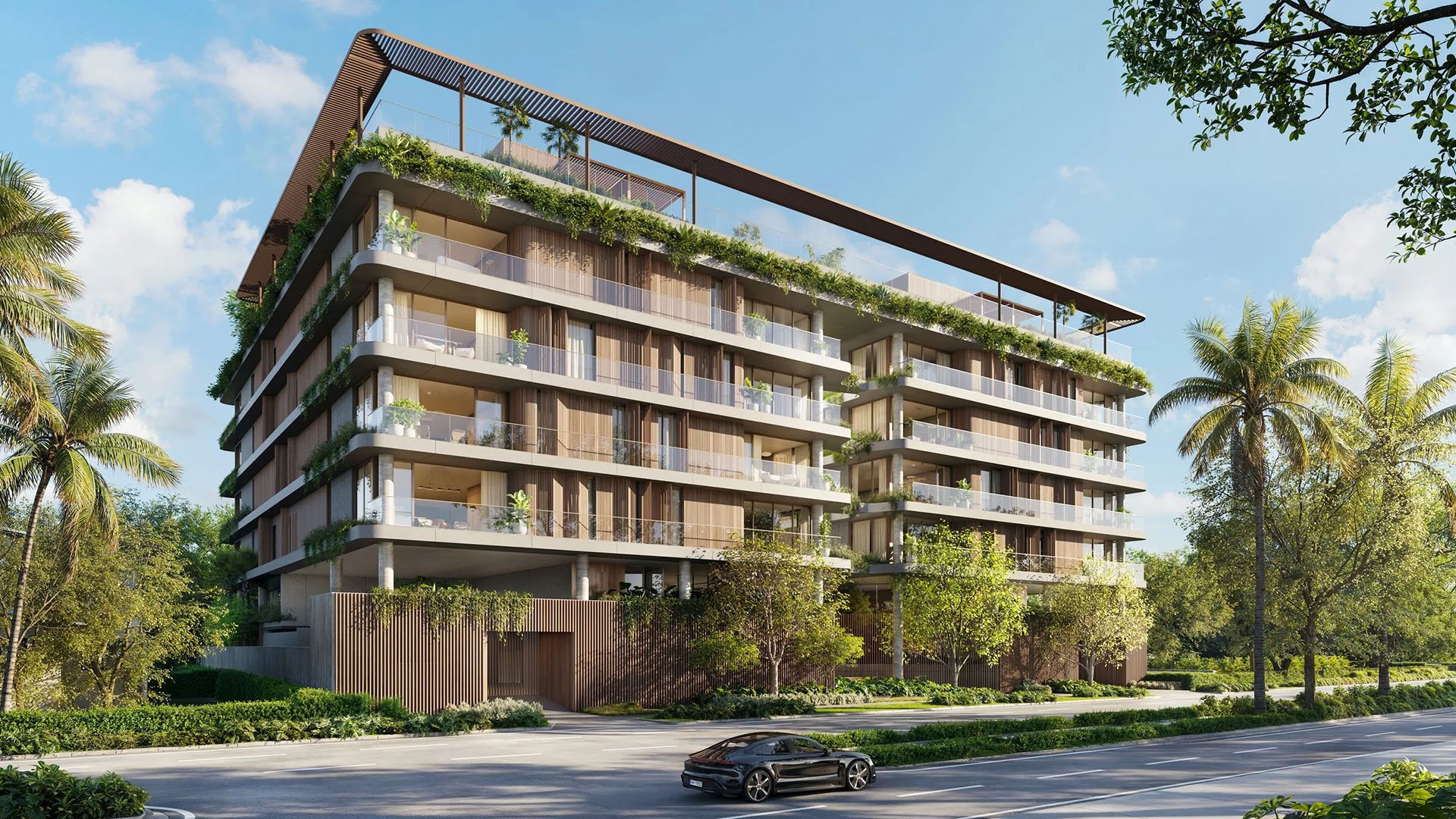
At Colette Residences Brickell, the ownership conversation should extend beyond the visible interior to the systems that support daily comfort. Marketed as a boutique condominium at 1880 Brickell Avenue in South Brickell, the project is associated with META Development and approximately 38 residences. Its publicly described air-conditioning features offer a starting point, not a complete account of filtration or indoor-air performance.
For a discerning buyer, the distinction is practical. Individually controlled central air-conditioning and linear diffusers are described; filtration ratings, replacement-filter logistics, and completed post-construction testing remain unverified in the reviewed public materials. This is a documentation gap, not evidence that equipment, services, or testing are absent.
The ownership file should therefore answer three questions: what equipment and filtration will serve the residence, how those filters will be maintained, and which records will demonstrate performance at turnover. The requests below are buyer due-diligence recommendations, not confirmed Colette deliverables or contractual obligations.
Colette’s described linear diffusers belong to the architectural discussion: their stated purpose is to preserve a clean, continuous design. They are not a filtration specification. Likewise, the description of smart HVAC with individual unit control establishes neither a filter rating nor a verified indoor-air outcome.
No MERV rating, HEPA specification, or equivalent filtration-performance rating is disclosed in the reviewed public materials. Air-handler or fan-coil manufacturers, model numbers, and filter-access locations also remain unspecified. No verified specification establishes activated-carbon filtration, UV-C treatment, bipolar ionization, or photocatalytic oxidation.
For buyers also considering 2200 Brickell, a useful comparison discipline is to keep architectural integration and mechanical performance in separate columns. This makes no claim about that project’s systems. It prevents an appealing design description from answering a technical question it was never intended to address.
The first substantive request should be a residence-specific mechanical schedule and the relevant equipment documentation. Ask for the manufacturer and model of each air handler or fan coil, the specified filter rating, filter dimensions and thickness, and instructions showing where and how filters are accessed.
The file should also address permitted pressure drop and manufacturer-approved substitutes. Rather than selecting an upgrade from a retail description, ask the responsible mechanical professional to identify the filter options approved for the installed equipment. Retain that answer with the equipment records so future maintenance does not depend on recollection.
The air path is another unresolved point. Whether filtration treats only recirculated indoor air or also serves a dedicated outside-air system remains unverified in the reviewed public materials. Request a clear explanation of the equipment serving each function and its associated filtration. Buyers should be able to distinguish residence equipment from shared systems without interpreting a marketing phrase as an engineering commitment.
A filter specification is only part of the file. Replacement-filter dimensions and thickness remain undisclosed in Colette’s reviewed public materials. No replacement-filter supply program is identified, and no procurement channel through the developer, association, manager, installer, or retailer is confirmed. A planned replacement interval is also unstated.
Ask for a written supply arrangement identifying the approved product, who orders it, who installs it, and how service is scheduled. Request current service pricing, supplier details, and any approved alternatives. If a supply or service program is proposed, distinguish that proposal from an executed agreement.
Buyers weighing Una Residences Brickell alongside Colette can apply the same ownership questions without assuming equivalent equipment or services. The useful comparison is whether each property’s documentation makes routine maintenance clear and assigns responsibility for it.
For Colette specifically, whether filter replacement is included in resident services, a warranty, or a post-closing maintenance agreement remains unverified in the reviewed materials. Those terms require written confirmation separate from the equipment specification.
Request the condominium maintenance matrix together with applicable warranty and service terms. The aim is to clarify which tasks belong to the owner, association, manager, or outside contractor, and where responsibility shifts between residence equipment and shared systems.
Ask who arranges access, who retains maintenance records, and whom an owner contacts when replacement parts or service are needed. Request the proposed replacement schedule and its supporting instructions rather than adopting an interval that has not been specified for the residence.
Keep commercial terms distinct from technical instructions. A document identifying the correct filter does not, by itself, establish whether installation is included in a service fee. Conversely, a service description does not establish the filter’s performance rating. An orderly file should contain both, with unresolved items clearly marked for follow-up.
No post-construction indoor-air-quality test results are provided in the reviewed public materials. No residence-level results are disclosed for particulates, VOCs, formaldehyde, carbon monoxide, carbon dioxide, humidity, mold, or microbial sampling. This establishes neither that the residence has an air-quality problem nor that testing has not occurred.
Request any available testing documentation, including dates, sampling locations, analytes, laboratory accreditation, and corrective actions. Ask whether the results concern the intended residence, another residence, or common areas. Location and scope should be explicit before a buyer treats any result as relevant to a particular home.
Completion of HVAC testing, adjusting, and balancing, or TAB, also remains unconfirmed in the reviewed materials. So does third-party commissioning covering airflow, outside-air quantities, controls, pressure relationships, and filtration performance. Request these records separately, together with controls-verification documentation and punch-list closeouts.
No specific post-construction indoor-air-quality testing protocol or independently verified framework is identified in the reviewed materials. Ask which protocol, if any, governed testing and what acceptance criteria were used. A general assurance is no substitute for the underlying scope and results.
Before treating the ownership file as complete, request turnover documentation addressing construction dust, duct cleanliness, moisture, mold, and ventilation operation. Where corrective work is recorded, seek the corresponding closeout evidence. Organize the material under equipment, maintenance, responsibility, and performance so the owner’s representative can locate it later.
For a buyer whose shortlist includes The Residences at 1428 Brickell, this structure offers a consistent diligence standard, not a ranking of building systems. Evaluate each residence on its own documentation.
Colette’s public descriptions establish individual central air-conditioning control and architectural diffusers. The remaining task is to connect those descriptions to specific equipment, a workable replacement-filter arrangement, and relevant performance records. That is the distinction between an attractive specification and an ownership file ready for everyday use.
For a considered perspective on South Florida residential ownership, explore MILLION.
If branded residences are on your mind — as a home or as an allocation — we would be glad to share what we are seeing, privately.
Begin a quiet conversationColette is marketed as a boutique condominium at 1880 Brickell Avenue in South Brickell, Miami.
Approximately 38 residences are described, and the project is associated with META Development.
Individually controlled central air-conditioning and linear diffusers are described. Smart HVAC with individual unit control is also mentioned, without establishing filtration performance.
The reviewed public materials disclose no MERV rating, HEPA specification, or equivalent filtration-performance rating. Buyers should request the equipment-specific filtration documentation.
No. They are described as an architectural feature preserving a clean, continuous design, not as a filtration specification.
The reviewed materials do not establish whether filtration treats only recirculated indoor air or also serves a dedicated outside-air system. Request documentation identifying the relevant equipment and air paths.
No replacement-filter supply program or procurement channel is confirmed in the reviewed public materials. Filter dimensions, thickness, and a planned replacement interval are also undisclosed.
The reviewed materials do not establish whether replacement is included in resident services, a warranty, or a post-closing maintenance agreement. Buyers should request written service terms and the condominium maintenance matrix.
No post-construction indoor-air-quality results are provided in those materials. Completion of TAB and third-party HVAC commissioning is also unconfirmed.
No. These findings concern reviewed public sales materials, not engineering or turnover records; buyers should request residence-specific equipment, maintenance, and performance documentation.
.jpg&width=700&height=438&fit=cover)