A financed condominium purchase through an LLC deserves two distinct reviews: the proposed ownership structure and the building itself. This buyer’s guide organizes the questions around jumbo lending, structural inspections, reserve funding, litigation, mixed-use space, and concentrated ownership.

For a South Florida condominium buyer purchasing through an LLC, the legal and financial file deserves the same attention as the residence. Separate two questions from the outset: will the lender accept the proposed ownership and borrowing structure, and will it accept the condominium project?
A substantial personal balance sheet does not resolve a building-level concern. Nor does an attractive residence establish that the association’s structural obligations, funding arrangements, or ownership profile satisfy the intended loan program. Review the borrower and condominium files in parallel, identifying unresolved conditions before commitment.
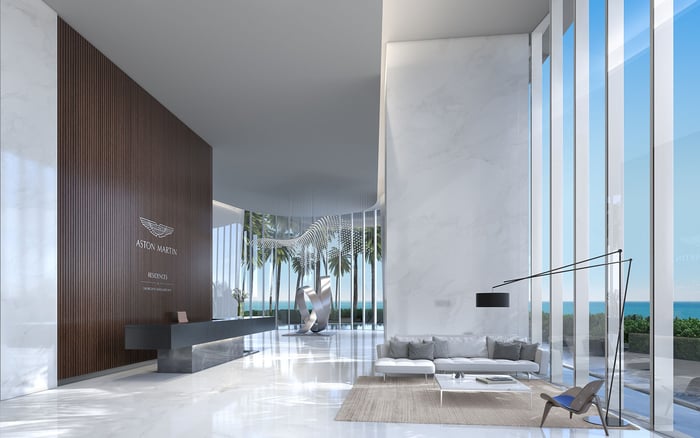
For a buyer considering Una Residences Brickell, that discipline belongs alongside the lifestyle assessment. The residences mentioned here provide search context only; their inclusion makes no representation about financing eligibility or association condition.
A lender’s willingness to discuss a jumbo loan does not establish its willingness to finance the proposed LLC arrangement. Ask who may hold title, who must be the borrower, whether personal guarantees would be required, and which entity documents the lender would request.
Also ask how liquidity would be evaluated, whose assets would count, and whether the intended use of the residence changes the proposed terms. These questions are lender-specific; they do not reflect universal requirements for every financed LLC purchase.
Have counsel and the lender review the same proposed structure. A useful written checklist distinguishes accepted terms from open questions and identifies who must resolve each item. The objective is not merely a complete folder, but a transaction structure the relevant advisers and lender have actually reviewed.
Agency project-eligibility standards provide reference points for structural condition, litigation, mixed-use space, and concentrated ownership. They are not automatic approval or rejection rules for every jumbo lender.
Ask which project-review framework the proposed loan uses and whether the lender applies additional conditions. If an issue arises, request the applicable requirement and the documentation needed to address it. A general statement that a building is financeable is not confirmation for this particular loan.
In Miami Beach, a search that includes The Perigon Miami Beach should maintain that distinction between selecting a residence and confirming the intended financing. Neither a project’s positioning nor a buyer’s preferences substitutes for review.
Florida residential condominium buildings with three or more habitable stories generally require a structural integrity reserve study, or SIRS, covering critical structural and life-safety components. The study generally must be repeated at least every ten years.
Milestone inspections are a separate requirement. Qualifying buildings generally require an initial inspection at 30 years and every ten years thereafter; local authorities may require the first inspection at 25 years because of local environmental conditions.
For qualifying unit-owner-controlled associations existing on or before July 1, 2022, the initial SIRS deadline was December 31, 2025. Certain associations with a milestone inspection due by December 31, 2026, may complete their SIRS simultaneously, but not beyond that date. This is a conditional exception, not a blanket extension.
Request the complete milestone-inspection documentation, the full SIRS, and subsequent engineering and repair documentation. A board summary should not replace the underlying findings. Ask counsel to confirm which obligations and deadlines apply to the particular association.
A completed reserve study does not establish adequate funding. Read the SIRS alongside the association’s reserve funding arrangements, comparing anticipated repair and replacement obligations with the resources intended to meet them.
Request an explanation of projected costs, timing, available reserves, and planned contributions. Where those elements do not align, ask how the difference is expected to be addressed. Do not assume a universal jumbo reserve-adequacy percentage across lenders.
Special assessments deserve their own review. Identify what each assessment funds and whether it relates to unresolved critical repairs. Under agency project standards, projects requiring critical repairs can be ineligible, making structural condition a financing issue as well as an ownership consideration.
For a Surfside buyer considering Ocean House Surfside, the discipline is to request the applicable structural and funding file rather than infer readiness from presentation. Collection of an assessment and completion of the underlying work are different facts.
Litigation warrants examination, but its subject matters. Agency eligibility frameworks address litigation through applicable requirements and exceptions; a lawsuit does not carry the same financing implications in every case.
Disputes involving safety, structural soundness, habitability, or functional use are particularly consequential. Ask counsel to identify the claims, current status, requested relief, and any connection to unresolved building conditions. Then ask the lender how those facts affect its review.
Keep the legal and engineering files connected. If litigation concerns a defect, a summary of procedural progress does not establish that the physical issue has been corrected. The lender should receive the information relevant to both questions.
One agency project standard generally limits commercial or mixed-use space to 35% of the project, or 35% of the building containing the project. That figure is not a universal jumbo ceiling. Confirm the actual lender’s rule and how the applicable areas are calculated.
Descriptions such as “mostly residential” are insufficient. Request the residential and nonresidential allocation and determine whether the lender accepts the basis of that calculation.
Separately, condominium hotels and similar transient-housing projects can be ineligible under agency standards. Ask the lender to evaluate actual use and governing arrangements rather than treating commercial floor area as the only issue. Mixed-use allocation and transient operation are distinct review questions.
Excessive single-investor ownership is another project-eligibility concern, separate from the purchaser’s financial strength. Review units held by a single entity and related ownership interests; do not assume differently named LLCs necessarily represent independent owners.
Ask for the ownership information the lender needs and its applicable concentration limits. Do not assume a universal single-investor ceiling for jumbo financing.
For buyers considering Jade Signature Sunny Isles Beach, ownership concentration belongs in the same due-diligence conversation as structural condition and funding. This is a review principle, not a finding about the project.
Before proceeding, reconcile the LLC structure, lender conditions, structural findings, reserve arrangements, assessments, litigation, space allocation, and ownership concentration. Identify what is resolved, what remains conditional, and who must provide the next answer.
The strongest purchase decision rests on documented acceptance of the intended financing and a clear understanding of the association’s obligations-not confidence in either file alone.
For a considered approach to South Florida’s exceptional residences, explore MILLION.
If branded residences are on your mind — as a home or as an allocation — we would be glad to share what we are seeing, privately.
Begin a quiet conversationConfirm whether the actual lender accepts the proposed LLC ownership and borrowing structure. LLC title, guarantees, entity documents, and liquidity treatment must be addressed with that lender rather than assumed.
No. They provide reference points for project review, but the intended jumbo lender must confirm its applicable standards and any additional conditions.
Residential condominium buildings with three or more habitable stories generally require a structural integrity reserve study covering critical structural and life-safety components. The study generally must be repeated at least every ten years.
Qualifying buildings generally require an inspection at 30 years and every ten years thereafter. Local authorities may require the initial inspection at 25 years because of local environmental conditions.
No. Certain associations with a milestone inspection due by that date may complete their SIRS simultaneously, but the exception does not allow postponement beyond December 31, 2026.
No. Review the full study alongside the association’s funding arrangements to assess how projected repair and replacement obligations will be met.
Their purpose matters, particularly when they relate to unresolved critical repairs. Collecting an assessment does not itself establish that the underlying work is complete.
No universal rejection rule should be assumed. The applicable standards and exceptions matter, with litigation involving safety, structural soundness, habitability, or functional use deserving particular attention.
No. It is a general threshold within one agency project standard, not a universal jumbo ceiling; confirm the lender’s rule and accepted calculation basis.
Differently named entities may represent related ownership interests. Concentration review should consider those relationships against the lender’s applicable single-entity ownership restrictions.