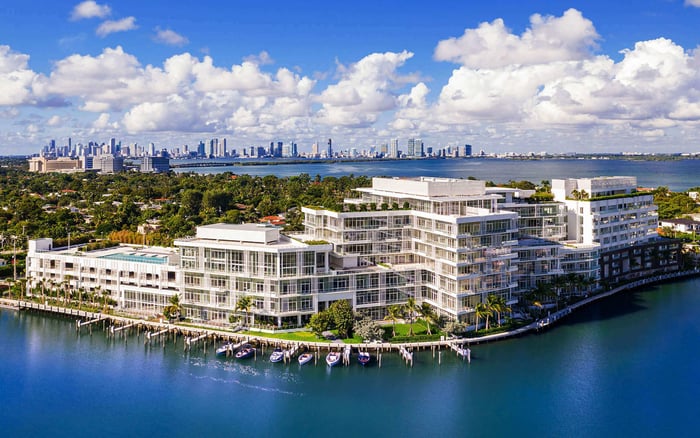
A calendar-led South Florida purchase requires separate reviews of residential short-stay restrictions and vessel arrangements. Buyers should confirm property documents, approval procedures, berth rights, waterway access, and the planned occupancy schedule before relying on flexibility or rental income.

For buyers who organize time in South Florida around a global yacht calendar, a residence may need to support personal stays, guest use, and periods of leasing. Those plans should be tested against the rules governing the specific property before flexibility or income is included in an acquisition strategy.
Residential use and vessel arrangements require separate diligence. Permission to lease a home does not establish a right to keep a yacht nearby, and access to a berth does not determine whether short stays are permitted in the residence.
Begin with a written schedule showing intended owner stays, guest periods, possible leasing windows, and expected arrival and departure patterns. The brief should identify the shortest contemplated stay, the anticipated frequency of leasing, and any periods when the home must remain available to the owner.
That framework helps buyers ask consistent questions when comparing South Florida properties. Someone considering The Ritz-Carlton Residences® Miami Beach or St. Regis® Residences Bahia Mar Fort Lauderdale should review the documents and arrangements applicable to the particular residence rather than infer flexibility from a project name or waterfront setting.
The residential review should identify the rules that apply to the property, the unit, and the proposed occupancy pattern. Buyers should request the current declaration, association rules, amendments, lease procedures, and any materials describing approval requirements or minimum leasing periods.
The review should also clarify how reservations, applications, guest access, and owner occupancy are administered. Any proposed rental schedule should be compared directly with the governing documents and confirmed through appropriate legal and property-management diligence.
For a buyer evaluating Una Residences Brickell, document review should come before assumptions about event-driven demand or short-stay availability enter the financial model.
Waterfront proximity should not replace written confirmation of vessel arrangements. Buyers should determine whether the plan depends on a private dock, assigned slip, marina berth, mooring arrangement, or another form of access, then verify the rights and conditions associated with that option.
The practical review should consider the intended vessel, the proposed location, the route to open water, and any operating or access conditions that require confirmation. Dimensions, availability, transferability, approvals, and contractual terms should be checked where relevant rather than inferred from photographs or nearby facilities.
Buyers considering Onda Bay Harbor should likewise treat residential occupancy and vessel placement as distinct parts of the acquisition review.
A focused acquisition brief connects the occupancy calendar, permitted residential use, documented vessel placement, and practical access. It should also assign responsibility for verifying each item before contract deadlines and closing.
The goal is clarity: when the owner expects to use the home, when guests or tenants may occupy it, where the yacht is intended to remain, and which approvals or agreements support the plan. Buyers should resolve material uncertainties before relying on calendar-based flexibility or income.
Why should residential use and yacht access be reviewed separately? They involve different documents, permissions, and practical arrangements. Each should be confirmed on its own terms.
What should a calendar-led ownership brief include? It should identify owner stays, guest periods, possible leasing windows, and the shortest contemplated occupancy.
Should buyers rely on a project’s waterfront setting? No. Waterfront proximity does not by itself document a dock, slip, berth, mooring arrangement, or anchoring option.
Which residential documents should be requested? Buyers should request the current declaration, association rules, amendments, and lease or guest-approval procedures relevant to the unit.
Why does the specific unit matter? The review should confirm the documents, approvals, and use plan applicable to the residence being purchased rather than rely on general assumptions.
When should projected short-stay income enter the analysis? Only after the proposed occupancy schedule has been checked against the applicable property documents and approval process.
What should be documented for yacht placement? The buyer should confirm the intended dock, slip, marina berth, mooring arrangement, or other access plan in writing where applicable.
Why should the route to open water be reviewed? The route is part of determining whether the proposed vessel arrangement works for the buyer’s intended use.
Can property management replace legal review? Property management can explain operating procedures, while appropriate legal diligence should address the governing documents and restrictions.
What is the best way to shortlist comparable options for touring? Start with location fit, delivery status, and daily lifestyle priorities, then compare stacks and elevations to validate views and privacy.
If you'd like a private walkthrough and a curated shortlist, connect with MILLION.
If branded residences are on your mind — as a home or as an allocation — we would be glad to share what we are seeing, privately.
Begin a quiet conversation