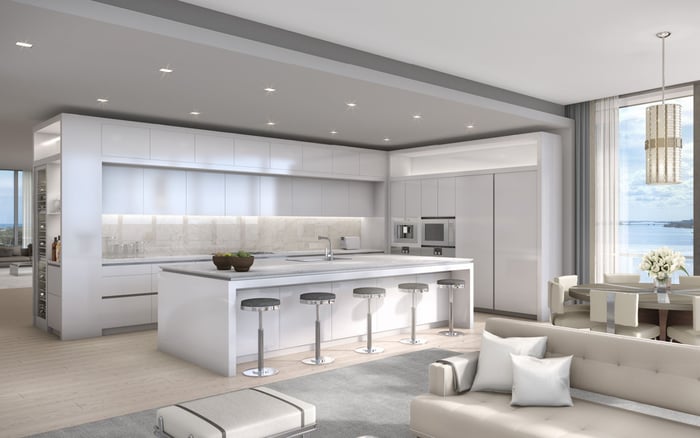
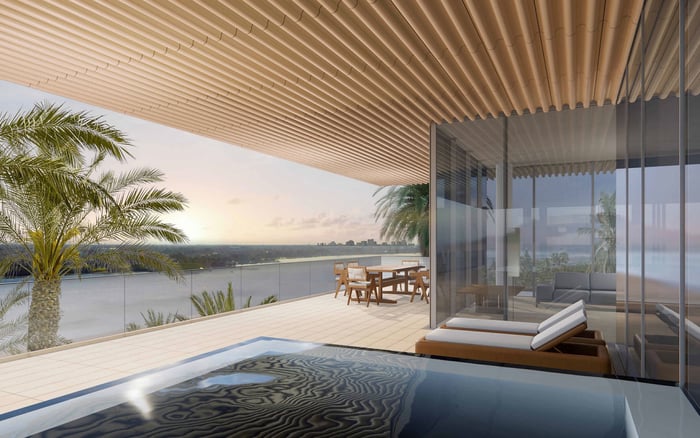
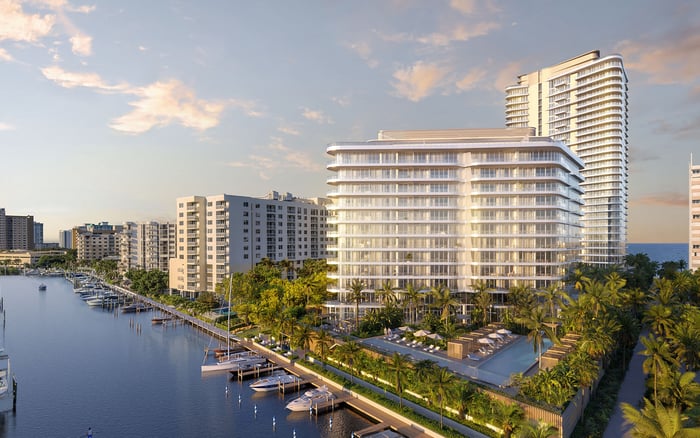
A discreet buyer-focused comparison of The Estates at Acqualina Sunny Isles and The Berkeley Palm Beach, emphasizing why prestige alone cannot answer questions about construction quality, façade maintenance, or replacement-reserve visibility.
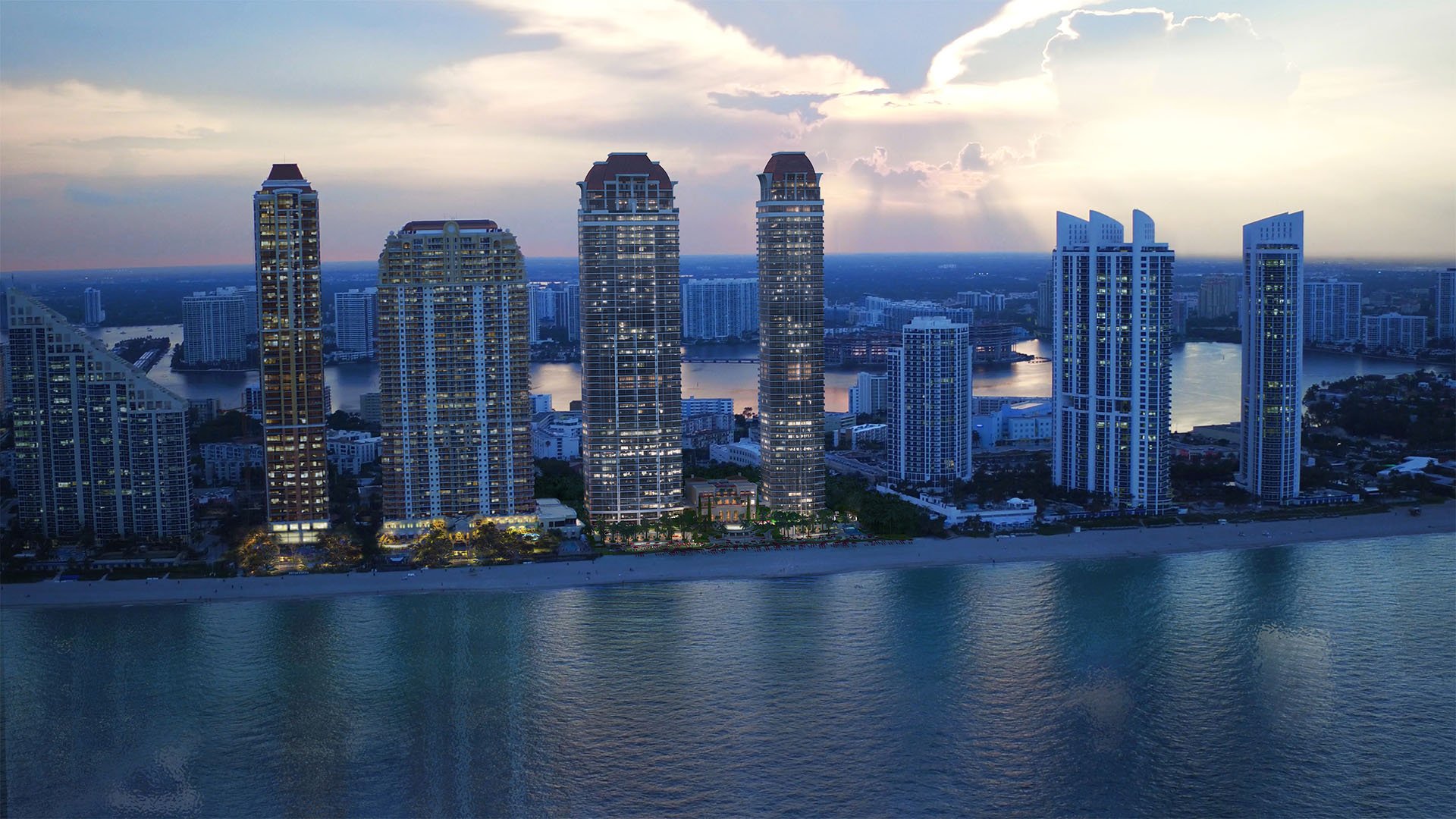
South Florida’s most rarefied condominium market often speaks first in images: arrival courts, water views, private elevators, curated amenities, and the quiet choreography of service. On that level, The Estates at Acqualina Sunny Isles and The Berkeley Palm Beach occupy a similar emotional register. Both belong in conversations where architecture, privacy, lifestyle, and location are part of a larger luxury equation.
But prestige is not proof. A buyer evaluating construction quality, façade maintenance, and replacement-reserve visibility must separate what can be seen from what can be documented. The public-facing information supports basic project identification and positioning, but it does not establish a verified head-to-head conclusion that one property has a stronger construction record, cleaner façade history, or more transparent reserves than the other.
That distinction matters. At this price level, sophisticated buyers are not asking only whether a residence feels luxurious. They are asking whether the building’s long-term stewardship is as refined as its presentation.
Construction quality in the ultra-luxury condominium segment is often discussed through finishes, ceiling heights, views, and brand associations. Those elements shape perception, but they do not answer the deeper questions: What do engineering records show? Have warranty items been resolved? Are there known claims, defects, or recurring building-envelope concerns? What has the association documented, and what has been budgeted for future work?
For The Estates at Acqualina, the public materials provide a clear project-specific reference point for identity and positioning. They do not, on their own, provide a complete construction-quality record, nor do they disclose the technical documentation a buyer would need for an engineering-grade assessment. For The Berkeley Palm Beach, the available public material supports limited identification, but it should not be treated as proof of construction performance, façade condition, or reserve adequacy.
This does not imply a deficiency at either property. It simply means that serious buyers should not draw engineering conclusions from branding, photography, or market stature alone. In the same way that buyers touring Bentley Residences Sunny Isles may admire design ambition while still asking technical questions, the Acqualina and Berkeley comparison should move quickly from aesthetic appreciation to document review.
In coastal and high-value South Florida buildings, façade maintenance is not a cosmetic footnote. It is a core ownership issue. Salt air, sun exposure, wind-driven rain, glazing systems, balcony assemblies, sealants, railings, and waterproofing details all become part of the long-term cost and care profile.
The challenge is that façade condition cannot be responsibly evaluated from exterior impressions alone. A building may look impeccable from the curb and still require scheduled envelope work. Another may have visible maintenance activity that reflects prudent stewardship rather than distress. Without engineering reports, inspection summaries, restoration notices, permit histories, or association communications, the public view remains incomplete.
No façade-maintenance records, engineering reports, special-assessment disclosures, or exterior-restoration notices were provided for either property. Therefore, the stronger editorial conclusion is restraint: there is no grounded basis here to declare a façade-maintenance winner.
For oceanfront buyers, this is especially important. Oceanfront glamour carries environmental complexity. A façade is both an architectural signature and a protective system. The right question is not merely, “How does it look?” It is, “What has been inspected, what has been repaired, what is scheduled, and how is it funded?”
Replacement reserves rarely appear in lifestyle marketing, yet they are among the most important indicators of disciplined condominium governance. They help determine whether future capital needs are being anticipated or deferred. They also shape a buyer’s exposure to assessments, fee increases, and liquidity considerations at resale.
No reserve study, condominium budget, association financial package, or replacement-reserve disclosure was provided in the available materials for either The Estates at Acqualina or The Berkeley Palm Beach. That absence prevents any verified comparison of reserve strength, funding philosophy, or future capital planning.
This is where investment discipline becomes particularly relevant. A trophy residence can be emotionally compelling and financially sound, but those are separate tests. The emotional test happens in the residence. The financial test happens in the documents.
A buyer should request current budgets, reserve schedules, recent financial statements, meeting minutes, insurance information, pending capital projects, assessment history, and any engineer-prepared building evaluations. In Palm Beach and Sunny Isles alike, those materials can reveal far more about long-term ownership quality than a polished amenity deck.
The Estates at Acqualina sits within the Sunny Isles luxury corridor, where vertical resort living, beach proximity, and high-service residential towers define the buyer experience. The broader Sunny Isles market is often compared with other branded and design-forward properties, including St. Regis® Residences Sunny Isles, because buyers frequently weigh privacy, service, amenities, and waterfront orientation across a compact set of elite addresses.
The Berkeley Palm Beach belongs to a different lifestyle conversation, one shaped by Palm Beach’s quieter social cadence and the prestige of a more restrained residential culture. Buyers looking at Palm Beach options may also consider the larger West Palm Beach luxury wave, where projects such as Forté on Flagler West Palm Beach frame a different version of waterfront and in-town living.
Those lifestyle distinctions are meaningful, but they do not answer construction or reserve questions. A buyer may prefer the energy of Sunny Isles or the discretion of Palm Beach. That preference should be evaluated separately from the building’s engineering record and association financial posture.
The cleanest way to understand this pairing is not “which one is better built?” The more disciplined question is “what evidence is available to support the ownership thesis?”
For The Estates at Acqualina, there is a project-specific public presence that helps confirm identity and positioning. For The Berkeley Palm Beach, the available public material is more limited in its usefulness for deeper technical evaluation. In neither case does the information at hand verify construction superiority, façade-condition differences, or reserve adequacy.
That leaves the buyer with a practical framework. First, admire the visible product. Second, examine the private file. Third, price risk according to what the documents show, not according to assumptions attached to prestige.
New-construction buyers should also remember that newness does not eliminate diligence. It changes the questions. Instead of focusing only on age-related restoration, the review may include turnover documents, warranties, developer obligations, initial reserve assumptions, and the transition from developer control to association governance.
The Estates at Acqualina and The Berkeley Palm Beach can both belong in a refined South Florida search. The difference is not that one can be publicly crowned superior on construction quality, façade maintenance, or reserves from the information available here. The difference is that each requires a buyer to move beyond visible prestige into disciplined document review.
Luxury real estate is at its best when beauty and stewardship align. Until the technical file is reviewed, the most responsible position is not certainty. It is informed caution.
Can buyers compare construction quality between The Estates at Acqualina and The Berkeley Palm Beach from public materials alone? Not responsibly. The available materials do not establish a verified head-to-head construction-quality comparison.
Does this mean either building has a construction problem? No. It means the materials at hand do not provide enough technical evidence to make that conclusion.
What should a buyer request before making an offer? Buyers should request association financials, budgets, reserve information, inspection materials, meeting minutes, and assessment history.
Why does façade maintenance matter in South Florida luxury condos? Coastal exposure can make building-envelope care a major long-term ownership issue, especially for waterfront towers.
Is oceanfront prestige enough to judge building quality? No. Oceanfront appeal is a lifestyle attribute, while building quality requires technical and financial documentation.
Are replacement reserves the same as monthly maintenance fees? No. Reserves are funds set aside for future capital needs, while fees may cover current operations and other expenses.
Should resale buyers approach due diligence differently? Yes. Resale buyers should pay close attention to completed repairs, pending projects, assessment history, and reserve funding.
Does new-construction eliminate reserve concerns? No. New-construction still requires review of initial budgets, warranties, transition obligations, and future capital planning.
Is The Estates at Acqualina Sunny Isles publicly identifiable as a project? Yes. The project has a public project-specific presence that supports basic identification and positioning.
What is the most prudent takeaway for buyers? Treat prestige as the starting point, then let documents determine confidence, pricing, and negotiating posture.
For a confidential assessment and a building-by-building shortlist, connect with MILLION.
If branded residences are on your mind — as a home or as an allocation — we would be glad to share what we are seeing, privately.
Begin a quiet conversation