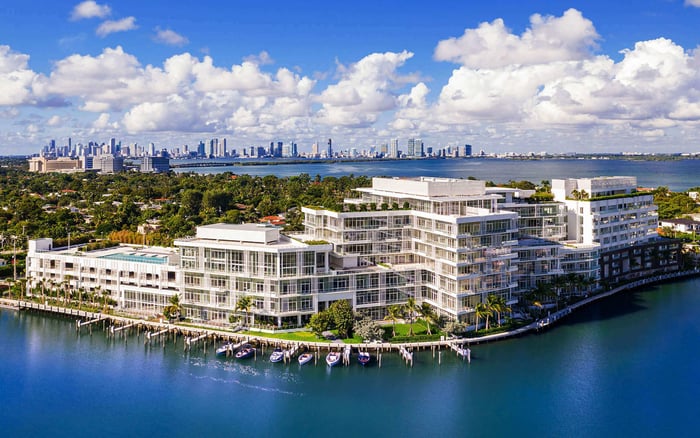
A disciplined framework for Connecticut buyers evaluating an Aventura residence, from tax and ownership planning to condominium costs, usage patterns, and lifestyle priorities.

For a Connecticut buyer, an Aventura residence can serve several distinct ambitions: a seasonal retreat, a future primary home, a family base, or a long-term real-estate holding. The right purchase depends less on an abstract idea of luxury than on how the property will actually be used.
Begin with a concise ownership brief. Identify who will occupy the residence and when, whether guests require privacy, how much storage is needed, and whether the home must function during extended absences. A buyer planning occasional winter stays may value a highly serviced condominium differently from someone anticipating a fuller transition to Florida.
This installment of MILLION's Buyer's Guides treats tax planning, carrying costs, and lifestyle as connected decisions. None should substitute for another. A favorable ownership plan cannot redeem a residence unsuited to daily life, while an appealing view should not obscure an uncomfortable annual budget.
Purchasing property and establishing residency should be treated as separate workstreams. Before signing a contract, Connecticut buyers should engage qualified tax and legal advisers to review domicile objectives, documentation, timing, ownership structure, estate planning, and the treatment of income across relevant jurisdictions.
The practical question extends beyond where a buyer owns a home. Advisers may need to understand where personal, professional, and family life is centered, along with how records and conduct align with the intended plan. A closing date alone should never be expected to resolve a broader residency analysis.
Ownership structure also merits early attention. Buying personally, through a trust, or through another entity can affect administration, succession, financing, privacy, and tax considerations. The appropriate approach is individual, and restructuring after contract or closing may create avoidable complexity. Coordinate counsel, tax advisers, lenders, and insurance professionals before finalizing the purchaser name.
Purchase price is only the opening figure. A disciplined condominium comparison should place every recurring and periodic obligation into a single annual model. Request current association materials and examine regular assessments, known special assessments, insurance responsibilities, property taxes, utilities, interior maintenance, management, housekeeping, and the cost of preparing the residence for periods of vacancy.
Financing adds another dimension. Buyers using debt should test the effect of loan terms, required reserves, and cash retained after closing. Cash buyers should still assign a cost to capital and preserve liquidity for interior work or building obligations.
For a waterfront residence, insurance and physical exposure require particular scrutiny. The review should be property-specific and led by appropriate professionals. Ask what the association covers, what remains the owner's responsibility, which deductibles may matter, and whether planned improvements could alter coverage or replacement assumptions.
Do not compare two residences by association charges alone. One building may bundle services that another bills separately. Normalize the figures into the same categories, then assess which services hold genuine value for your household.
The most important due diligence often resides in documents rather than finishes. Counsel should review the declaration, bylaws, rules, budgets, meeting materials, assessment history, reserve information, insurance documentation, and any available engineering or structural records. Buyers should also understand approval procedures, renovation restrictions, leasing rules, pet policies, parking arrangements, storage rights, and guest access.
This is especially important for a second home intended to remain unoccupied for extended periods. Confirm procedures for unit access, deliveries, maintenance personnel, storm preparation, water shutoff, inspections, and emergency communication. The objective is a residence that can be managed calmly from Connecticut-not one that demands improvisation whenever the owner is away.
An investment thesis requires its own analysis. Do not assume rental flexibility, approval timelines, or permitted lease patterns are uniform. Verify the exact rules and model conservative occupancy, management, furnishing, wear, vacancy, and compliance costs before assigning income value to a property.
Aventura should be evaluated both as a destination and as part of a broader northern Miami-Dade search. Within the city, Avenia Aventura offers a direct reference point for buyers beginning a project-level comparison. The useful exercise is not collecting names, but comparing plans, ownership terms, timelines, and service expectations against the written brief.
Buyers willing to widen the radius can examine One Park Tower by Turnberry North Miami as a North Miami alternative. Toward Sunny Isles Beach, Bentley Residences Sunny Isles and The Ritz-Carlton Residences® Sunny Isles extend the comparison to other nearby residential concepts.
Tour competing properties on the same day when possible. Record travel time, arrival experience, elevator journey, natural light, privacy, sound, service interaction, and the route to places you expect to visit. A spreadsheet can compare costs, but only repeated visits can reveal whether a location feels intuitive.
Test lifestyle fit through routine rather than vacation behavior. Imagine a typical Monday: morning exercise, remote work or meetings, groceries, family visits, dinner, and the return home at night. Then consider a high-demand week with guests, deliveries, multiple cars, and overlapping schedules.
Climate preferences also shape the choice. Consider orientation, shade, terrace usability, exposure, window treatments, interior materials, and the transition between conditioned and outdoor spaces. These are design and comfort questions to investigate in the specific residence-not assumptions to draw from a rendering.
Before making an offer, score each candidate across five categories: legal and tax readiness, annual cost, building governance, residence functionality, and neighborhood fit. Weight each category according to intended use. The strongest choice is the one that remains persuasive after advisers complete their work and the novelty of the first tour has faded.
Does buying in Aventura automatically establish Florida residency? Treat the purchase and residency planning as separate matters, and obtain advice tailored to your circumstances.
When should tax planning begin? Begin before contract execution so ownership, timing, financing, and estate considerations can be coordinated.
What carrying costs should I model? Include association obligations, taxes, insurance, utilities, maintenance, management, vacancy care, and financing where applicable.
Are association charges directly comparable? Not necessarily. Normalize included services and separately billed expenses before comparing annual totals.
What condominium documents merit review? Ask counsel to examine governing documents, financial materials, assessments, insurance, rules, and available building records.
How should I evaluate a seasonal residence? Focus on remote management, emergency access, maintenance protocols, storage, security, and ease of arrival.
Can I assume the residence may be rented? No. Verify leasing permissions, frequency limits, approval procedures, and related costs for the specific property.
Should I buy personally or through an entity? The answer depends on legal, tax, estate, financing, privacy, and administrative considerations that require professional advice.
How many times should I visit before offering? Visit under different conditions when practical, noting access, light, sound, privacy, and service.
What is the final decision test? Confirm that the property works financially, operationally, and personally after all professional reviews are complete.
For a confidential assessment and a building-by-building shortlist, connect with MILLION.
If branded residences are on your mind — as a home or as an allocation — we would be glad to share what we are seeing, privately.
Begin a quiet conversation