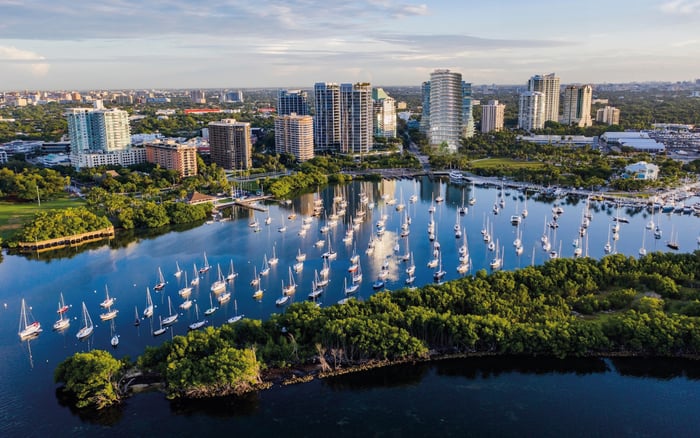
A practical, discreet guide for yacht owners evaluating Coconut Grove real estate, with a focus on access, dock diligence, operating logistics, privacy, and ownership fit.

For a yacht owner, Coconut Grove is not simply a residential choice. It is an operating decision. The right home must support the full rhythm of ownership: arrival, departure, guest movement, provisioning, service coordination, privacy, storm planning, and the quiet pleasure of returning to a residence that feels effortless after a day on the water.
That is why the strongest Coconut Grove search begins with a different hierarchy than a conventional luxury search. Views matter, but they are not enough. The real brief is often Coconut Grove first, then water views, marina proximity, potential boat-slip solutions, storage, access control, and a residence that can absorb the practical demands of a boating life without feeling operational.
The best buyers separate romance from mechanics early. They study the residence, then the route, then the rules. They ask where guests arrive, how supplies move, how crew or captains are accommodated, what the association allows, what insurance requires, and how the home performs when the yacht is not in use. In Coconut Grove, the most elegant purchase is the one that feels intuitive both on a Friday evening and during a complicated maintenance week.
A yacht owner should define the vessel profile before touring property. Length, beam, draft, bridge clearance, preferred marina arrangement, tender use, service schedule, and storm plan all influence the right address. A beautiful residence can become frustrating if the boating routine depends on assumptions that were never verified.
The first questions are simple but consequential. Will the yacht be kept at a private dock, a club, a marina, or elsewhere? Is the owner comfortable driving to the vessel, or must the boat be close enough for spontaneous use? Are overnight guests likely to arrive by car after a day on board? Will the property need space for water toys, fishing gear, luggage, coolers, or staff coordination?
These answers narrow the search quickly. A buyer who wants direct control may prioritize a single-family setting or a residence with a clearly documented docking solution. A buyer who wants lower maintenance may prefer a condominium lifestyle, provided the marina routine is convenient and the building’s rules align with the way the owner actually uses the yacht.
Water access should be treated like title, not décor. Before placing emotional weight on a dock, buyers should verify what is owned, what is licensed, what is shared, what is limited by association rules, and what requires outside approval. The existence of a dock or slip is not the same as unrestricted use.
Depth, maintenance obligations, lift capacity, electrical service, water service, access hours, security protocols, guest pickup, fuel logistics, and contractor access should all be reviewed. If dredging, seawall work, lift installation, or dock repair may be part of the plan, the buyer should understand the approval path before closing. A waterfront premium is justified only when the operating rights are clear.
For condominium buyers, the questions become more layered. Does the building permit marine vendors? Are there rules on deliveries, crew access, carts, dockside gatherings, or short-term guest movement? How does the front desk handle a captain arriving before the owner? Where does a guest wait if the yacht is delayed? These details shape the ownership experience far more than a brochure view.
Many yacht owners prefer condominiums because the building itself can simplify daily life. Security, valet, maintenance, package handling, fitness, wellness, and lock-and-leave convenience can pair beautifully with a boating lifestyle, especially for seasonal owners or buyers who split time among several residences.
In Coconut Grove, buyers comparing condominium options often study Four Seasons Residences Coconut Grove for its residential positioning, while others include Park Grove Coconut Grove in the conversation when evaluating established Grove luxury. The right choice depends less on name recognition and more on how the building supports movement between home, car, boat, guests, and service providers.
A condominium also requires a precise reading of rules. A yacht owner should review association documents, parking allocations, valet policies, storage availability, pet rules, guest access, service elevator procedures, and renovation limitations. If the buyer hosts often after time on the water, the arrival sequence matters. The most refined building experience is one where no guest feels processed and no staff member feels improvised.
A single-family home can offer autonomy, privacy, and a stronger sense of control. For yacht owners, that may mean the ability to coordinate marine vendors, manage equipment, receive guests discreetly, and create a home environment that feels less governed by shared systems. Yet autonomy also carries responsibility.
Buyers should evaluate seawall condition, elevation considerations, drainage, landscaping exposure, pool and terrace orientation, generator capacity, security design, and the ability to stage supplies without disturbing the residence. A home that entertains beautifully may still need practical support: refrigeration, storage, outdoor rinsing areas, secure side access, and a garage or utility zone that can handle the less glamorous side of boating.
Privacy is especially important. Yacht owners often value discretion around travel patterns, guest lists, and asset visibility. A strong residence should protect arrival and departure, limit unnecessary exposure, and create a calm threshold between public movement and private life.
For yacht owners, location should be measured in friction. The question is not merely whether a property is desirable. The question is how easily the owner can move through a real day. How long does it take to leave home, reach the vessel, collect guests, receive provisions, and return after dark? Where are the bottlenecks? What happens when weather changes? What happens when the owner is not present?
This is where a test drive matters. A buyer should rehearse the boating day from the residence before making a final decision. Start in the unit or home, move through parking or valet, account for luggage and coolers, imagine guests arriving separately, and walk through the return. The best properties feel composed under pressure.
Projects such as Vita at Grove Isle may enter a buyer’s comparison when the brief includes privacy and water-oriented living, while The Well Coconut Grove may be considered by buyers prioritizing a wellness-led residential experience in the Grove. The essential question remains the same: does the property make the yacht easier to own?
The Coconut Grove buyer who owns a yacht is often purchasing atmosphere as much as square footage. The residence must feel relaxed, polished, and unforced. It should support early departures, late returns, casual lunches after boating, and formal evenings when guests continue from the water to the dining room.
Outdoor space deserves close attention. Terraces, garden areas, summer kitchens, shade, wind exposure, and privacy screening can determine how often the home is actually used after time on board. Interiors should be durable enough for a coastal lifestyle without sacrificing refinement. Flooring, millwork, fabrics, and lighting should be selected with movement, humidity, and entertaining in mind.
Some buyers will also compare boutique-scale options such as Ziggurat Coconut Grove when seeking a distinctive residential setting. The strongest purchase is not the one with the most dramatic promise. It is the one that quietly supports the owner’s habits.
Before submitting an offer, yacht owners should have a written operating plan. It does not need to be elaborate, but it should answer practical questions. Where is the yacht kept? Who manages it? How do vendors access it? What is the storm procedure? How do guests move from residence to vessel? Where are supplies stored? What insurance or association requirements could affect use?
The buyer should also understand carrying costs beyond the home. Dockage, insurance, maintenance, captain or crew arrangements, service contracts, transport, hurricane preparation, and periodic upgrades can materially shape the true cost of the lifestyle. A disciplined buyer prices the full ecosystem, not just the residence.
Finally, the purchase should be reviewed by advisors familiar with waterfront and association nuance. The most expensive mistakes in yacht-oriented real estate often come from assuming access, assuming permissions, or assuming that a future approval will be routine. Luxury is not assumption. Luxury is certainty.
Should yacht owners prioritize a waterfront home or a nearby marina routine? It depends on how often the yacht is used and how much control the owner wants. Direct waterfront can be compelling, but a well-planned marina routine may be more efficient for some buyers.
Is a private dock always more valuable? Only when the rights, dimensions, condition, and approvals align with the vessel. Buyers should verify use carefully before assigning a premium.
Can a condominium work for a serious yacht owner? Yes, if the building’s rules, access systems, storage, parking, and guest protocols fit the owner’s boating habits. Convenience should be tested, not assumed.
What should be reviewed before relying on a boat slip? Ownership or license rights, permitted vessel size, maintenance duties, access limits, utilities, insurance, and transferability should all be reviewed.
How important is storm planning? It is essential. The residence, dock arrangement, insurance, and vessel plan should work together before hurricane season creates urgency.
Should buyers tour by lifestyle sequence? Yes. Walk through a real boating day from residence to vessel and back, including guests, provisions, parking, and late returns.
Do association rules matter for yacht owners? They matter greatly. Rules can affect vendors, deliveries, guests, storage, renovations, pets, and the practical flow of boating life.
What makes a property feel discreet? Controlled arrivals, thoughtful security, private outdoor areas, efficient service access, and limited exposure of personal routines all contribute.
Should yacht costs be considered with the home budget? Yes. Dockage, maintenance, insurance, crew, service, and storm preparation are part of the ownership ecosystem.
What is the best first step for a Coconut Grove yacht-owner search? Define the vessel profile and operating routine before touring homes. The right residence should make the yacht simpler to enjoy.
For a discreet conversation and a curated building-by-building shortlist, connect with MILLION.
If branded residences are on your mind — as a home or as an allocation — we would be glad to share what we are seeing, privately.
Begin a quiet conversation