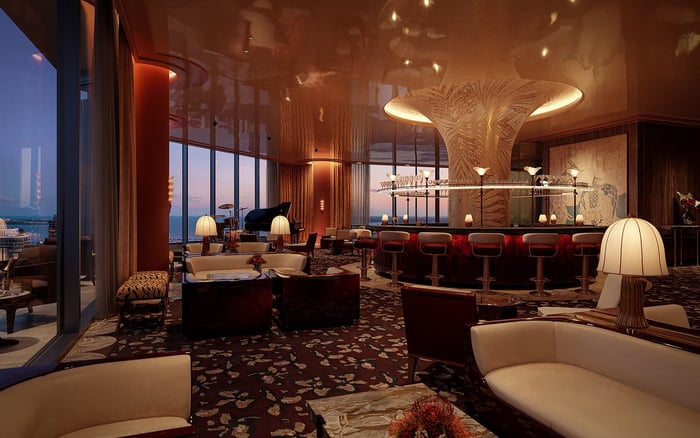
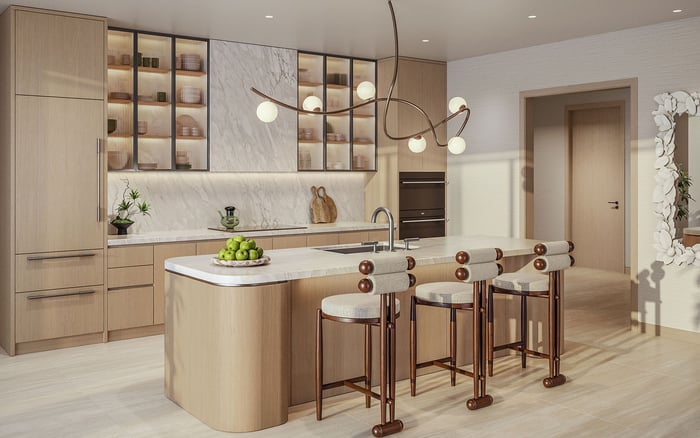
Casa Bella and Waldorf Astoria present two distinct visions of branded condominium ownership in Downtown Miami. One emphasizes a residential-only, design-led setting; the other integrates private residences with a globally recognized hotel service model. The right choice depends less on branding than on how each buyer values hospitality, privacy, governance, and predictable long-term obligations.
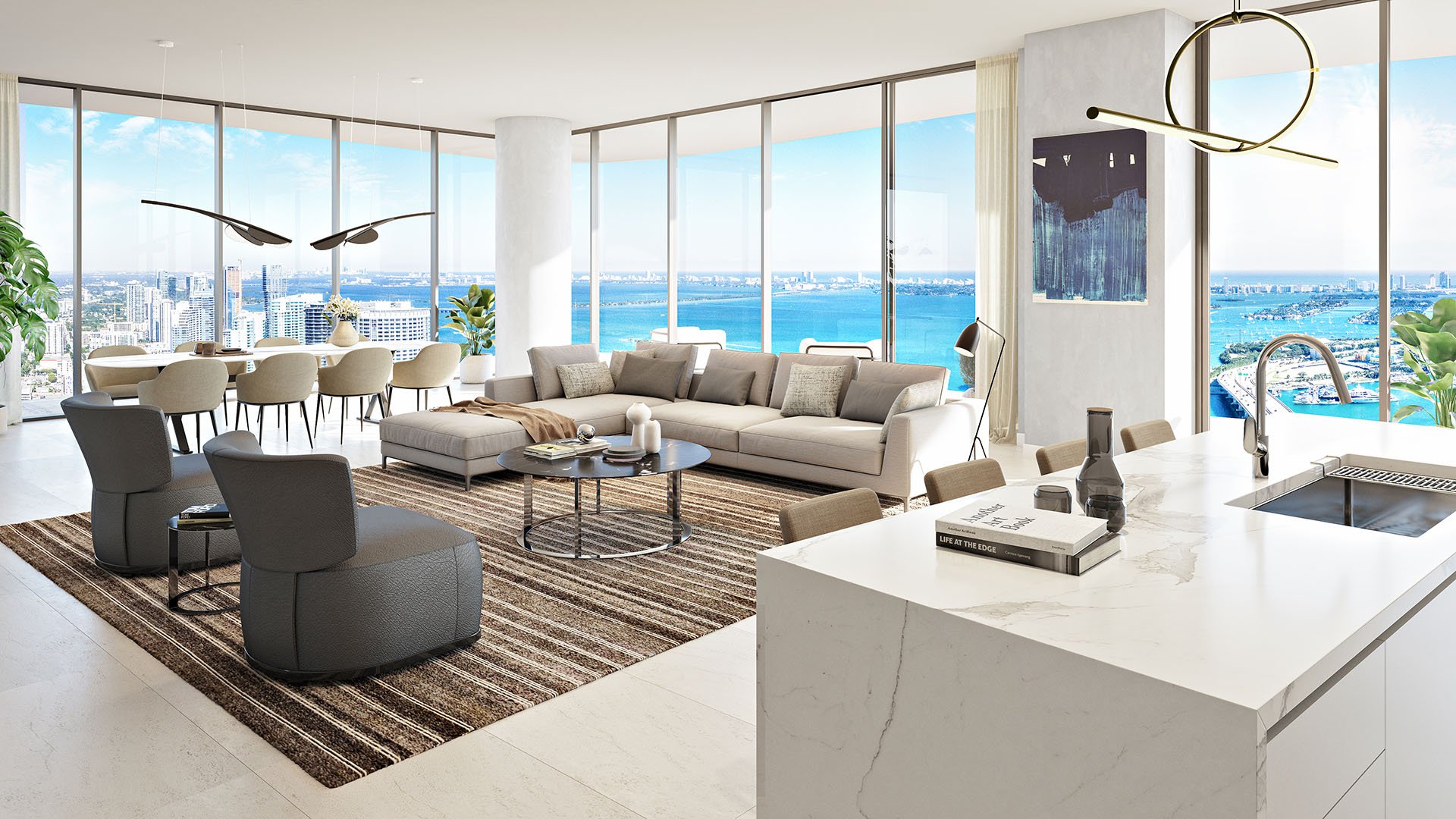
For buyers comparing new branded residences, the most consequential distinction is often not the finish palette or skyline profile, but the operating model behind the front door. Casa Bella by B&B Italia Downtown Miami and Waldorf Astoria Residences Downtown Miami are both pre-construction, full-service luxury propositions in Downtown Miami, yet they define ownership differently.
Casa Bella is conceived as a purely residential condominium with an arts-district orientation. B&B Italia anchors its design identity, centering the concept on Italian interiors and an urban residential atmosphere. Waldorf Astoria, by contrast, is structured as a mixed-use hotel-and-residence development with a vertically integrated hospitality model. The meaningful question is not which name carries greater recognition, but which daily rhythm better suits the owner.
Casa Bella’s service proposition sits within a residential-only environment. That structure may appeal to owners who want attentive building operations without the cadence of an integrated hotel. Its identity is design-led, but buyers should distinguish aesthetic authorship from the practical scope of management, staffing, and owner services defined in the governing documents.
Waldorf Astoria offers a more hospitality-intensive proposition than a conventional condominium. For buyers who value a global hotel culture, that can be compelling. It may also introduce a more layered operation encompassing both residential and hotel components. Service expectations should be measured against the proposed budget, management agreements, staffing plans, and allocation of expenses between uses.
The wider Downtown comparison set demonstrates the range of branded ownership models. Aston Martin Residences Downtown Miami offers another brand-centered point of reference, while One Thousand Museum Downtown Miami helps buyers consider how a distinctly residential identity may shape perception. Such comparisons are useful only when the underlying operations receive equal scrutiny.
Privacy is not established by a private-residence label alone. At Waldorf Astoria, buyers should examine how residents and transient hotel guests interact throughout the property. Separate entrances, elevator banks, arrival sequences, amenities, access controls, loading areas, and staffing protocols can materially shape the experience.
A residential-only concept such as Casa Bella may suggest a more consistent community atmosphere, particularly for buyers who prefer fewer transient patterns. It does not guarantee seclusion. Visitor policies, deliveries, amenity access, security procedures, rental activity, and management discipline remain central to everyday privacy.
Prospective owners should request circulation diagrams and clear explanations of shared spaces. A polished sales presentation may describe exclusivity, but the condominium declaration and operating documents determine how that exclusivity functions.
The purchase decision should extend beyond the residence itself. Buyers need to understand the proposed condominium budget, reserve assumptions, insurance estimates, management and branding agreements, rental rules, and any expenses shared between residential and hotel operations. These materials reveal whether the service model aligns with an owner’s preferred level of complexity.
At Waldorf Astoria, scrutiny should focus on the allocation of hotel-residential costs and the governance mechanisms affecting shared facilities. Buyers should identify which services are included, which are usage-based, and how future changes may be approved. They should also determine whether branding or management agreements create obligations that persist independently of personal use.
At Casa Bella, diligence should test how a residential-only tower funds its service standard over time. The B&B Italia association is central to the project’s identity, but owners should establish what that identity means contractually for common-area upkeep, replacement standards, management, and future capital planning.
Neither privacy, future costs, maintenance quality, nor resale performance should be treated as guaranteed. Long-term value will depend partly on execution, governance, financial stewardship, and the building’s ability to preserve its intended experience.
Casa Bella is likely to resonate with buyers who prioritize design, a residential atmosphere, and an arts-oriented Downtown setting. Waldorf Astoria may better suit owners who actively want hotel-caliber hospitality integrated into the ownership experience and accept the additional operational questions that follow.
A second-home owner may place greater weight on convenience and service readiness. A primary resident may focus more intently on predictable circulation, community continuity, and governance. An investor must study rental rules and operating costs rather than assume brand recognition alone determines demand or liquidity.
The essential principle is consistent: compare the legal and operating architecture as carefully as the physical architecture. The strongest choice is the one whose service intensity, privacy structure, and financial framework remain comfortable after the initial appeal of design and branding.
What is the principal difference between Casa Bella and Waldorf Astoria? Casa Bella is conceived as a residential-only condominium, while Waldorf Astoria combines hotel and residential uses within an integrated hospitality model.
Which project may feel more residential? Casa Bella’s residential-only concept may appeal to buyers seeking a community atmosphere without an integrated hotel operation.
Which project offers the more hospitality-intensive proposition? Waldorf Astoria presents the more hospitality-oriented model because its residences are part of a mixed-use hotel-and-residence development.
Does a residential-only tower guarantee greater privacy? No. Privacy also depends on access controls, visitor policies, rental activity, deliveries, security, and management practices.
What should buyers examine at Waldorf Astoria? Review the separation of entrances, elevators, amenities, staffing, and costs, along with the interaction between residents and hotel guests.
What should buyers examine at Casa Bella? Review the declaration, budget, service scope, reserve assumptions, rental rules, and contractual implications of its branded design identity.
Are current association fees established here? No specific fee figures are presented. Buyers should obtain the proposed budget and identify included, optional, and shared expenses.
Can either project’s resale performance be predicted? No. Resale outcomes depend on future market conditions, execution, governance, maintenance, costs, and buyer demand.
Which documents deserve priority before contract review ends? Prioritize the condominium declaration, proposed budget, reserve assumptions, insurance estimates, management agreements, branding agreements, and rental rules.
How should a buyer make the final choice? Match the preferred level of hospitality and privacy with the documented cost structure, governance framework, and intended pattern of use.
If you'd like a private walkthrough and a curated shortlist, connect with MILLION.
If branded residences are on your mind — as a home or as an allocation — we would be glad to share what we are seeing, privately.
Begin a quiet conversation