An art-focused buyer’s guide to the distinction between shared artwork, cultural programming, and documented residential capabilities at two South Florida addresses, with practical diligence on lighting, collection care, and installation consent.
For a collector buying in South Florida, an art-filled arrival can be compelling. The more consequential question is whether the residence can accommodate a particular collection-its lighting needs, installation requirements, and care arrangements. A beautiful lobby and a workable plan for privately owned art are separate propositions.
The Ritz-Carlton Residences® West Palm Beach and Faena House Miami Beach offer distinct starting points for that inquiry. The former markets artwork within residential common areas. Faena’s broader cultural setting includes an active nonprofit arts platform and public installations. Neither proposition, on its own, establishes conservation-grade lighting or a condominium approval pathway for an owner’s collection.
The buyer’s task is to distinguish what is marketed, what is documented, and what must be confirmed for the intended installation. That distinction preserves the pleasure of an art-centered address without mistaking atmosphere for a service.
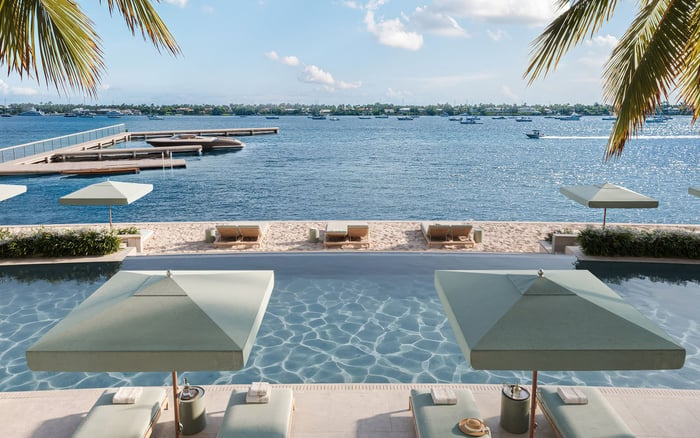
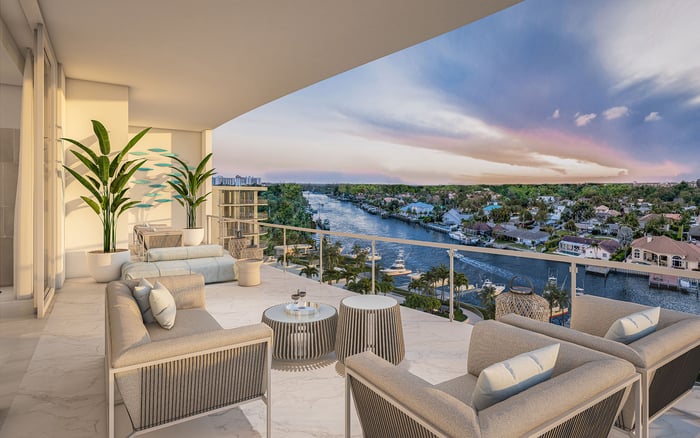
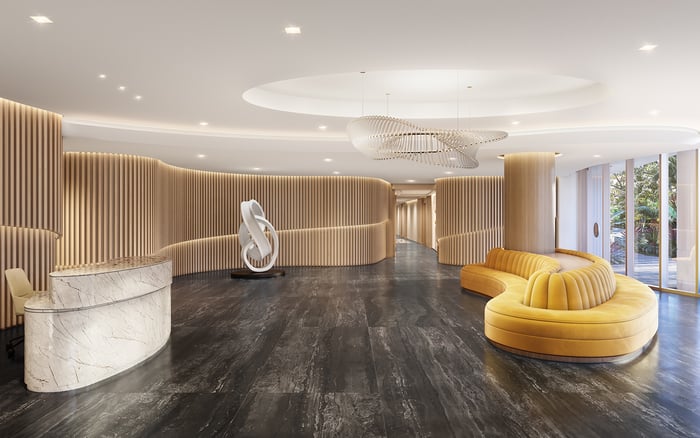
The Ritz-Carlton Residences® West Palm Beach markets “museum-quality artwork throughout common areas,” alongside a grand entrance and lobby with expansive water views. Art is presented as part of the shared residential experience, rather than solely as decoration within individual homes.
The qualification matters. Artwork, contributing artists, designers, interior designers, and managing entities are proposed components subject to developer modification. Buyers should not treat a marketed artwork or design element as a guaranteed final specification. If a particular installation influences a purchase decision, request written clarification of its status and the applicable contractual language.
“Museum-quality artwork” describes the art offering, not a verified conservation system. Color-rendering index, color temperature, ultraviolet filtering, and illumination levels are not established in the available documentation. Nor is a formal owner-facing approval process for installing privately owned artwork disclosed.
For buyers also considering Forté on Flagler West Palm Beach, the useful comparison rests on consistent documentation requests-not an assumption that nearby residences share equivalent art infrastructure. Each property requires its own documentation.
Faena Art is a 501(c)(3) nonprofit that commissions, produces, and houses cross-disciplinary artistic experiences. Its exhibitions and programming establish an ongoing arts platform, rather than simply a collection of decorative installations. The Faena Art Project Room is located at 3420 Collins Avenue, Miami Beach, FL 33140.
The public setting includes works associated with Damien Hirst, Jeff Koons, Alberto Garutti, Gonzalo Fuenmayor, Manuel Ameztoy, Amaya Bouquet, and Juan Gatti. Gatti’s “The Way to Futopia” comprises large-scale murals lining the entrance to The Cathedral. Hirst’s “Gone But Not Forgotten,” a gilded woolly mammoth skeleton, is installed in Faena’s Mammoth Garden.
The locations matter: The Cathedral is the Faena Miami Beach hotel lobby, not a Faena House residential common area. During Miami Art Week 2025, a public Reading Room installation was listed there for December 2-7. Es Devlin’s “Library of Us” was described as a 50-foot revolving library, with illuminated installations transforming Faena Beach and The Cathedral.
This cultural context can inform a buyer’s preference for the neighborhood. It does not establish Faena House resident services, private collection management, or condominium amenities. Nor do illuminated public installations establish conservation-grade lighting inside residences or residential common areas. The same distinction should guide a comparison with The Perigon Miami Beach or The Ritz-Carlton Residences® Miami Beach: evaluate residential provisions independently of the surrounding cultural experience.
An owner’s collection and a building’s common-area artwork require separate lines of inquiry. For shared art, ask who owns the works, who is responsible for their care, and whether maintenance, condition assessment, insurance, and replacement are covered by a documented arrangement. These are diligence questions, not established services at either property.
For privately owned works, clarify any assistance available with receiving, handling, installation, or ongoing care. Identify the responsible party and the limits of that role. A delivery contact should not be mistaken for a conservator or collection manager without an explicit agreement.
The buyer file should distinguish building obligations from owner responsibilities and the roles of independently retained specialists. Where art materially shapes the purchase, resolve those distinctions before committing to an installation plan. Neither the common-area artwork language nor Faena’s programming establishes a comprehensive private collection-management service.
Museum-grade lighting is not established for either residence in the available documentation. Rather than seeking a reassuring adjective, request specifications for the spaces where the collection would be displayed.
That request should cover color-rendering index, color temperature, measured or proposed lux levels, dimming capabilities, ultraviolet exposure, heat, and glare. Include daylight conditions and environmental information addressing humidity and temperature. These are recommended diligence categories, not disclosed performance standards at either address.
Ask an appropriate specialist to assess the intended works against the proposed conditions. The inquiry should address the collection and its display locations, rather than rest on a single building-wide claim. If changes are proposed, establish separately whether they are permissible.
Keep the technical file and approval file connected. A lighting concept is not an approved electrical alteration, and a visually successful presentation is not proof of conservation suitability. Written specifications and written consent answer different questions.
The available documentation does not disclose a Faena House condominium policy for owner artwork installation, design review, engineering review, or management consent. A formal owner-facing installation process is likewise not disclosed for The Ritz-Carlton Residences® West Palm Beach. Neither gap means approval is unnecessary.
Request the declaration, bylaws, alteration agreement, and design-review rules. Confirm whether the planned installation requires structural anchoring, electrical changes, engineering review, or management consent, and ask which contractors may undertake the work. Treat each point as an open question until the governing documents or a written response resolves it.
Before scheduling delivery, confirm art-handler access, insurance requirements, elevator procedures, and any approvals applicable to the proposed work. For a substantial installation, keep the artwork description, installation drawings, technical recommendations, and written permissions together in the buyer file.
The strongest decision rests not on which address has the more theatrical art setting, but on whether the chosen home has a documented path for the buyer’s particular collection-with responsibilities and unresolved questions made explicit.
For a discreet residential perspective on your next acquisition, explore MILLION.
If branded residences are on your mind — as a home or as an allocation — we would be glad to share what we are seeing, privately.
Begin a quiet conversationIt markets museum-quality artwork throughout common areas. That offering accompanies a grand entrance and lobby featuring expansive water views.
Artwork and other proposed design and management components are subject to developer modification. Buyers should seek written clarification where a specific element matters.
No. The phrase describes the marketed art offering and does not verify conservation-grade lighting or environmental standards.
The available documentation does not establish those specifications for either property. Faena’s illuminated public installations do not establish residential lighting performance.
Faena Art is a 501(c)(3) nonprofit that commissions, produces, and houses cross-disciplinary artistic experiences. Its programming supports an ongoing arts platform.
The Faena Art Project Room is at 3420 Collins Avenue, Miami Beach, FL 33140.
The Cathedral is the Faena Miami Beach hotel lobby. Its public programming should not be treated as a Faena House condominium amenity without additional documentation.
The available documentation does not disclose a residential policy covering installation, design review, engineering review, or management consent. This does not mean approval is unnecessary.
Request the declaration, bylaws, alteration agreement, and design-review rules. Confirm the applicable consent, contractor, insurance, access, and elevator procedures in writing.
Request color-rendering index, color temperature, lux levels, dimming, ultraviolet exposure, heat, glare, humidity, and temperature information. These are diligence recommendations, not established specifications at either property.