A buyer-focused examination of what Onda and La Baia North disclose about terrace living, and which maintenance, wind-protection, financial, and storm-securement documents deserve closer review before purchase.
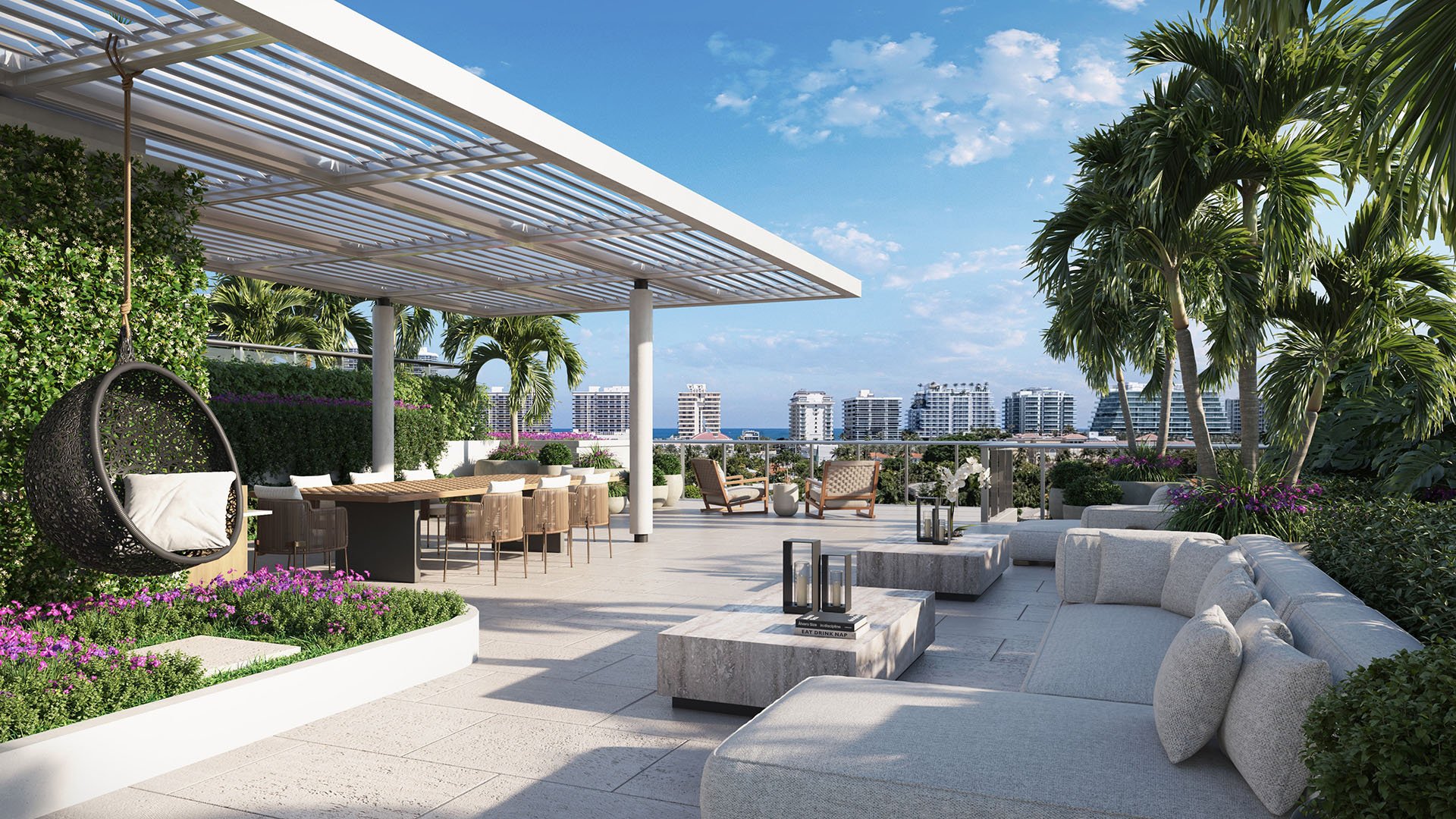
A waterfront terrace is both an outdoor room and an ownership responsibility. For a buyer considering Onda or La Baia North, the appeal lies in the views, furnishings, and connection between interior and exterior space. The consequential questions are who maintains each component, what protection is documented, and who acts when storm preparation becomes necessary.
The distinction matters: a project description is not an operating manual. Public descriptions of these two developments do not establish complete terrace-maintenance schedules or binding storm-securement procedures. That is not evidence of a defect or inadequate preparation. It means the purchase decision should rest on residence-specific documentation and association rules-not an assumption that waterfront amenities imply a particular service standard.
The most useful buyer file separates three subjects: the terrace as delivered, its ongoing care, and the procedures governing it during severe weather.
Onda Bay Harbor is located at 1135 103rd Street, Bay Harbor Islands. It is described as an eight-story waterfront development with 41 residences. Those facts establish location and scale, but not a terrace-drainage protocol, preventive-maintenance schedule, project-specific wind-load specification, or storm-securement procedure.
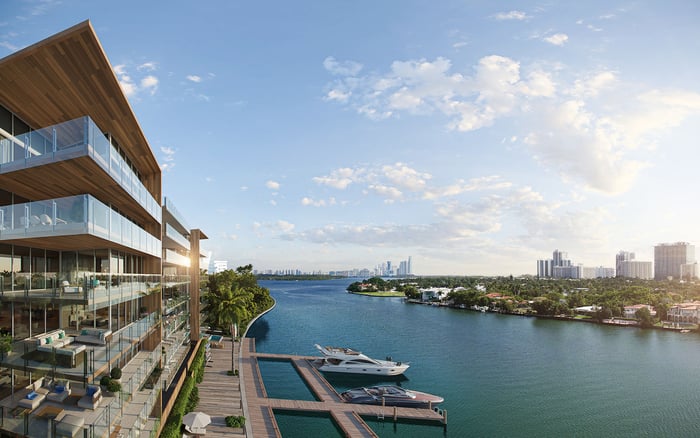
La Baia North Bay Harbor Islands is located at 9481 East Bay Harbor Drive. It is described as an eight-story building with approximately 57 residences and a private marina with 20 boat slips. Its private terraces are marketed with views toward Biscayne Bay, the Atlantic Ocean, Bal Harbour, Miami Beach, and Downtown Miami. These are project-level descriptions, not assurances that every residence has each view.
La Baia North's terraces are described as tiled and glass-railed, with residences featuring wall-to-wall, floor-to-ceiling high-impact sliders and windows. These details provide a starting point for questions about finishes and openings. They do not establish a cleaning frequency, wind-exposure rating, or complete protection specification for every opening.
Ask for a written responsibility matrix, not a broad statement that maintenance is included. It should address tile, grout, drains, waterproofing, railings, glass, sliders, sealants, and ceiling finishes. For each component, identify who inspects it, who arranges routine care, who authorizes repairs, and who pays.
The distinction between cleaning and repair deserves particular attention. A promise to clean a surface does not establish who maintains the assembly beneath it. Likewise, responsibility for a slider's visible glass may not resolve responsibility for its seals or operating components. Require those distinctions in writing rather than inferring them from an amenity description.
Request the applicable care instructions and any available inspection or repair history for the residence's terrace. Ask management to clarify approved cleaning methods, drain-access procedures, and how an owner should notify the association of a concern. These are diligence requests, not assertions that either development has a particular maintenance issue.
The file should clearly distinguish routine owner tasks from work requiring association coordination. Any unresolved item should remain visible in the purchase review.
A view description is not a wind specification. Nor does an eight-story building description establish the conditions or engineering requirements at a particular terrace. Request documentation applicable to the selected residence, including the relevant specifications for its exterior openings and terrace components.
For La Baia North, the high-impact slider and window description should prompt a request for the installed products' specifications and confirmation of which openings they cover. It should not be treated as proof of complete hurricane protection. For Onda, request the corresponding documentation rather than assuming its requirements match those of another waterfront property.
Ask an appropriately qualified professional to explain the documents in relation to the residence being purchased. Keep questions about documented protection separate from those about ordinary terrace use, furniture restrictions, and acceptable installations. A sales description cannot settle all three.
If the broader search includes Bay Harbor Towers, apply the same document-led questions there. The purpose is a consistent comparison, not an inference that neighboring projects share specifications or rules.
Neither project's public descriptions establish a binding storm-securement checklist. Obtain the current association rules and any applicable storm-preparation instructions, then ask management to clarify how they apply to the residence.
The written instructions should answer four practical questions: which objects must be secured or removed, what triggers action, who performs the work, and when it must be completed. Furniture, planters, decorative pieces, and proposed accessories should be addressed explicitly, not left to a general instruction to prepare the terrace.
Also confirm whether management may enter the residence, under what authority, and with what notice. Ask who bears responsibility for damage associated with unsecured objects and whether the rules specify enforcement measures. Furniture restrictions, deadlines, access rights, and enforcement remain unverified for both associations; none should be assumed from marketing language.
For an owner who will not always be in South Florida, storm preparation is also a question of availability. Ask whether the association offers or permits a preparation arrangement, what authorization it requires, and whether a separate charge applies. Do not assume staff will move personal belongings.
Clarify where removed items may be stored and who can complete the work while the owner is away. The plan should align with the written rules and access provisions. An elegant terrace is easier to enjoy when its practical obligations do not depend on the owner being present at short notice.
La Baia North's estimated condominium fee is described as $1.77 per square foot monthly, with building insurance and campus care included in that estimate. Verify the current budget, the square-footage basis used for billing, and the exact scope of services. The estimate does not establish that every terrace expense is covered.
For either property, request current budgets, reserves, applicable structural inspection and reserve-study materials, engineering assessments, repair logs, insurance deductibles, and pending-assessment disclosures. Review these alongside the responsibility matrix so the financial picture accounts for both association obligations and potential owner costs.
Proposed alterations require a separate review. Bay Harbor Islands requires a building permit for most construction work. Confirm whether the intended work needs a municipal permit, and independently confirm association approval requirements. Neither approval should be assumed to substitute for the other.
The available facts do not support ranking Onda or La Baia North for terrace maintenance or hurricane readiness. They support a more useful comparison: which residence comes with clear component responsibilities, relevant protection documentation, understandable storm instructions, and a verified financial allocation.
For a discreet, document-led approach to your next waterfront residence, explore MILLION.
If branded residences are on your mind — as a home or as an allocation — we would be glad to share what we are seeing, privately.
Begin a quiet conversationOnda is located at 1135 103rd Street, Bay Harbor Islands, Florida. It is described as an eight-story waterfront development with 41 residences.
La Baia North is located at 9481 East Bay Harbor Drive, Bay Harbor Islands, Florida. It is described as having approximately 57 residences in an eight-story building.
No unit-specific assurance is established by the project-level view descriptions. Buyers should verify the outlook from the particular residence they are considering.
The allocation remains unverified for both properties. Request a written matrix covering cleaning, inspection, repair, authorization, and payment for each terrace component.
No. The descriptions do not establish the complete protection specification for every opening, so buyers should request documentation for the selected residence.
The available facts do not support that ranking. Compare applicable engineering documentation and binding association procedures instead.
It should identify what must be secured, who performs the work, what triggers action, and the deadline. It should also clarify access rights and responsibility for unsecured-object damage.
That service is not established for either property. Confirm any available arrangement, authorization requirements, access provisions, and charges in writing.
The estimate is $1.77 per square foot monthly, described as including building insurance and campus care. Verify the current budget, billing basis, and service scope.
Bay Harbor Islands requires a building permit for most construction work, so confirm whether the proposed alteration needs one. Check association approval requirements separately.