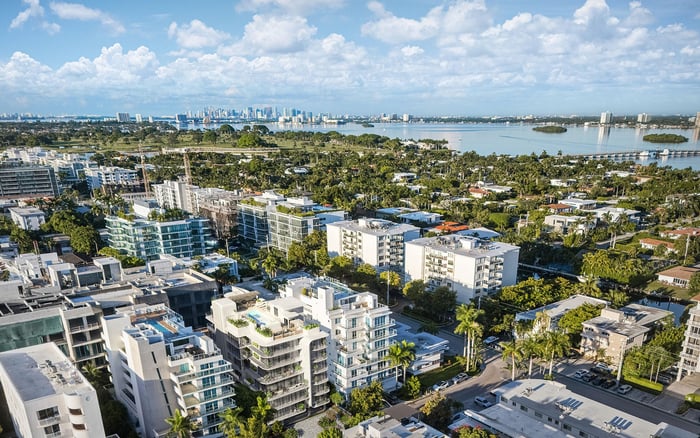
A quarter-by-quarter framework for Montreal buyers coordinating a Bay Harbor Islands purchase, cross-border advice, construction timing and a flexible move in 2026.

For a Montreal household considering Bay Harbor Islands, a measured move can provide more flexibility than a rushed one. The process should be sequenced around professional advice, capital readiness, property due diligence and a realistic occupancy window.
This 2026 framework is a decision calendar rather than a fixed deadline. It gives buyers quarterly checkpoints while leaving room for changes in property selection, contract review, closing and moving logistics.
Begin the year by assembling independent Canadian and United States tax, immigration, legal, financing, insurance and estate-planning advisers as appropriate. Review the intended use of the residence, ownership structure, travel plans and source of funds before committing to a purchase timeline.
Define the preferred closing range and tolerance for construction uncertainty. Buyers exploring Bay Harbor Towers can place it within a broader comparison without allowing a projected schedule to control every cross-border decision.
Create a document checklist for identity records, financial materials and any items requested by advisers, lenders, insurers or closing professionals. Early organization can make later decisions easier to coordinate.
Spring is an appropriate time to compare new construction with resale. A developer contract requires careful review of its stated schedule, deposits, closing conditions, delay provisions, remedies and occupancy terms. A completed residence allows the buyer to inspect an existing home and evaluate a different transaction structure.
Project comparisons should focus on the residence, agreement and timing rather than presentation alone. Buyers may review Alana Bay Harbor Islands and La Maré Bay Harbor Islands alongside completed alternatives, subject to confirmation of current availability and terms.
Use this quarter to identify nonnegotiable requirements, acceptable compromises and the amount of scheduling flexibility the household can preserve. Any proposed agreement should be evaluated by the buyer’s chosen professionals.
By midsummer, the preferred property path should be clear enough to test the logistics. Request current documents and written schedule information before fixing a Montreal sale, movers, storage, financing deadlines or travel.
Buyers can also compare Origin Bay Harbor Islands and The Well Bay Harbor Islands when considering how different residences and agreements fit the 2026 calendar. The objective is to narrow the field to the option best suited to the household’s priorities and tolerance for timing changes.
Prepare alternative arrangements for temporary accommodation, storage and travel if closing or access does not align with the preferred moving day. Avoid treating completion, closing and move-in as interchangeable milestones unless the governing documents and relevant professionals confirm the sequence.
In the final quarter, reconfirm the closing statement, insurance arrangements, title work, contractual conditions, property status and access plan with the appropriate professionals. Keep enough flexibility to address inspections, documentation and any interval between closing and the intended move.
A well-managed calendar does not make the Montreal disposition dependent on a single South Florida milestone. Preserving liquidity, time and alternative arrangements can help the household respond to a revised schedule without disrupting the broader plan.
Whether the intended use is an investment, second residence or principal home, the central question is whether a particular property aligns with the buyer’s professional advice, capital schedule and intended date of use.
The strongest plan relies on quarterly checkpoints, current documents, written confirmations and contingency time. Marketing timelines can inform planning, but the applicable agreement and verified closing requirements should guide the transaction.
Can a Montreal buyer use this calendar for a Bay Harbor Islands purchase? Yes. It is designed as a planning framework that can be adapted with guidance from the buyer’s Canadian and United States advisers.
When should cross-border advisers become involved? Ideally, the relevant advisers should be consulted before the buyer commits to an ownership structure, travel plan or purchase timeline.
Should a projected completion date control the move? No. Use projected dates for planning while preserving flexibility until the applicable documents and professionals confirm the transaction timeline.
Why compare new construction with resale? The two paths can involve different documents, inspection opportunities, schedules and negotiation considerations.
What deserves attention in a developer contract? Buyers should ask their advisers to review deposits, stated schedules, closing conditions, delay provisions, remedies and occupancy terms.
When should moving arrangements be finalized? Final commitments are best coordinated after current closing and access information has been reviewed with the appropriate parties.
Why keep temporary accommodation available? It provides a practical alternative if closing, access and the preferred moving date do not align.
How should buyers narrow the project shortlist? Compare each residence and agreement against intended use, financial planning, timing tolerance and nonnegotiable requirements.
Should the Montreal home sale depend on one Florida milestone? A contingency-based plan avoids making the broader move dependent on a single projected date.
What is the central principle of the 2026 calendar? Maintain current information, professional oversight and enough flexibility to respond when transaction timing changes.
To compare the best-fit options with clarity, connect with MILLION.
If branded residences are on your mind — as a home or as an allocation — we would be glad to share what we are seeing, privately.
Begin a quiet conversation