Cipriani Residences Miami is marketed as a branded condominium, not a condo-hotel. For buyers, the essential questions concern shared capital funding, private interior costs and the documents that establish any refurbishment obligations.

The appeal of Cipriani Residences Brickell rests partly on the promise of hospitality at home. For long-term budgeting, however, the decisive distinction is the ownership model: Cipriani Residences Miami is marketed as a branded condominium, not a condo-hotel. Hotel-style service should not be mistaken for participation in a hotel rental operation or evidence of a hotel-room replacement program.
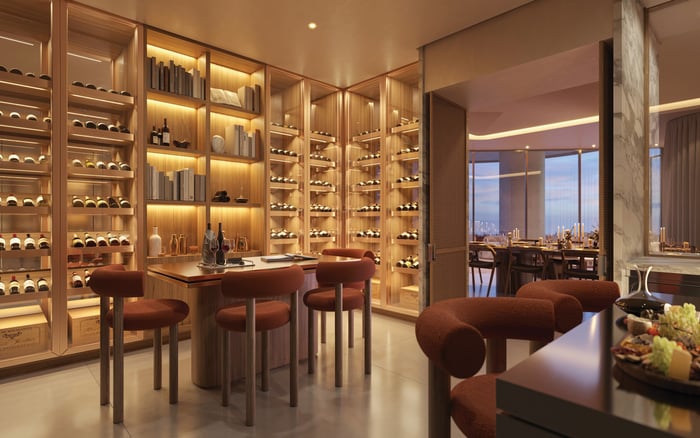
At 1420 South Miami Avenue, the project comprises 397 residences across 80 stories. Advertised hospitality includes 24-hour resident dining, residents-only dining spaces, private reservable dining rooms and a Cipriani bar. These offerings describe the residential experience; they do not establish how future furniture and equipment purchases will be funded.
For a buyer assessing FF&E-furniture, fixtures and equipment-the essential task is to separate shared capital obligations from private interior spending. Neither the brand name nor the service menu establishes that division. The governing documents must establish who pays, who decides and when an expenditure becomes compulsory.
Begin with two distinct budgets. The first covers assets funded through the condominium association, subject to the actual allocation of responsibility. The second covers furniture, décor and interior refurbishment within the residence, subject to any applicable contractual obligations.
Advertised maintenance categories include common areas, building exterior, elevators, pool service, landscaping, security, management, water and sewer. This outlines the breadth of operations, not an itemized reserve schedule. It does not establish that an owner's sofa, dining chairs or other interior furnishings will be replaced through monthly charges.
A recurring service expense is not the same as a provision for eventual replacement. Buyers should ask whether amenity furnishings and equipment have identified reserve contributions, which assets those contributions cover and whether projected replacement costs are documented. A maintenance description alone cannot resolve those questions.
For someone also evaluating Baccarat Residences Brickell, the useful comparison rests on a consistent budget framework-not an assumption that two branded addresses share the same funding structure. Request the allocation of responsibilities for each property before comparing carrying costs.
A dedicated in-unit FF&E reserve for Cipriani is not publicly disclosed in the project marketing. That does not establish that no such obligation exists in the governing documents. Nor is a Cipriani-specific mandatory refurbishment interval publicly disclosed. A five-, seven- or fourteen-year contractual cycle should not be assumed.
This distinction matters when building an ownership forecast. An owner's preferred date for refreshing upholstery is a planning choice; a replacement deadline imposed by an applicable agreement is a contractual matter. Combining the two can make discretionary spending appear mandatory or conceal an obligation within an overly optimistic personal budget.
Ask whether interior standards apply, which items they govern and who has authority to revise them. Clarify notice periods, approval procedures and the allocation of costs if standards change. Neither unrestricted owner control nor compulsory brand-wide interior upgrades should be treated as established.
A private refurbishment allowance can still be sensible. Base it on the intended furnishing scheme, expected use and personal standards. Label it explicitly as an owner planning assumption, not a Cipriani requirement.
The advertised amenity program includes two swimming pools and a resort-style pool deck, alongside a spa, wellness facilities, golf simulator and screening room. These spaces make future furnishings and equipment an important part of the capital-budget review. Their presence alone does not reveal which entity carries each replacement obligation.
For the restaurant, bar and spa in particular, determine whether capital costs fall to the association, developer or operating partner. Ask whether the facility's operator is also responsible for replacing its equipment. Operational responsibility and capital responsibility should not be assumed to be identical.
The review should identify the assets covered, estimated replacement timing, planned contributions and any applicable reserve balances. It should also establish what happens if funds are insufficient: who can authorize additional spending, how owners' shares are calculated and which special-assessment mechanisms apply.
When comparing Cipriani with St. Regis® Residences Brickell, conduct the same review independently. An amenity description is a starting point for questions, not proof of equivalent reserve coverage or future owner obligations.
Advertised plant care and away-from-home maintenance may appeal to a seasonal owner. Those services should not be read as a disclosed furniture-replacement program. Caring for a residence and funding its eventual refresh are separate considerations.
Intended use should guide the private budget, not replace the contractual review. A lightly used retreat and a more frequently occupied residence may warrant different personal allowances. Neither use pattern, however, establishes an exemption from any applicable shared contribution or interior requirement. Confirm those duties in the documents.
Rental assumptions deserve equal scrutiny. A rental policy publicized at the 2022 launch allowed residences to be rented twice annually, with a one-month minimum. Treat that as historical, not as confirmation of current permissions. Verify current restrictions before incorporating rental income into an ownership forecast, and do not equate permission to lease with a hotel rental program.
Advertised occupancy is projected for summer 2027. This is a delivery projection, not confirmation of completed occupancy. Buyers should distinguish projected budgets and schedules from obligations established in the purchase and condominium documents.
Request the declaration, proposed or current association budget, applicable reserve study or replacement schedule, and agreements governing brand standards or relevant operations. Have counsel identify provisions affecting private interiors, shared equipment, spending authority and additional contributions. Request a rental-management agreement if one is proposed; do not assume such an arrangement exists.
The goal is a clear allocation of responsibility: the asset, the responsible party, the funding mechanism and the authority to require replacement. Keep unresolved questions visible in the purchase analysis rather than treating an unknown cost as zero.
There is no substantiated basis here for quantifying a Cipriani-specific refurbishment surcharge, future fee increase or resale penalty. The stronger approach is to assess documented obligations alongside a separately labeled personal refresh allowance, then test whether the ownership budget remains comfortable if spending arrives earlier than planned.
Luxury service and disciplined capital planning are compatible. A rigorous purchase review connects the daily experience to a clear understanding of its long-term funding, without importing hotel-residence assumptions into a branded condominium.
For a discreet discussion of Brickell ownership priorities and your residential shortlist, connect with MILLION.
If branded residences are on your mind — as a home or as an allocation — we would be glad to share what we are seeing, privately.
Begin a quiet conversationIt is marketed as a branded condominium, not a condo-hotel. Its hotel-style hospitality does not establish participation in a hotel rental operation.
FF&E means furniture, fixtures and equipment. Buyers should distinguish shared amenity assets from furnishings and equipment within their private residence.
Public project marketing does not disclose one. That omission does not establish that the governing documents contain no related obligation.
No Cipriani-specific mandatory interval is disclosed in public project marketing. Buyers should not assume a five-, seven- or fourteen-year contractual cycle.
Advertised maintenance categories do not establish coverage for private interior furniture replacement. Confirm the responsibility split and reserve provisions in the condominium documents.
The allocation of those capital costs is not established in public marketing. Buyers should determine whether responsibility belongs to the association, developer or operating partner.
Advertised away-from-home maintenance and plant care should not be interpreted as a disclosed furniture-replacement program. Confirm the scope of those services separately.
A policy publicized at the 2022 launch allowed rentals twice annually with a one-month minimum. Verify current condominium documents before relying on those historical terms.
Advertised occupancy is projected for summer 2027. This is a delivery projection, not confirmation of completed occupancy.
Request the declaration, association budget, applicable reserve study or replacement schedule, and agreements governing relevant operations or brand standards. Review funding duties, approval authority and special-assessment mechanisms with counsel.