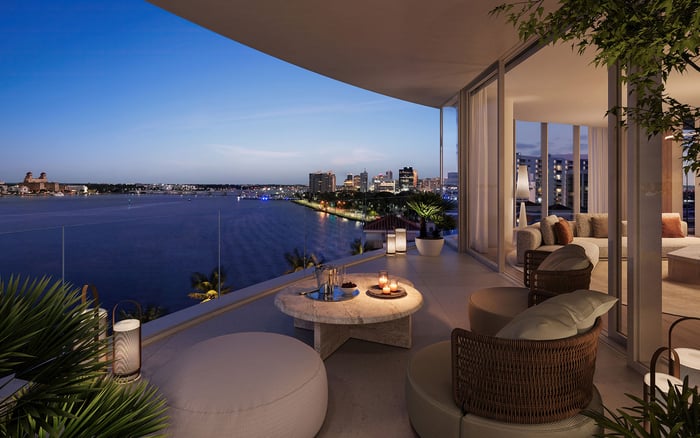
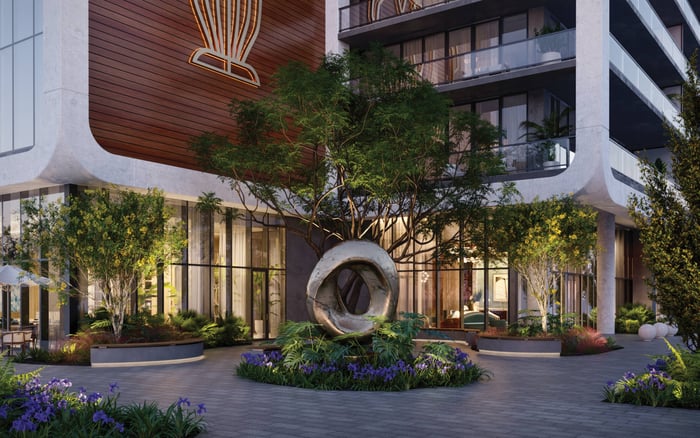
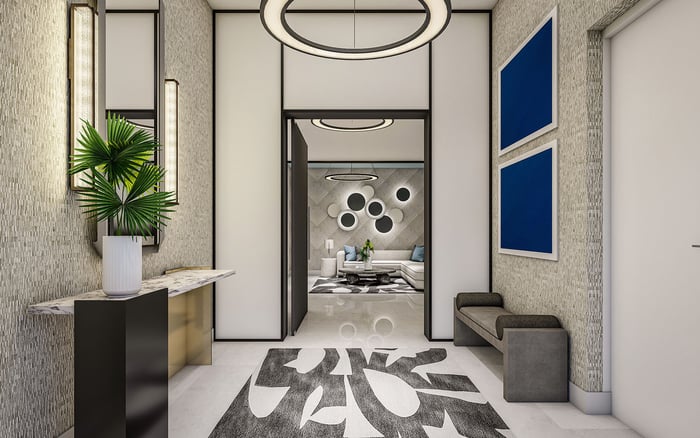
A residence-specific guide to evaluating shade, wind, furnishings, entertaining rules, cooking provisions, maintenance, and service support on a South Flagler House terrace.
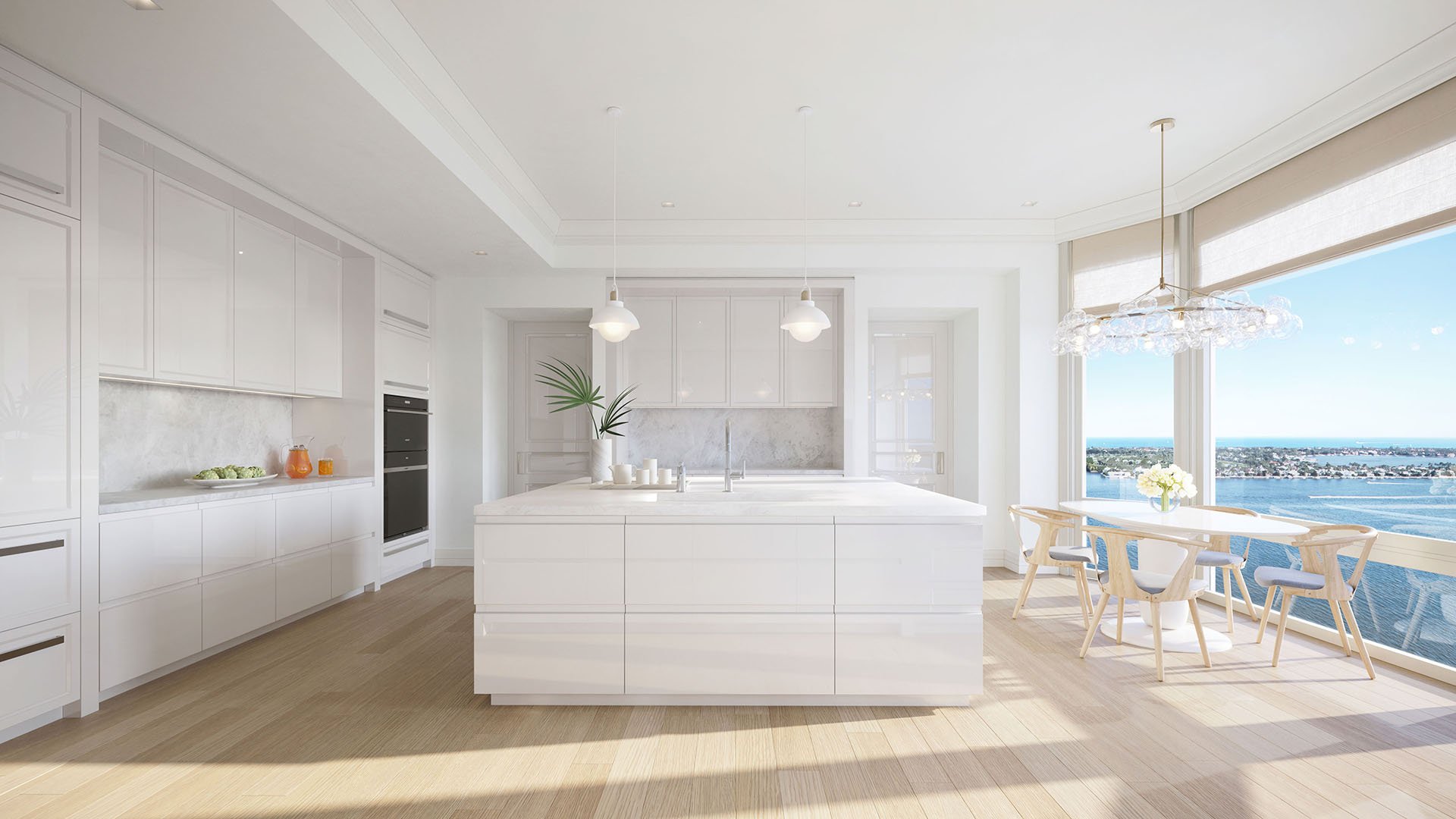
At South Flagler House West Palm Beach, a private terrace can shape the daily rhythm of a residence. Yet its practical value cannot be measured by area or outlook alone. The more revealing question is how comfortably and consistently the space can be used.
A terrace has its own microclimate, governed by orientation, elevation, building-envelope design, sun, heat, wind, and seasonal weather. These variables can change how the same outdoor plan performs from one residence to another. This entry in MILLION's Buyer's Guides focuses on the details that warrant residence-specific confirmation before a purchaser assigns value to outdoor living.
Begin by determining which portions of the terrace receive direct sun or shade throughout the day. A shaded breakfast setting may become a high-heat zone later, while another exposure may better accommodate afternoon reading or evening dining. Seasonal changes should also be considered rather than relying on a single visit.
Buyers should confirm whether retractable awnings, umbrellas, pergolas, screens, or other shade devices are permitted. Approval may depend on association rules governing attachment methods, dimensions, placement, color, and exterior consistency. The question is not simply whether shade is desirable, but whether it can be created legally and elegantly where needed.
Wind should be evaluated at the specific residence and floor-not inferred from the lobby, pool deck, or another unit. Conditions may vary by elevation and orientation, affecting comfort, furniture selection, table settings, planters, and the safe use of umbrellas.
Ask whether a wind study addresses the relevant terrace and whether operating limits or terrace-use restrictions apply. Storm-preparation procedures matter equally. Buyers need to understand which loose items must be removed, where they may be stored, how much notice residents receive, and whether staff support is available. A waterfront outlook can be compelling, but exposure must remain part of the valuation.
Outdoor furniture should be selected for coastal moisture, strong sun, wind, and repeated handling. Weight and stability can be as important as appearance. Upholstery, frames, fasteners, covers, and accessories should suit the setting, while cushions and decorative objects require a practical secure-storage plan.
Association rules may govern furniture placement, planters, umbrellas, lighting, and the overall exterior appearance. Confirm whether pieces can remain outdoors continuously and whether anything may be attached to the structure. A generous terrace should function as a composed extension of the interior, not become an ongoing storage exercise. Buyers comparing the district might apply the same review to Forté on Flagler West Palm Beach.
The word balcony can suggest outdoor access without revealing whether the space accommodates a complete dining arrangement, multiple seating zones, comfortable circulation, or safe furniture placement. Buyers should study the usable geometry rather than rely on a single dimension.
Door swings, façade conditions, structural edges, and prescribed clearances may determine where furnishings can sit. The objective is to test a real plan: chairs pulled back from a table, guests moving between zones, and a route kept open for service. This practical exercise is also useful when considering nearby choices such as The Ritz-Carlton Residences® West Palm Beach.
For owners who envision outdoor dinners or receptions, association rules are part of the design brief. Confirm permitted occupancy, noise standards, allowable hours, and any limits on speakers, lighting, décor, or temporary installations. Service access matters as well: determine how staff, food, glassware, and waste will move between the kitchen and terrace without disrupting the interior.
Outdoor cooking demands particularly precise questions. Verify whether equipment is installed, optional, restricted, or prohibited. If cooking provisions exist, establish who maintains the equipment and related utilities. A polished lifestyle depends less on improvisation than on understanding the operational boundaries before specifying furniture or planning an event.
Ask who cleans terrace surfaces, glazing, drains, railings, and any installed fixtures, and which tasks remain the owner's responsibility. Buyers should also understand access requirements for building maintenance and whether furnishings must be moved before scheduled work.
Resident-service support can materially affect usability, particularly when storm preparation, furniture movement, deliveries, or post-event resetting is involved. Services should never be assumed. Obtain the current scope, request procedures, and any applicable charges in writing. The same disciplined questions can inform a comparison with Shorecrest Flagler Drive West Palm Beach.
The most useful diligence pairs an in-person review with current offering documents and association rules. When possible, visit at more than one time of day. Stand in the proposed seating and dining zones, note the shade line, observe the wind, and consider how the doors connect indoor entertaining areas with the exterior.
Then reconcile those impressions with written restrictions, storm protocols, maintenance duties, and service provisions. The terrace's practical value emerges from the combined effects of orientation, envelope design, governance, upkeep, and support. Each point should be verified for the particular residence because floor level, exposure, and configuration may differ.
Why is terrace square footage not enough to judge usability? Orientation, shade, wind, geometry, building design, and rules determine how comfortably the area functions.
When should a buyer inspect terrace shade? Ideally, evaluate it at different times of day and ask how the pattern changes seasonally.
Can an owner add an awning or pergola? Permission should be confirmed in current condominium documents and association rules before any purchase or installation.
Does wind exposure change by floor? Yes. Conditions may differ by elevation, orientation, and the configuration of the specific residence.
Should buyers ask for a wind study? Yes. Ask whether relevant studies, operating limits, or terrace restrictions apply to the residence.
What furniture qualities matter most outdoors? Materials should withstand moisture and sun, while weight, stability, secure storage, and storm readiness deserve equal attention.
Can planters, umbrellas, and lighting be restricted? Yes. Association rules may govern placement, attachment, appearance, and permitted terrace accessories.
What entertaining rules should be confirmed? Verify occupancy, noise standards, allowable hours, service access, and any restrictions on lighting or décor.
Is outdoor cooking necessarily permitted? No. Confirm whether equipment is installed, optional, restricted, or prohibited, along with responsibility for utilities and maintenance.
Who handles terrace maintenance and storm preparation? Responsibilities and available staff support should be verified in current documents for the specific residence.
When you're ready to tour or underwrite the options, connect with MILLION.
If branded residences are on your mind — as a home or as an allocation — we would be glad to share what we are seeing, privately.
Begin a quiet conversation