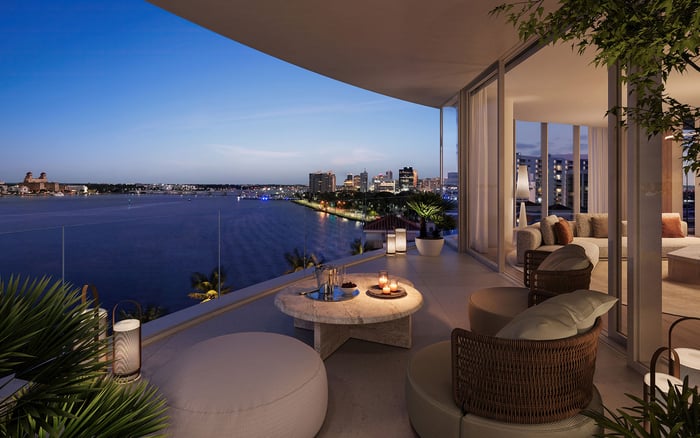
A discreet buyer’s guide to the back-of-house logistics that shape everyday luxury at The Ritz-Carlton Residences® West Palm Beach, from storage and deliveries to service-elevator access, contractor coordination, privacy, and hurricane-season planning.
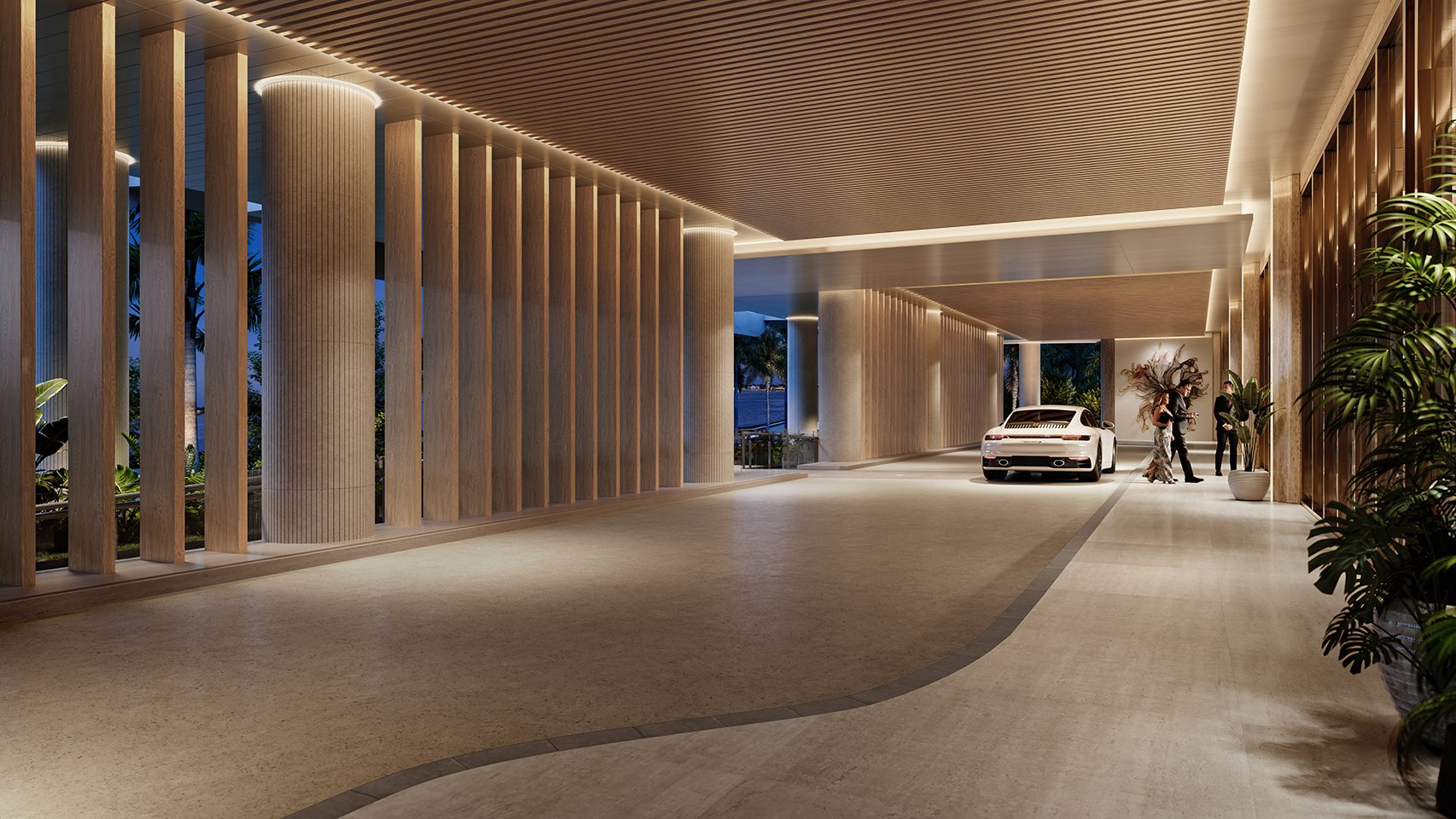
At the highest end of South Florida real estate, buyers often study the visible language of luxury first: ceiling heights, arrival sequences, amenity design, water views, appliance packages, terrace depth, and the overall feeling of privacy. Yet the daily experience of ownership is shaped just as much by the systems behind the walls and below the lobby. At The Ritz-Carlton Residences® West Palm Beach, the questions worth asking extend beyond finishes to storage, deliveries, service-elevator access, loading procedures, and vendor circulation.
This is not a secondary matter. For buyers considering Branded Residences in West Palm Beach, operational elegance is part of the product. The smoother the back-of-house choreography, the less friction residents feel when receiving furniture, rotating seasonal wardrobes, installing art, preparing for travel, or managing a residence from another city. A building can be visually impressive and still become cumbersome if its delivery rules, storage provisions, and contractor protocols do not match a buyer’s lifestyle.
Storage is one of the most underestimated features in a premium condominium purchase. Many buyers tour a residence with attention fixed on closets, kitchens, baths, and terraces, but the true storage picture includes luggage, sports equipment, holiday items, outdoor accessories, seasonal wardrobes, and overflow décor. For second-home owners, the need can be even more pronounced because arrivals and departures often occur within concentrated seasonal windows.
At The Ritz-Carlton Residences® West Palm Beach, storage should be evaluated as a practical due-diligence category. Buyers should confirm whether storage is deeded, assigned, separately licensed, limited by size, or governed by building-specific rules. They should also ask where storage is located in relation to elevators, parking, loading areas, and the residence itself. The most refined storage solution is not simply additional space; it is accessible, secure, well-managed space that fits the rhythm of ownership.
This same thinking applies across the local luxury set. A buyer comparing Alba West Palm Beach, Mr. C Residences West Palm Beach, and other West Palm Beach offerings should treat storage as part of the operating model, not a line item to clarify after closing.
Service-elevator access is one of the most important operational questions for a residence that may receive large furniture, sculpture, framed works, specialty lighting, wine storage equipment, fitness pieces, or outdoor furnishings. The issue is not merely whether a service elevator exists. Buyers should understand its usable dimensions, reservation procedures, protective padding policies, staging areas, and relationship to the loading dock and residential corridors.
For collectors and design-driven buyers, these details matter. Art installation often requires coordination among handlers, designers, installers, insurance requirements, and building staff. Furniture deliveries may involve oversized pieces that need specific elevator clearances or scheduling windows. Contractor work, whether for built-ins, lighting, audiovisual systems, wallcoverings, or repairs, can also depend on service access.
No buyer should assume that a branded address automatically answers these questions. The better approach is direct: request building-specific rules, dimensions, procedures, and contact protocols before signing. The most expensive mistake is discovering after move-in that a desired piece, installation, or delivery sequence requires exceptions that may not be available.
Loading-dock configuration is the quiet infrastructure behind a polished residential experience. It determines how movers approach the building, where vendors wait, how deliveries are staged, and whether resident-facing spaces remain calm. In a luxury building, the goal is not only efficiency; it is separation. Resident, guest, vendor, and service circulation should be organized in a way that protects discretion.
This is especially relevant in Palm Beach and West Palm Beach, where owners may maintain multiple homes, entertain seasonally, and receive a steady flow of deliveries, design teams, household vendors, drivers, and specialty service providers. The building’s policies for package acceptance, large-item delivery scheduling, moving days, and contractor arrivals become part of the resident experience.
When evaluating properties such as Forté on Flagler West Palm Beach and Mandarin Oriental Residences, West Palm Beach alongside The Ritz-Carlton Residences® West Palm Beach, buyers should compare how each building anticipates the operational demands of affluent ownership. The question is not which building sounds more luxurious in a brochure, but which building will feel more seamless on a Tuesday morning when movers, art handlers, housekeepers, and guests all need to move through the property without collision.
South Florida ownership is often seasonal. That changes the operational calculus. A part-time resident may arrive with trunks, golf equipment, wardrobe rotations, shipped décor, or household goods that need to be received before the owner is physically present. Departures can be equally complex, especially when items are stored, shipped, serviced, or secured for the summer.
For this reason, the delivery desk, management office, loading policies, storage rules, and service-elevator calendar should be understood as part of the ownership platform. Buyers should ask how advance deliveries are handled, whether vendors may access the residence in the owner’s absence, what documentation is required, and how building staff coordinate with approved representatives. These are not abstract administrative questions. They determine whether a residence functions as a true lock-and-leave home or requires constant intervention.
Hurricane-season logistics should also be discussed before purchase. Outdoor furnishings, terrace accessories, seasonal equipment, and storm-related building procedures can place sudden pressure on storage and service systems. A buyer should know how the building communicates, what residents are expected to secure, and where items may be placed when weather planning becomes urgent.
Even a newly delivered residence can require customization. Buyers may wish to add millwork, window treatments, lighting controls, audiovisual systems, wall finishes, art hanging systems, or closet upgrades. Over time, repairs and replacements will also occur. Contractor access policies therefore influence not only the move-in process, but the ongoing flexibility of the home.
The key questions are practical. Which hours are permitted for contractor work? How are vendors approved? Are insurance certificates required? How are materials brought into the building? Can multiple trades operate at once? Where may contractors park, unload, and stage materials? Are noisy activities restricted? These details should be confirmed directly through the appropriate building documents or management procedures.
For buyer’s guides, this category often separates a beautiful residence from a well-operating one. Lifestyle is not only the pool deck, spa, dining room, or lobby. Lifestyle is also the ability to maintain a home elegantly without turning routine work into a scheduling ordeal.
A disciplined buyer should request the relevant condominium documents, management rules, delivery procedures, storage information, service-elevator specifications, move-in guidelines, vendor requirements, and hurricane-season protocols before final commitment. If a detail is material to the way the home will be used, it belongs in the due-diligence conversation.
For The Ritz-Carlton Residences® West Palm Beach, the broader lesson is clear: visible luxury invites the purchase, but operational luxury sustains satisfaction. The buyers most likely to be pleased after closing are those who understand both the residence and the machinery that allows it to function with grace.
Why do storage details matter at The Ritz-Carlton Residences® West Palm Beach? Storage affects how easily owners manage luggage, seasonal clothing, sports gear, outdoor items, and overflow décor.
Should I ask for service-elevator dimensions before signing? Yes. Dimensions and procedures matter for furniture, art, large deliveries, and contractor work.
Is loading-dock access a major due-diligence item? Yes. Loading access can determine how smoothly movers, vendors, and deliveries enter and exit the building.
Do part-time residents need to ask different questions? Often, yes. Seasonal owners may rely more heavily on advance deliveries, storage, vendor access, and remote coordination.
Can delivery rules affect the luxury experience? Absolutely. A well-managed delivery system helps preserve privacy, calm, and convenience for residents.
What should art collectors confirm before purchase? They should confirm service-elevator access, installation scheduling, vendor approval, and any rules governing art handlers.
Why are contractor policies important in a new residence? Customization, repairs, and installations all depend on building access rules, insurance requirements, and work-hour policies.
How does hurricane season relate to storage? Outdoor furniture, terrace items, and seasonal equipment may need to be secured, stored, or coordinated quickly.
Should buyers rely on assumptions about branded service? No. Brand quality is valuable, but buyers should still verify building-specific procedures and restrictions.
What is the most important takeaway for buyers? Request rules, dimensions, procedures, and storage details before signing, not after move-in.
For a tailored shortlist and next-step guidance, connect with MILLION.
If branded residences are on your mind — as a home or as an allocation — we would be glad to share what we are seeing, privately.
Begin a quiet conversation