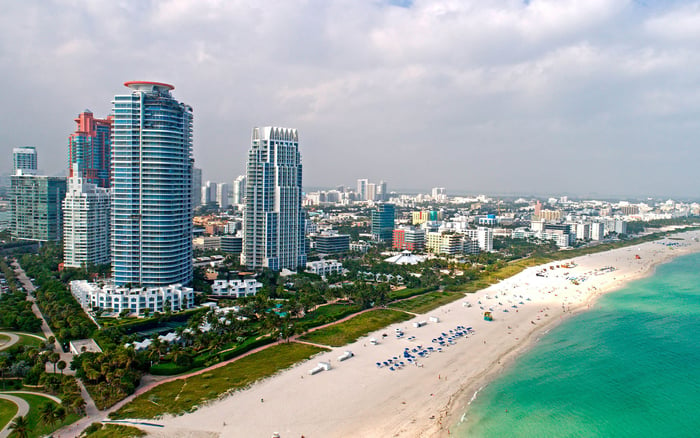
A Florida move calls for two distinct tax reviews: any state income-tax obligations that require individual advice, and the property-tax rules governing the new home. Understanding homestead timing, reassessment and Save Our Homes portability helps buyers avoid overstating their available housing budget.

A South Florida purchase can align the home, lifestyle and long-term financial plan. The tax calculation deserves a separate review. A move alone does not establish that two state income-tax returns are required or that a credit is available for taxes paid elsewhere. Those questions require advice specific to the states and circumstances involved.
If that review identifies two returns, the home budget should reflect the resulting obligations and any confirmed credits-not an assumed relocation windfall. Until the analysis is complete, treat anticipated income-tax savings as provisional. That discipline matters whether the search centers on Brickell, Miami Beach or a quieter residential setting farther north.
Florida property-tax benefits belong in a separate calculation. Homestead exemption, Save Our Homes assessment limits and portability can influence ownership costs, but none is an income-tax credit. The objective is a housing budget grounded in confirmed eligibility, rather than several distinct benefits blended into one optimistic number.
The first column is the income-tax review. Ask your adviser to determine whether any former-state filings remain necessary and whether a credit is available under the relevant rules. A Florida home purchase does not answer either question. Do not count an unconfirmed credit as money available for ownership costs.
The second column is Florida homestead exemption. It reduces the taxable value of a qualifying residence, not the tax bill dollar for dollar. The first $25,000 applies to all property taxes, including school-district taxes. The additional exemption applies to qualifying assessed value for non-school taxes, so its effect varies across taxing authorities. Confirm the applicable tax-year amounts before setting a savings estimate.
The third column is Save Our Homes portability. It concerns an eligible assessment difference from a previous Florida homestead-not income taxes or the automatic transfer of an exemption. Keeping these columns separate prevents the same expected benefit from being counted twice.
A seller's property-tax bill is a historical figure, not a reliable forecast for the buyer. A change of ownership can trigger reassessment, and the seller's exemptions may not carry over. A low existing bill warrants investigation, not automatic inclusion in the annual ownership budget.
For a buyer considering The Residences at 1428 Brickell, the useful question is not simply how much the property has been taxed. It is what the buyer should reasonably budget under their own ownership and eligibility circumstances. The same distinction applies across price points and residential settings.
Request a buyer-specific estimate that distinguishes assessed value, taxable value and assumed exemptions. Keep the seller's bill alongside it for context, not as the controlling figure. If an anticipated exemption or portability benefit remains unconfirmed, maintain a budget scenario without it. That provides a clearer view of affordability before the purchase becomes a commitment.
Homestead eligibility generally requires ownership and permanent Florida residency at the property on January 1 of the applicable tax year. The standard application deadline is March 1, through the county property appraiser, using Form DR-501. These dates serve distinct purposes: January 1 establishes the general eligibility point; March 1 governs the standard application timetable.
A buyer who establishes ownership and permanent residency after January 1 generally must wait until the following tax year to qualify for their own exemption. Filing before March 1 does not, by itself, resolve a January 1 eligibility issue.
For someone evaluating The Perigon Miami Beach, the priority is to align the purchase calendar with the intended permanent-residency calendar. A preferred closing date and the first eligible homestead year may not coincide. Model that interval explicitly rather than assuming the anticipated benefit begins immediately after closing.
On a qualifying homestead, Save Our Homes generally limits annual assessed-value increases to 3% or the change in the Consumer Price Index, whichever is lower. This limits the assessment; it does not promise that the entire property-tax bill will rise by no more than that percentage.
Portability can allow eligible homeowners to transfer up to $500,000 of the difference between assessed value and just or market value to a new qualifying Florida homestead. The transferred amount is neither a cash credit nor a dollar-for-dollar tax saving. It is also distinct from the homestead exemption itself.
Consider a current Florida homeowner comparing their residence with Andare Residences Fort Lauderdale. Their existing assessment history may merit a portability review. A buyer arriving from another state should not assume the same treatment: portability applies between qualifying Florida homesteads, not to property-tax benefits accumulated elsewhere.
Eligibility generally requires establishing the new homestead within three tax years after abandoning the previous one. Do not calculate that window solely from closing dates. A separate portability application, Form DR-501T, is generally filed with the new homestead application by March 1. The new property also requires a new homestead application; the exemption does not move automatically.
Before committing to a home budget, request two separate written analyses. One should address any state income-tax filings and credits relevant to the move. The other should estimate Florida property taxes using the buyer's circumstances, with assumptions clearly identified.
Then reconcile the timing. Record the intended ownership and permanent-residency dates, the applicable January 1 eligibility point and the March 1 application deadline. If moving between Florida homesteads, add the prior homestead's abandonment history and the portability review. Do not treat a submitted application as a confirmed financial result.
Whether the shortlist includes Alba West Palm Beach or another South Florida address, the budgeting standard should remain consistent: use buyer-specific figures, distinguish taxable-value reductions from actual tax savings, and exclude unconfirmed benefits from the base case.
The strongest relocation budget does not require every available benefit to materialize on day one. It supports the purchase decision with confirmed obligations while advisers resolve any remaining filing, credit or exemption questions.
Explore South Florida residences with MILLION while keeping your tax planning specific to your household and intended home.
If branded residences are on your mind — as a home or as an allocation — we would be glad to share what we are seeing, privately.
Begin a quiet conversationNo automatic requirement should be assumed. Have an adviser determine the filing obligations under the relevant states' rules and your circumstances.
No. Confirm eligibility under the relevant state's rules before including an anticipated credit in your home budget.
No. It reduces a qualifying home's taxable property value rather than providing an income-tax credit.
No. The first $25,000 reduces taxable value for all property taxes, including school-district taxes; it is not a dollar-for-dollar tax saving.
Eligibility generally requires ownership and permanent Florida residency at the property on January 1 of the applicable tax year.
The standard deadline is March 1 through the county property appraiser. Form DR-501 is the application for homestead and related property-tax exemptions.
Not reliably. A change of ownership can trigger reassessment, and the seller's exemptions may not carry over.
No. It generally limits annual assessed-value increases on a qualifying homestead to 3% or the change in the Consumer Price Index, whichever is lower.
No. Portability applies between qualifying Florida homesteads and can transfer up to $500,000 of an eligible assessment difference, not out-of-state benefits.
No. It requires a separate Form DR-501T, generally filed with the new homestead application by March 1, and a review of the three-tax-year eligibility window.