In South Florida's 2025 luxury condo market, turnkey now means a residence delivered with intelligent automation, digital security and wellness technology already integrated. Buyers in Brickell, Sunny Isles and Palm Beach expect their new home to arrive with a fully programmed smart system that controls climate, lighting, entertainment and building services from day one. This article outlines the smart-home standards that define a truly turnkey condo, and how to evaluate whether a tower's technology is ready for your lifestyle and future needs.
Not long ago, a turnkey South Florida condo meant fresh paint, installed closets and maybe a furniture package waiting on move in day. In 2025, turnkey has a very different meaning at the top of the market. For buyers accustomed to five star hotels and chauffeur level service, a new residence is expected to arrive with an invisible digital infrastructure already humming in the background. The most desirable addresses now deliver a condo that is as smart and responsive as it is beautifully finished.
In Miami, Brickell, Miami Beach and the broader Sunny-isles coastline, that translates into homes where lighting, climate, sound, security and even wellness systems are orchestrated by a single intuitive platform. The owner should be able to step off a plane, tap a command on a phone and arrive to a cooled residence with the shades set, the playlist ready and the door already expecting them. There is no appetite for months of retrofit work or a jungle of aftermarket devices stuck to the walls.
As a result, the definition of turnkey now includes a level of integrated smart-home technology that would have been considered custom only a few years ago. The best developments treat automation as a core part of the architecture rather than an optional extra. What matters is not simply having gadgets but how elegantly the hardware, software and building services are woven together so that daily life feels frictionless from day one.
In a 2025 luxury tower, the starting point is a fully integrated automation backbone, typically built around professional grade systems such as Crestron, Savant or Lutron. Lighting scenes, temperature, motorized shades, multi room audio and video, and even fragrance diffusers are stitched into one coherent interface rather than scattered across unrelated apps. Wall keypads, discreet touchscreens and a secure mobile app all speak to the same brain, making it easy to adjust one room or the entire residence with a few taps.
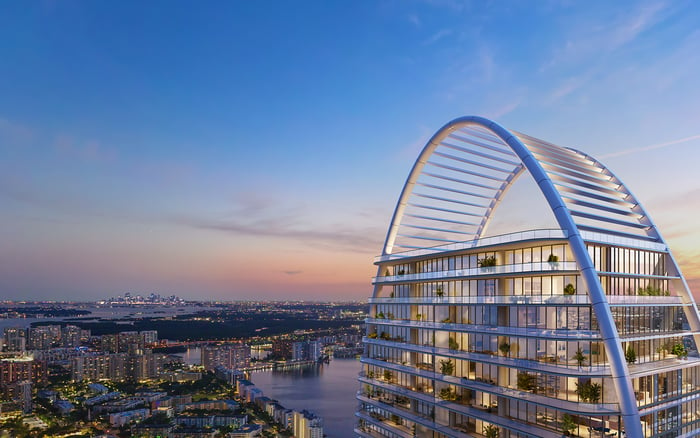
At Waldorf Astoria Residences Downtown Miami, for example, each residence is delivered with an elevated smart-home package and a dedicated app aligned with the building's services. From the moment an owner closes, they can select a welcome scene that cools the great room, softens the lighting, cues a preferred playlist and checks that doors and windows are secured. The point is not technology for its own sake but a thoughtful standard that works seamlessly on day one.
The best systems now incorporate learning capabilities. Over the first weeks, the home begins to understand when you usually wake, what temperature you like to sleep at, how you prefer the lights in the office versus the media room and which rooms are rarely used. Over time, your condo behaves like a discreet digital butler, subtly pre conditioning spaces and suggesting scenes rather than waiting for constant manual adjustment.
Voice and low touch controls are now part of this baseline. Residents expect to say a simple good night command and have the system turn off non essential lights, close the shades, lock the door and arm security without touching a switch. In kitchens and media rooms, motion and occupancy sensors can trigger soft lighting or background audio as you enter. Crucially, all of these controls are tied to a secure, building branded app so that owners can adjust their condo, let in guests or call for assistance while they are in the car, at the office or traveling abroad.
In parallel, safety and privacy expectations have risen sharply. A full service lobby and staffed gatehouse are only the first layer. Buyers now look for biometric access control that recognises them as they approach the building, quietly cues the elevators and delivers them to their floor without a button press. Early adopters showed the way, and buildings such as Continuum on South Beach have demonstrated how facial recognition and destination control can feel effortless rather than intrusive.
At the residence level, smart locks with encrypted digital keys are now standard in serious projects. Owners can issue one time codes for housekeeping or vendors, receive alerts when a door is unlocked and revoke access instantly. Just as important are the systems you barely see: flood sensors in utility closets, leak detectors near appliances, smart breakers and shutoff valves that can limit damage from a burst pipe. For a lock and leave lifestyle common among global owners, these protections and the potential for reduced insurance premiums are a non negotiable part of a turnkey package.
Wellness technology has also moved from luxury to expectation. High efficiency filtration of both air and water, integration of fresh air into the mechanical design and continuous monitoring of humidity and particulate levels are increasingly baked into new towers. In individual residences, circadian friendly lighting that shifts colour temperature through the day, low noise fans and options for spa like features such as smart steam controls or app ready saunas create a healthy backdrop without calling attention to the tech.
Sustainability has become another quiet marker of quality. Multi zone HVAC with learning thermostats, pre programmed shade schedules that follow the sun and high performance glazing all work together to moderate South Florida heat while reducing unnecessary energy use. At The Residences at 1428 Brickell, a dramatic solar integrated facade is designed to generate a meaningful portion of the building's power and support lower operating costs over time. For owners, that means enjoying expansive glass, open layouts and panoramic views without feeling guilty about the energy bill.
Perhaps the clearest sign that turnkey has evolved is that the smart experience does not stop at the front door. The most compelling towers are now conceived as fully networked buildings, where lifts, parking, amenities and staff all plug into a single digital concierge platform. From a resident app, owners can reserve a cabana, book a private chef, arrange a spa treatment or check on a parcel delivery with the same ease they manage scenes inside the residence.
Few concepts illustrate this better than Bentley Residences Sunny Isles. Its signature car elevator and private sky garages are glamorous, but the real luxury is how quietly the systems work in the background. With a few taps on a phone, residents can call their car, pre condition the garage, coordinate with valet and verify that their residence is locked and secured before leaving dinner. The building's technology is not a novelty, it is an extension of the lifestyle the brand represents.
Across Brickell and the coastal skyline, connectivity has become infrastructure rather than amenity. Gigabit fibre, robust in unit Wi Fi, 5G signal enhancement and dedicated coworking lounges allow a residence to function as a credible office at a moment's notice. Video conference ready studies with built in lighting, acoustic treatment and integrated screens are increasingly part of the floor plan. For buyers who split time between cities or run global businesses, a turnkey home is one that can pivot from sanctuary to command centre without additional wiring or renovation.
For buyers, the challenge is that nearly every brochure today uses the language of smart living and turnkey convenience, but the substance can vary widely. A few connected thermostats and a basic video doorbell do not put a condo in the same category as the buildings described above. When you tour a residence or review plans, it is worth digging into exactly which devices and services are delivered, which platforms they run on and how upgrades will be handled over the life of the building.
Useful questions include whether lighting, shades, climate and audio are truly integrated or simply controlled by separate apps, whether the system is compatible with your preferred voice assistant, and what level of remote access is standard. Ask if the residence will be delivered with scenes already programmed, if the developer will offer white glove configuration at closing, and whether there is a dedicated technology concierge or integrator on call for future changes. In a serious building, those answers should feel as rehearsed as a discussion of finishes and ceiling heights.
It is also wise to understand how future proof the infrastructure is. Look for wiring and network capacity that can support additional devices, flexible software that can accept updates over time and a clear plan for cybersecurity. A tower that was designed from the outset as a smart building will age far more gracefully than one that has technology bolted on later. In a market where expectations are rising quickly, choosing a residence with thoughtful digital foundations can help protect both your comfort and your resale position.
What smart-home features should be non negotiable in a 2025 South Florida luxury condo?
At a minimum, expect integrated control of lighting, climate, motorized shades and security from a single app and in wall keypads, supported by high speed connectivity. Pre wired multi room audio, a robust security suite with smart locks and cameras, and basic wellness features such as filtered air and water and humidity management are also becoming baseline at the upper end of the market.
How can I tell if a building's technology is truly integrated and turnkey rather than just a collection of devices?
Ask the sales team to walk you through exactly how you would set an evening scene, let in a guest or check on the residence while travelling. If they switch between multiple apps or cannot show you a unified interface that controls most functions, it is a sign the system may feel fragmented in daily use. A genuine turnkey solution will make these actions feel simple and repeatable.
Can I still use my own preferred devices and platforms if the developer has installed a standard system?
Many high end installations are designed to be platform agnostic, so you can integrate personal favourites such as particular speakers, shades or voice assistants. It is important to confirm in advance which protocols are supported and whether there are additional costs to swap or add devices. Clarifying this early helps avoid frustration and ensures the delivered system aligns with how you already live.
What is the best way to compare smart-home offerings across different luxury condo towers?
Create a simple checklist that covers automation scope, security, wellness features, network infrastructure and the quality of the digital concierge, then score each building against it. Reviewing a few leading examples such as Waldorf Astoria Residences Downtown Miami or Bentley Residences Sunny Isles can quickly calibrate your expectations. For tailored guidance on specific South Florida projects and their smart-home standards, you can speak with the advisory team at MILLION Luxury.
If branded residences are on your mind — as a home or as an allocation — we would be glad to share what we are seeing, privately.
Begin a quiet conversation