For South Florida luxury buyers, rental policy is more than a yield question. It shapes access control, common-area wear, financing options, resident privacy, and the depth of a future resale audience.

In South Florida luxury real estate, the ability to rent for short periods can appear to offer useful optionality. It may accommodate seasonal ownership, create an income path during unused weeks, and appeal to investors seeking flexibility. Yet that same permission can alter the experience of arriving home, using an elevator, reserving an amenity, or recognizing the people in the lobby.
Quiet-residential control makes a different trade-off. Longer minimum leases and limits on rental frequency may reduce the addressable investor audience, but they can reinforce privacy, continuity, and a more predictable residential rhythm. The critical question is not whether one model is universally superior, but whether a building’s operating culture, legal framework, and buyer pool align with the owner’s intended use.
Rental flexibility has value only when the building can support its operational consequences.
Rental rules can influence who competes for a residence and how confidently a future buyer can finance it. That makes policy review relevant to lifestyle purchasers, second-home owners, and investors across Miami-Dade, Broward, and Palm Beach counties.
Municipal permission, condominium documents, licensing, taxes, and building operations are separate tests. Local zoning may limit where short stays are permitted, while lawful operation may depend on applicable registrations, approvals, and tax requirements.
Association rules add another layer. Governing documents may restrict rental duration and frequency, and amendments can affect owners differently. A buyer should therefore examine the declaration, amendments, current application package, minimum term, annual lease cap, approval process, occupancy limits, and any grandfathering questions with qualified counsel.
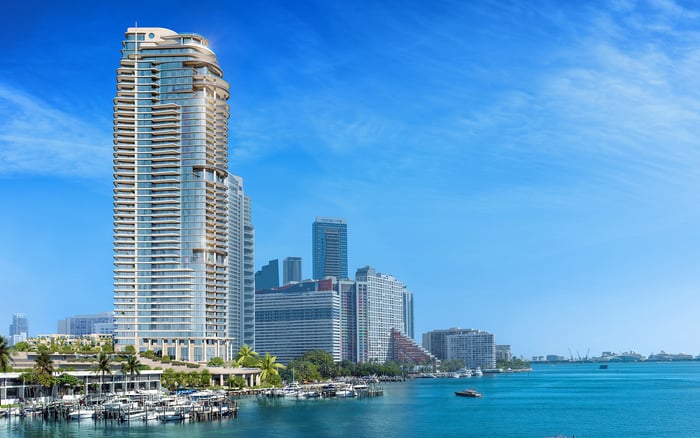
Project marketing is no substitute for unit-level verification. A buyer considering Five Park Miami Beach should test the specific residence against zoning and governing documents rather than infer rental rights from location, branding, or sales language. The same discipline applies to resales and new construction throughout South Florida.
Short stays create a credential-management responsibility within a residential environment. Frequent turnover can heighten risks associated with retained keys, shared entry codes, tailgating, and weak control over access credentials. Other possible exposures include guest fraud, theft, property damage, bodily injury, and failures in communication or operations.
Thoughtful controls can mitigate risk, but only through consistent execution. Buyers should review life-safety equipment, camera disclosures, smart-lock protocols, and safeguards around pools or other amenities. Temporary guests may be unfamiliar with the property, making clear procedures especially important.
For a luxury tower, the inquiry should extend to loading access, visitor registration, parking credentials, elevator authorization, after-hours staffing, package handling, emergency communication, and the process for revoking a guest’s access. Technology helps, but staffing quality and enforcement determine whether the system feels discreet or intrusive.
The wear created by short stays is not confined to an owner’s flooring and furnishings. Higher turnover can mean more luggage, deliveries, housekeeping crews, waste, elevator trips, and movement through corridors and amenities. Those pressures can affect maintenance planning and the atmosphere residents experience, even when the individual residence is professionally managed.
Longer leases generally reduce the cadence of move-ins and credential changes. Minimum lease requirements can shape the likely tenant profile as directly as they shape projected income.
Buyers comparing quieter residential settings might review properties such as Four Seasons Residences Coconut Grove while still confirming the current restrictions for the precise unit. This is not a statement about that project’s leasing policy; it illustrates why neighborhood character and building documents must be assessed together.
Rental flexibility may deepen demand among investors, occasional users, and owners who value the ability to monetize vacancy. The offset can be financing: a rental-heavy or short-term-rental-permissive condominium may face additional project-level lender scrutiny, potentially narrowing the financed-buyer pool.
Even an affluent purchaser may prefer financing for liquidity or portfolio reasons. A cash-oriented investor pool can therefore coexist with a thinner pool of financed owner-occupants.
In Brickell, a buyer touring The Residences at 1428 Brickell should ask a lender to review the building and unit early rather than assume that personal financial strength resolves project-level underwriting. In a resale, future marketability depends not only on the permitted rental model but also on how lenders, insurers, and subsequent buyers view the building.
An investment buyer should model gross revenue against management, cleaning, taxes, insurance, furnishing replacement, licensing, vacancy, booking costs, and any building charges. Legal permission does not guarantee effortless operation. Association approval, guest screening, occupancy enforcement, access control, and tax compliance remain distinct obligations.
A second-home buyer may assign more value to spontaneous personal use than to maximum rental yield. An owner-occupant may prefer familiar neighbors, low guest turnover, and quieter amenities. For these buyers, strict leasing controls are not simply limitations. They are part of the property’s service proposition and may strengthen its appeal among privacy-focused, long-hold purchasers.
Geography does not settle the issue. Buyers can compare urban, waterfront, and hospitality-influenced formats, including W Pompano Beach Hotel & Residences, without presuming any particular rental permission. Every project and unit requires independent confirmation.
The most useful framework is a written matrix. Record municipal zoning, property classification where relevant, minimum lease length, annual rental frequency, application timing, fees, occupancy limits, taxes, licensing, insurance, lender eligibility, and access procedures. Ask for the declaration and every rental-related amendment, not merely a summary from a sales presentation.
Also review meeting minutes, budgets, reserve planning, rules for elevators and move-ins, enforcement practices, and anticipated policy changes. A short-term-rental label should never replace documentary diligence. Rules can distinguish among owners, units, or amendment dates, so counsel should determine how current provisions bind the specific purchaser.
Finally, consider resale through two lenses. Flexible rules may attract yield-oriented capital, while quiet control may preserve a more residential identity. The stronger choice is the one whose buyer pool, financing profile, security infrastructure, and daily atmosphere remain coherent over the intended holding period.
For discreet guidance on South Florida residences aligned with your ownership priorities, connect with MILLION.
If branded residences are on your mind — as a home or as an allocation — we would be glad to share what we are seeing, privately.
Begin a quiet conversationNo single rule applies across the region. Buyers should confirm local zoning, licensing requirements, and building restrictions for the specific residence.
Requirements may include local registrations, tax accounts, operating approvals, and association consent. The applicable steps depend on the property and jurisdiction.
Governing documents may limit rental duration, frequency, occupancy, and approvals. Qualified counsel should confirm how current provisions apply to a specific purchaser and unit.
They affect the income model, frequency of turnover, likely tenant profile, and character of daily building life.
It can increase exposure to retained keys, shared codes, tailgating, guest fraud, theft, property damage, and communication failures.
Review life-safety equipment, camera disclosures, smart locks, amenity safeguards, visitor registration, credential revocation, and emergency procedures.
Higher turnover can increase elevator traffic, luggage movement, waste, service visits, and wear in corridors and amenities.
Yes. Rental-heavy buildings may face additional lender scrutiny, which can narrow financing options for some purchasers.
Not necessarily. They may limit investor interest while strengthening appeal among owner-occupants, privacy-focused buyers, and long-hold purchasers.
Confirm zoning, governing documents, amendments, lease minimums, annual caps, approvals, taxes, insurance, access procedures, and lender eligibility for the exact unit.