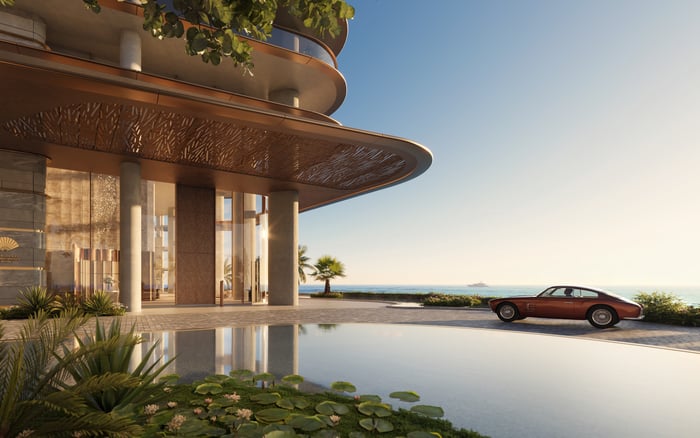
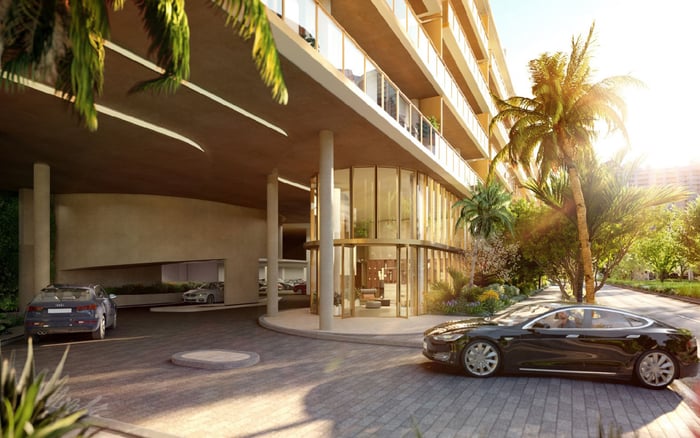
For South Florida buyers who treat practice like a ritual, the new benchmark is not simply “a simulator room,” but a properly specified environment: commercial-grade launch monitoring, true-to-life turf and strike mats, ample ceiling height, and acoustic separation so the experience feels like a private bay at an elite club. In ultra-premium condominium living, that level of performance is increasingly paired with equally serious wellness, concierge, and social programming. The result is a new kind of amenity: part training facility, part entertaining suite, and part all-weather retreat. This editorial selects seven condominium environments where a pro-grade simulator is the right expectation. In some buildings it is a resident-facing club room designed for real practice sessions. In others, the most convincing solution is a private build-out inside the residence, supported by generous ceiling volumes, sensible floor plans, and management policies that accommodate sophisticated AV. In all cases, the goal is the same: a dependable, repeatable swing experience that fits seamlessly into a South Florida lifestyle.
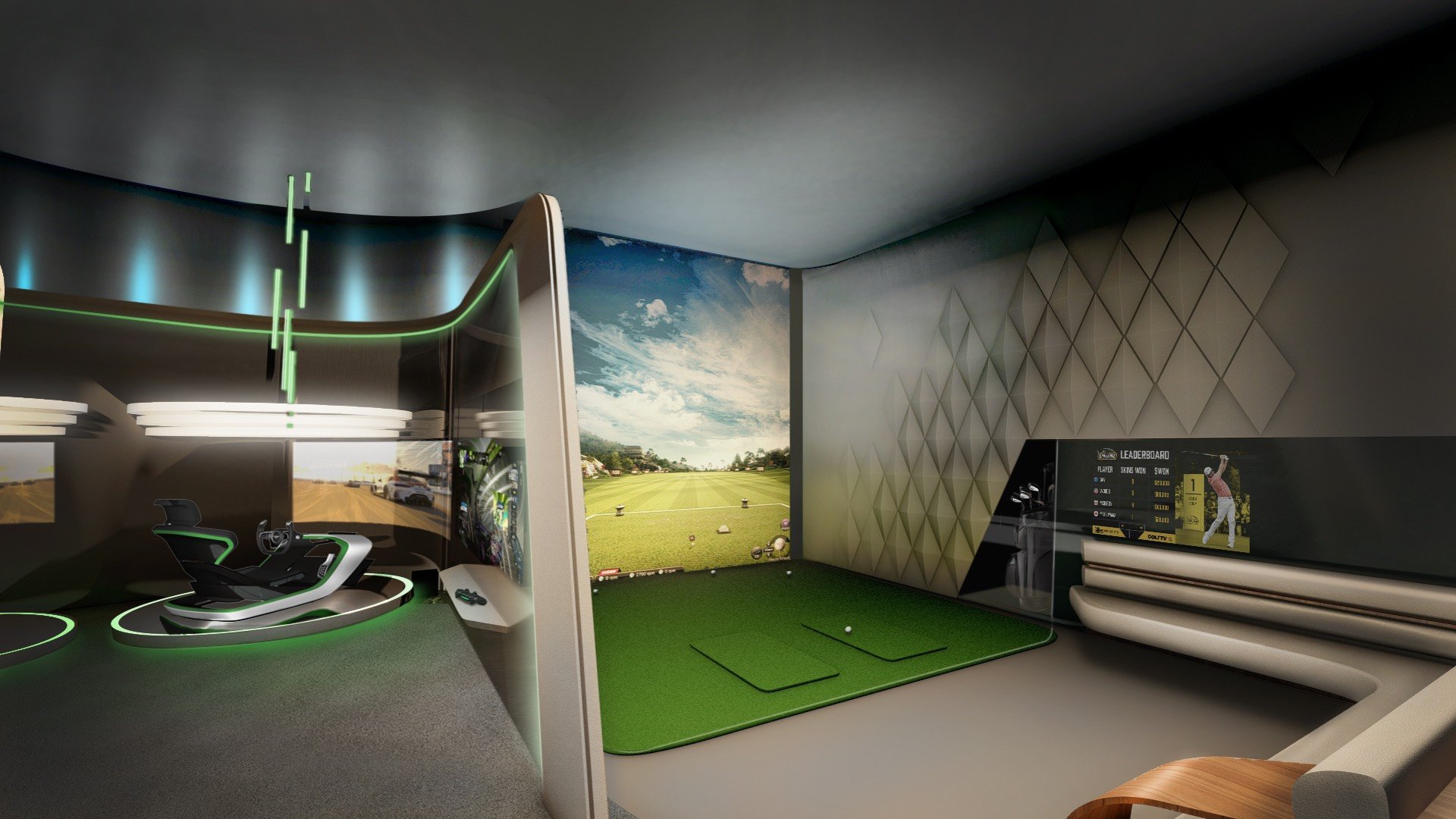
A golf simulator is only as credible as the space that contains it. In a condominium, “professional grade” has less to do with décor and everything to do with performance conditions: enough ceiling height for an uninhibited driver swing, proper throw distance to an impact screen, and sufficient room width to keep swing path and clubhead tracking honest. Add reliable HVAC, acoustic separation, and lighting control that avoids washing out ball-flight visuals, and the amenity reads as a serious practice tool rather than a novelty.
For South Florida luxury buyers, the simulator also needs to operate like a club. That means intuitive booking, discreet access, and a layout that supports both focused sessions and social use. Done right, a simulator becomes the only “course time” that is always available-regardless of humidity, late-afternoon storms, or a tight calendar.
In a single-family home, you can overbuild. In a tower, you need to specify. Before you prioritize a building for its simulator, focus on the conditions that separate credible training from a casual arcade feel.
Start with the physical envelope. Ceiling height and clearance around the hitting area are decisive; even strong players will subtly guard their swing if the space feels tight. Next, evaluate the acoustic strategy. A properly designed room limits both impact noise and conversation spill, keeping the experience refined and neighbor-friendly. Then, look at programming: a simulator integrated into the building’s club rhythm-consistently maintained, managed, and supported by sensible rules-will see far more real use.
Finally, consider whether you may want a private simulator inside the residence. Many ultra-premium owners prefer an “always-on” setup that functions like a personal studio. In that case, due diligence shifts to ceiling volume, electrical capacity, sound isolation, and whether building policies allow the AV integration and protective build-out required for an impact environment.
Below is a buyer-oriented ranking of seven condominium contexts across South Florida where professional-grade simulation is a reasonable expectation-either as a curated resident amenity or as a residence-level opportunity.
1. Brickell tower living - finance district convenience
Brickell’s best towers are built for residents who value efficiency: quick sessions before work, late-night practice, and a social calendar that never requires driving. If you want to pair a simulator routine with a central address, 2200 Brickell reflects the neighborhood’s direction: elevated club amenities, strong lifestyle programming, and modern infrastructure that supports serious AV and tightly controlled environments.
In Brickell, the differentiator is how seamlessly the simulator experience sits alongside fitness, spa, and resident social space. The strongest scenarios feel like an extension of a private club, not a check-the-box game room.
2. Fashion-led ultra-luxury - design as performance
A pro-grade simulator is inherently technical, but at the highest tier it should also be visually resolved. Buildings with fashion-house interior ambition tend to understand lighting, materiality, and acoustic comfort-elements that translate directly into credible simulator environments. 888 Brickell by Dolce & Gabbana signals that mindset: the amenity experience is curated, and spaces are conceived to feel intentional rather than leftover.
For buyers who entertain, the best simulator room is not tucked away. It reads as a destination, with lounge adjacency and a sense of arrival that makes practice feel like part of the evening.
3. Miami Beach oceanfront mindset - practice with a resort cadence
Miami Beach buyers often want their building to function as a private resort: wellness, pool culture, and an easy way to host. A simulator in this context should feel calm and elevated, not loud. 57 Ocean Miami Beach aligns with the oceanfront sensibility, where indoor amenities are expected to be as refined as the outdoor experience.
Here, the appeal is balance. You can practice with intent, then move directly into restorative living-spa-like routines, beach access, and the kind of privacy that helps even a busy weekend feel controlled.
4. Hallandale’s next-tier resort corridor - golf culture meets new luxury
North of Miami Beach, Hallandale has become a compelling option for buyers who want proximity to the core market with a slightly more relaxed daily rhythm. 2000 Ocean Hallandale Beach represents the caliber of oceanfront living where a simulator feels entirely in context: owners expect amenities that support both health and leisure without compromise.
In this corridor, the strongest simulator environments are often paired with serious fitness facilities and lounge spaces that make it easy to turn practice into a social moment.
5. Sunny Isles vertical luxury - high-rise scale, private-club expectations
Sunny Isles continues to draw buyers who want dramatic views and a full-service building ecosystem. In towers of this scale, the simulator should be managed like a premium amenity: polished, consistently maintained, and booked cleanly. Bentley Residences Sunny Isles points to the direction of ultra-luxury in the neighborhood, where residents anticipate destination-level amenities that justify staying in.
If you are a frequent golfer, Sunny Isles also offers a practical advantage: you can maintain year-round consistency, using simulation as your baseline while saving outdoor rounds for true leisure.
6. Fort Lauderdale’s refined, full-service tower lifestyle - a quieter kind of luxury
Fort Lauderdale has matured into a market where understated luxury leads: excellent service, walkable dining, and waterfront energy without Miami’s intensity. For buyers seeking a club-like building environment, Four Seasons Hotel & Private Residences Fort Lauderdale reflects the model where indoor amenities are expected to operate flawlessly.
In a Four Seasons-style ecosystem, the simulator becomes part of a broader wellness-and-service narrative-moving from practice to recovery to an evening out with minimal friction.
7. Palm Beach County’s next chapter - a residential club atmosphere
In Palm Beach County, the appeal is often about cadence: calmer mornings, a higher ratio of space to congestion, and an easy sense of discretion. Alba West Palm Beach captures the kind of residential experience where an owners’ amenity suite can be thoughtfully programmed, including spaces that translate well to simulation.
For buyers who split time between cities or keep multiple residences, a dependable simulator amenity can become the anchor that keeps your swing consistent across travel.
On a tour, the simulator should answer practical questions immediately. Can you take a full driver swing comfortably? Does the room feel ventilated after multiple users? Is the lighting controllable and flattering rather than harsh? Are the lounge furnishings arranged like the space is meant to be used-not merely photographed?
If possible, stand at the hitting position and scan the room. The best setups have clear safety margins, obvious ball containment, and an overall sense that the designer understood real play. A refined simulator is quiet enough for conversation and isolated enough that you never feel you are “bothering” other residents.
For some buyers, the ideal is not a shared amenity at all. A private simulator inside the residence can be the most luxurious version, especially for daily practice or lessons. In condos, the highest-risk mistakes are typically acoustic and structural: impact noise, vibration transfer, and improper build-outs that do not respect the building’s rules.
A successful in-residence simulator starts with room selection. Favor spaces with generous ceiling volume and a layout that keeps the hitting zone away from party walls when possible. Invest in true sound isolation-not just soft finishes. Plan clean cabling paths, lighting control, and a dedicated equipment zone so the room still feels like a home, not a server closet.
In ultra-premium buildings, amenities increasingly resemble a private members’ club: wellness suites, recovery modalities, curated lounges, and quiet work areas. The simulator belongs in that world, not in the old model of a generic “game room.” At its best, it is intentional and adult: a place for improvement, concentration, and hosting.
For buyers focused on long-term livability, a pro-grade simulator also functions as a weather hedge. South Florida’s outdoor lifestyle is unmatched, but the calendar is not always cooperative. The right indoor golf experience preserves the pleasure of the sport without requiring you to schedule around heat, rain, or travel.
What makes a golf simulator “professional grade” in a condo? Adequate swing clearance, realistic impact materials, and reliable tracking in a properly controlled room.
Do luxury buildings usually include simulator bays as a standard amenity? It is increasingly common in top-tier projects, but quality and programming vary significantly.
Should I prioritize a shared simulator amenity or a private in-unit build-out? Shared is convenient and social; private is best for daily practice and maximum discretion.
What room features matter most when touring a simulator space? Ceiling height, ventilation, lighting control, and acoustic separation are the fastest indicators.
Can simulator noise be an issue in high-rises? Yes, which is why proper isolation and impact design matter more than décor.
Is a simulator mainly for entertainment, or can it support real practice? With the right room and equipment, it can be a serious training tool, not just a game.
How do I keep a simulator room feeling luxurious rather than technical? Conceal equipment, use integrated lighting, and add lounge seating that suits the building’s style.
Does location in South Florida change how valuable this amenity feels? Yes; in denser areas, it adds convenience, while in resort zones it extends all-weather living.
What should I ask building management about simulator access? Ask about booking rules, maintenance standards, and whether outside instruction is permitted.
Can a simulator increase day-to-day enjoyment of a second home? Absolutely; it creates an instant routine and a repeatable experience whenever you arrive.
To compare the best-fit options with clarity, connect with MILLION Luxury.
If branded residences are on your mind — as a home or as an allocation — we would be glad to share what we are seeing, privately.
Begin a quiet conversation