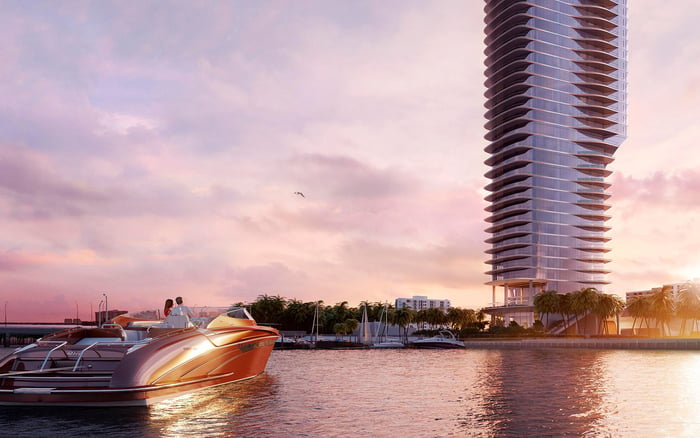
For seasonal owners with significant art collections, the essential luxury is continuity of care. A buyer-focused examination of private collection responsibilities, lighting specifications and installation approvals separates branded presentation from contractual commitments.

For a collector, a seasonal residence must do more than present beautifully on arrival. It should support a clearly defined plan for the paintings, sculpture and sensitive objects left behind. The decisive questions are about responsibility: who can enter, who monitors conditions, who authorizes intervention and who pays when specialist attention is required.
At The Ritz-Carlton Residences® West Palm Beach, buyers should distinguish the appeal of a branded residential setting from documented private collection management or conservation standards. Common-area art and private collection care are separate commitments.
Seasonal occupancy also requires a precise definition. This review considers how to operate a whole-owned home during extended absences; it does not establish a fractional-interest or rotating seasonal-allocation program at either project. Buyers should confirm the legal ownership structure through the applicable offering documents.
For the West Palm Beach offering, request current condominium documents to confirm the legal project identity, address, residence count and ownership terms. Any pricing used in a purchase comparison should also be confirmed directly before relying on it.
Identify the developer, any brand licensor and any proposed service operator separately. That distinction matters when assigning responsibility for promised services: which legal entity undertakes each obligation in the governing agreements? A brand name should not substitute for identifying the party responsible for performance.
A parallel review of 619 Residences by Foster + Partners + Nobu Hospitality should begin by confirming the legal project identity, address, developer and operating arrangements. Those particulars must be established before the project can be treated as a verified operational comparable. The name alone does not establish collection services, lighting performance or installation permissions.
At either project, any presentation of common-area artwork should be evaluated separately from services for an owner's collection. A shared aesthetic environment is not a commitment to inventory, store, rotate or conserve privately owned works.
For shared artworks, ask whether pieces will be owned, loaned, commissioned or rotated. Establish who controls curation and conservation, and whether the collection buyers see at purchase is intended to remain. A compelling presentation is not a permanent inventory without written confirmation.
For private works, request a separate scope of responsibility covering inventory records, condition photography, handling permissions, storage arrangements, rotation requests and access by outside conservators. Ask whether building staff or an independently contracted specialist would deliver each proposed service, and have insurance responsibilities reviewed alongside the handling agreement.
A concierge introduction may be useful, but it is not the same as accepting custody of valuable objects. The agreement should identify where coordination ends and professional collection care begins.
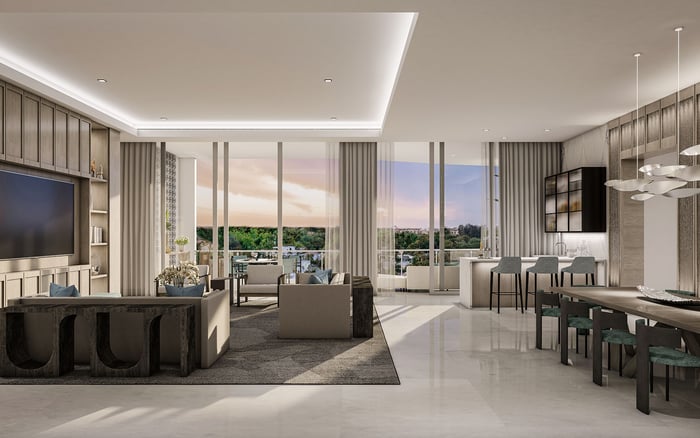
“Museum-quality artwork” is not a technical specification for museum-grade lighting. An artwork description does not establish conservation performance in common spaces or within a private residence. Nor should a beautifully illuminated rendering be read as a schedule of included fixtures.
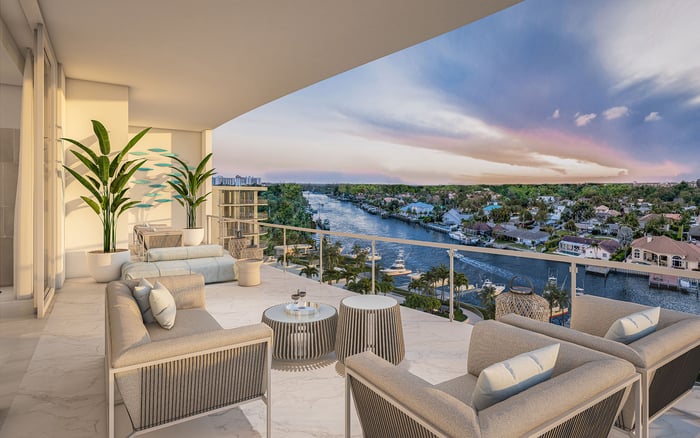
Before relying on a rendering, confirm whether its lighting, furniture, décor and fixtures are included in the purchase or would require additional payment. A collector should request both an inclusion schedule and a technical lighting package for the intended residence.
That package should identify fixtures, color rendering, color temperature, ultraviolet control, illuminance and dimming capabilities. Ask a collection specialist to assess the proposal for the actual works rather than adopting a single setting for every object. Establish who designs, approves, installs and pays for any upgrades, including related electrical work.
The objective is a documented lighting design that the owner's advisers can evaluate before installation. The phrase “museum-grade” is no substitute for that review.
Detailed owner art-installation procedures remain unestablished here for either project. That is a due-diligence question, not evidence that ambitious installations are prohibited. Before commissioning a display wall, suspended piece or substantial sculpture, request the applicable alteration rules and written review requirements.
The approval conversation should cover architectural review, wall penetrations, electrical changes and structural loads, along with contractor insurance, elevator reservations, delivery access and protection of common areas. Ask what drawings, load information or installation methods must be submitted, who approves them and when work may begin.
Coordinate the art installer's proposal with the interior design and lighting plans. A purchase decision should not rest on assumed permission that remains unresolved when the work is ready to ship. Where approval is conditional, record the conditions and any associated costs before authorizing fabrication or transport.
A complete operating agreement, fee schedule, response-time standard and seasonal arrival-and-departure protocol remain unestablished here for either residence. Buyers should request those details without assuming that specialist services either exist or are unavailable.
Start with environmental oversight. Ask whether humidity, temperature, leaks and power interruptions are monitored, where alerts go and who responds while the owner is away. Separate notification from intervention: an alert does not establish who has authorization to enter or permission to engage a specialist.
Then document routine care: pre-arrival preparation, housekeeping, package handling and post-departure inspections. Specify exclusions around artwork and clarify the approval process for extraordinary expenditure. Carry the same questions into a separate review of Mr. C Residences West Palm Beach, without presuming identical services or contractual terms.
The strongest purchase file would bring together current offering documents, a service-and-fee schedule, an owner-specific collection-care agreement, lighting specifications and written installation requirements. Each document should answer a distinct question; a marketing promise should not stand in for an operating obligation.
For a seasonal collector, the distinction is ultimately between an artful setting and a home with a documented plan for art. Both can be desirable; only the latter addresses what happens between visits. Resolve open responsibilities before relying on the residence as a long-term setting for important works.
Explore a more considered approach to South Florida ownership with MILLION.
If branded residences are on your mind — as a home or as an allocation — we would be glad to share what we are seeing, privately.
Begin a quiet conversationSeasonal occupancy describes when a home is used, not its legal ownership structure. This review considers whole-owned homes and does not establish a fractional program at either project.
Confirm each project's legal identity, address, developer and ownership terms through current offering documents. Review operating arrangements separately from the branding.
Use current condominium offering documents to confirm residence counts and request current pricing before making comparisons. Resolve discrepancies before relying on a purchase analysis.
Buyers should identify the entity responsible for each service in the governing agreements. Do not assume that the brand licensor, developer and service operator have identical obligations.
A common-area art offering does not establish private collection management. Inventory, handling, storage, rotation and conservation responsibilities should be confirmed separately in writing.
No; an artwork description does not establish technical lighting performance. Buyers should request fixture schedules and specifications for specialist review.
Do not assume inclusion from a rendering alone. Request a written inclusion schedule and confirm the cost of any proposed upgrades.
Request written requirements for architectural review, wall penetrations, electrical changes, structural loads and contractor insurance. Delivery access, elevator reservations and common-area protection should also be addressed.
It should define environmental monitoring, alert routing, entry authorization and response responsibilities. Arrival preparation, departure inspections, fees and exclusions around artwork should also be documented.
Not without confirming its legal project identity, address, developer and operating arrangements. Its name alone does not establish private collection care, lighting specifications or installation permissions.