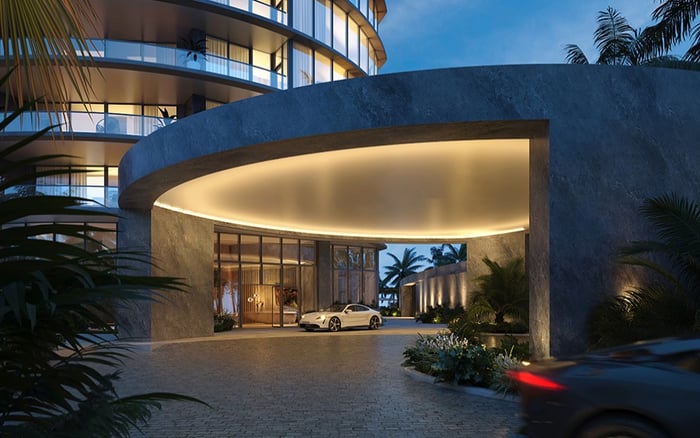
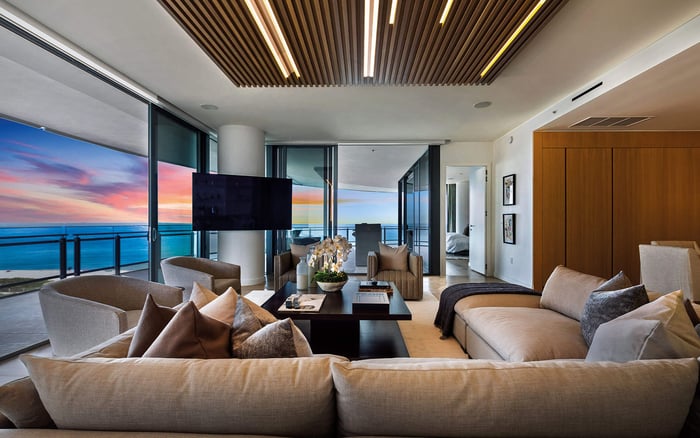
For seasonal owners at Fendi Château and Armani Casa Pompano Beach, service prestige is only the starting point. Written inspection duties, private-unit access permissions, and vendor-response terms deserve their own due diligence.
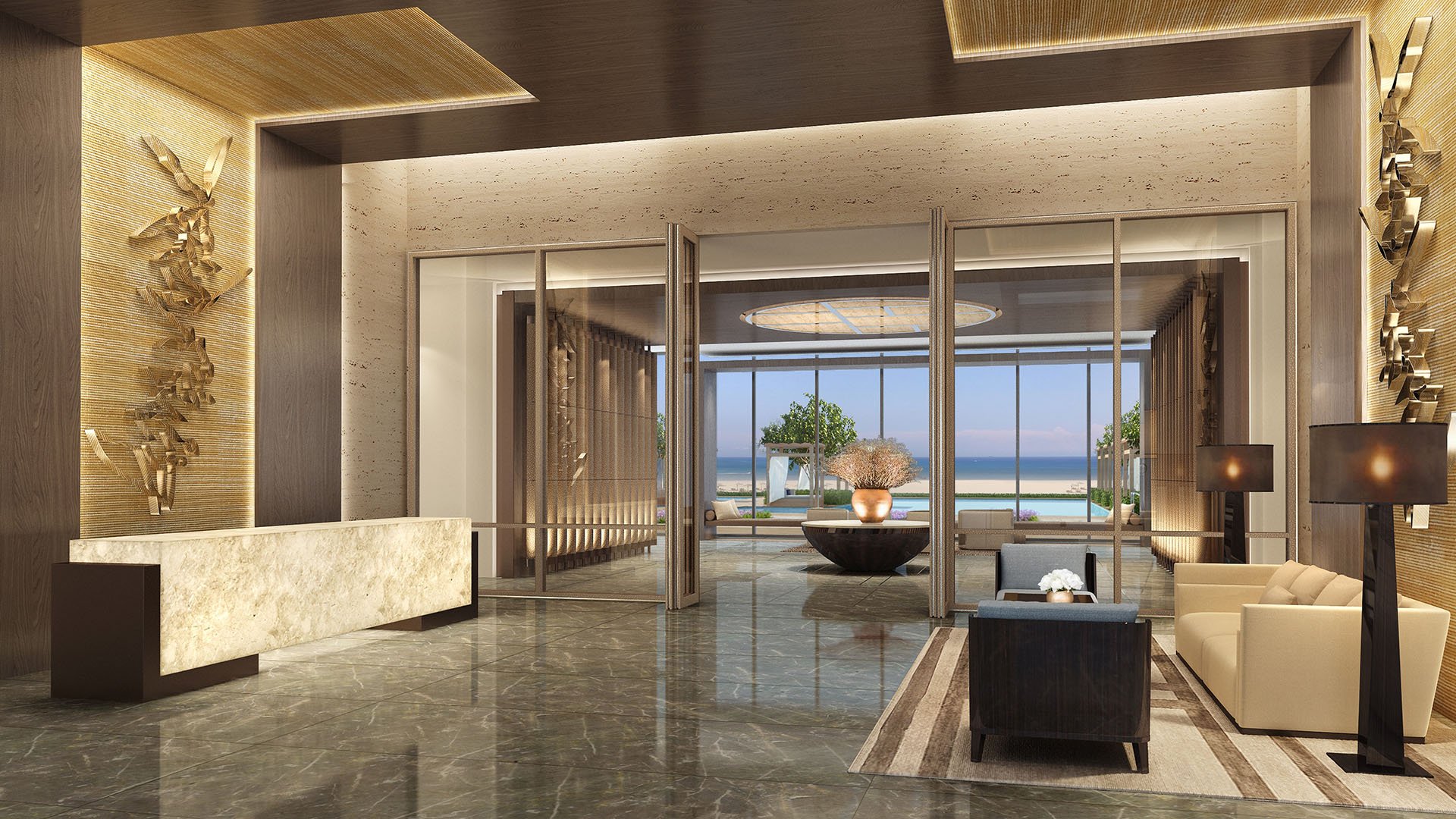
For a seasonal oceanfront owner, luxury includes the confidence to leave. The question is not simply whether a residence offers a concierge, but what happens when the owner is elsewhere and a storm requires someone to inspect, communicate, and act. Hospitality and emergency oversight may intersect, but they are not interchangeable promises.
At Fendi Château Residences Surfside and Armani Casa Residences Pompano Beach, that distinction deserves particular attention. Both present service-oriented residential lifestyles. Guaranteed private-unit post-storm inspections and measured emergency vendor response times are not established here for either property. That does not mean either lacks a plan. It means buyers should request the applicable written procedures before relying on them.
The strongest ownership arrangement identifies who is responsible, what that person may authorize, and how the owner will receive confirmation. A reassuring conversation is useful; a defined scope of service matters more when decisions must be made remotely.
Fendi Château occupies 9349 Collins Avenue in Surfside. Its service proposition emphasizes five-star, white-glove service and includes multilingual concierge staffing available around the clock. Those features do not constitute an automatic commitment to enter and inspect every absent owner's residence after a storm.
Its outdoor amenities include two swimming pools, pool- and beachside service, cabanas, an outdoor jacuzzi, and an ocean-facing gazebo with a summer kitchen. For buyers, that amenity mix raises specific operational questions: who inspects these areas, who determines whether they can reopen, and how are owners informed of restrictions?
Private-residence oversight can also be a separate engagement. Available private-unit services associated with the property include inspections, maintenance coordination, repair oversight, and owner reporting, distinct from condominium-association operations. Their availability should not be read as an association endorsement or a storm-response guarantee. Request a contract specifying the residence, the inspection scope, and the circumstances under which access is permitted.
Armani Casa's advertised service offering in Pompano Beach includes security and full-service concierge. Its pool program includes a resort-style pool with cabanas and a sundeck, plus a 45-foot oceanfront lap pool. The advertised wellness offering includes a spa, sauna, steam room, hammam, cold plunge, and meditation garden.
These are project features, not proof that staffing arrangements or emergency operating procedures are already in place. Guaranteed private-unit emergency maintenance, post-storm inspection commitments, owner-notification procedures, and emergency vendor response times are not established here.
A seasonal buyer should therefore separate the promised residential experience from the proposed operating framework. Ask which service commitments will appear in governing documents or a separate agreement, when they become effective, and who will administer them. For amenities, request the intended inspection and reopening responsibilities. For the private residence, ask whether oversight is included, optional, or subject to an independent contract. Keep those answers distinct; a full-service concierge description should not stand in for all three.
A practical absence plan starts with permission. Ask who may enter the residence, how keys or access credentials are controlled, and whether authorization covers routine visits, storm-related checks, or both. The agreement should distinguish an observation visit from permission to shut off equipment, engage a contractor, or approve repairs.
Request an inspection schedule for ordinary absences and a separate trigger for post-storm checks, subject to safe access. Specify the intended scope: visible water intrusion, accessible doors and windows, terrace conditions, and other agreed areas. Ask what cannot be assessed during the visit and when a specialist would be called.
Owner communication deserves equal precision. Request time-stamped photographs, a written condition summary, and a clear escalation path if the owner cannot be reached. Establish spending limits, a backup decision-maker, and an after-hours contact. These are terms to negotiate, not services to presume. A seasonal residence is easier to oversee when permission, documentation, and financial authority are settled before departure.
A building-wide assessment and an interior residence check answer different questions. Buyers should ask who evaluates the building envelope, balconies, elevators, generators, pumps, and pools, and who authorizes access or re-entry. Separately, ask who checks the private unit for water intrusion once entry is permitted.
Request a written sequence rather than a blanket assurance that the property will be checked. Does a building notice mean common areas were assessed, or that the residence itself was visited? Who notifies the owner if a unit is inaccessible? What happens if visible damage requires further investigation? The answers should define both responsibilities and limits.
This distinction also offers a useful comparison for buyers considering Ocean House Surfside. Apply the same questions without assuming that another property has equivalent protocols. A polished arrival experience should be evaluated separately from the documented arrangements for an absent owner.
For either property, ask for the preferred contractor roster and its backups, along with the person authorized to make the first call. Clarify whether a response commitment means acknowledging a request, attending the property, beginning work, or completing a repair. These are distinct milestones; a contract should not treat them as interchangeable.
Ask whether priority restoration arrangements exist, what they cover, and what exceptions apply. Establish emergency procurement rules, expenditure thresholds, and the approval route for work exceeding the owner's standing authorization. Request a procedure for situations in which the preferred contractor is unavailable or access remains restricted.
Buyers comparing The Ritz-Carlton Residences® Pompano Beach can use the same framework. The comparison should focus on documented scope and authority, not an assumed response advantage attached to a brand. No verified mobilization performance is established here for Fendi Château or Armani Casa, so speed remains a contractual question rather than a claimed distinction.
Before committing, request the relevant building procedures, private-unit oversight agreement, entry authorization, notification process, and vendor-response terms. Look for consistency across them: a manager cannot credibly promise an interior inspection without an access arrangement, and a contractor call does not itself establish authority to approve the work.
For Fendi Château and Armani Casa, the decision is not which name sounds more reassuring. It is which proposed ownership arrangement provides an acceptable, written answer to absence, inspection, and action. The most discreet form of luxury is knowing what will happen without having to improvise from a distance.
For a considered approach to South Florida seasonal ownership, explore MILLION.
If branded residences are on your mind — as a home or as an allocation — we would be glad to share what we are seeing, privately.
Begin a quiet conversationA guaranteed post-storm private-unit inspection is not established here. Owners should request written inspection duties and entry terms rather than infer them from white-glove service.
Yes, it advertises security and full-service concierge. Those descriptions do not establish guaranteed private-unit emergency maintenance.
No. An undisclosed protocol does not establish a lack of capability; buyers should request the applicable written procedures.
Yes, private-unit oversight can be a separate service. Buyers should clarify its contractual scope, permissions, and relationship to building operations.
Specify who may enter, how credentials are controlled, and whether permission covers routine inspections, storm checks, emergency shutoffs, or contractor access.
Request time-stamped photographs, a written condition summary, and any access or inspection limitations. Agree on an escalation process for conditions requiring specialist attention.
Ask who checks the envelope, balconies, elevators, generators, pumps, and pools. Separately clarify who authorizes access and who inspects private-unit water intrusion.
Distinguish request acknowledgment, attendance, work commencement, and completion. Ask for preferred and backup contractors, applicable exceptions, and any priority restoration terms.
No. Advertised project features do not establish that staffing or emergency procedures are already in place.
Set written spending limits, emergency procurement permissions, and an approval route for larger expenditures. Name a backup decision-maker if the owner cannot be reached.