Lending a Miami Beach seasonal residence to relatives during private-school admissions visits calls for more than a calendar check. Owners should distinguish vacancy from unoccupancy, review named-insured residency language, and confirm the proposed arrangement with their insurer in writing.
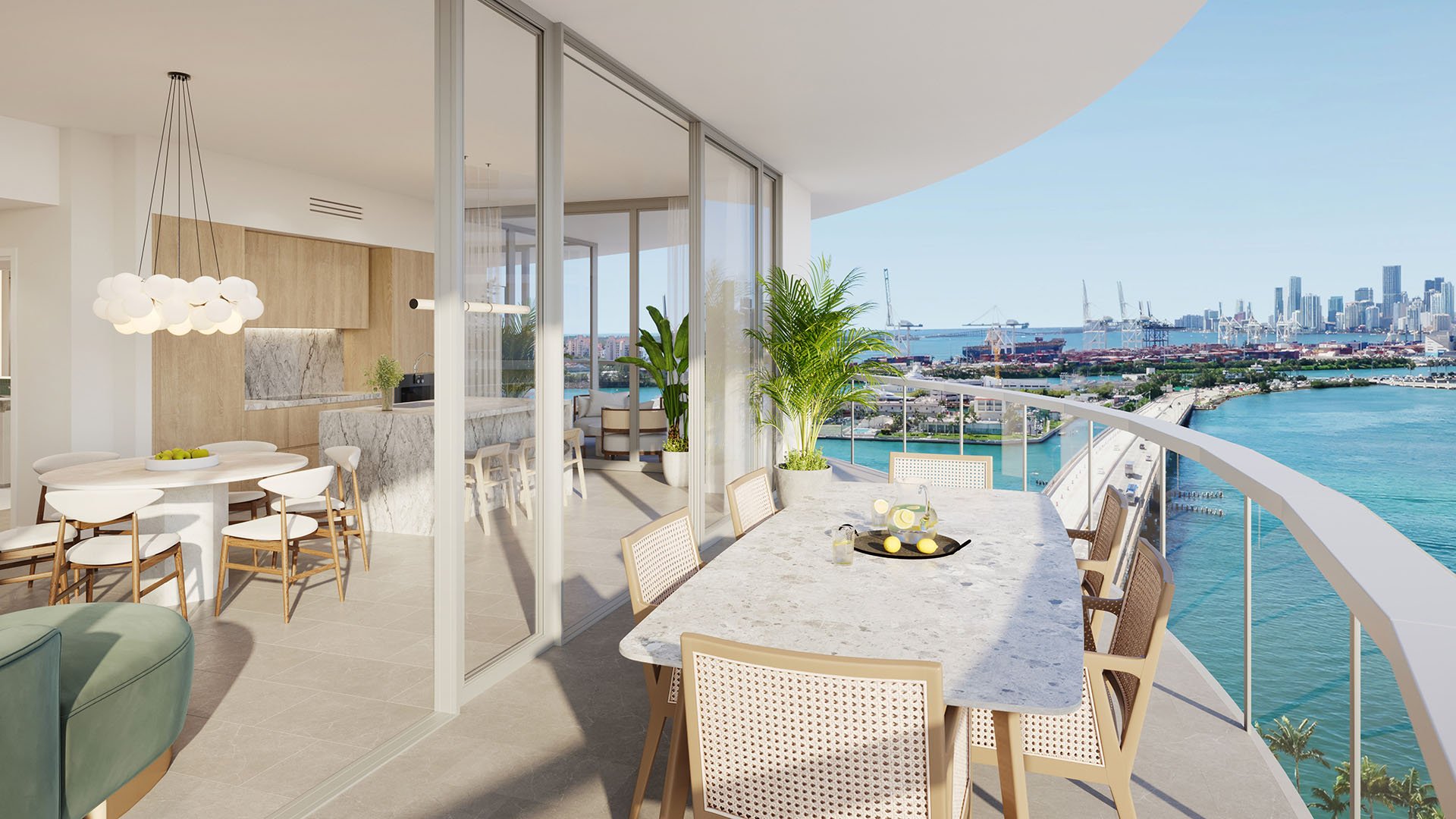
A Miami Beach residence can offer a calm setting for a family navigating school visits and admissions appointments. Lending it to a sibling, adult child, or close friend may feel like a simple extension of hospitality. For insurance purposes, however, the question is not merely who has the keys. It is whether the actual living arrangement fits the policy.
A guest’s presence does not automatically satisfy a named insured’s residency requirement. Nor does an elegantly furnished interior establish occupancy while everyone is elsewhere. Before extending an invitation, owners should separate three questions: how the residence is classified, whose residency matters, and whether the proposed use requires notice or different coverage.
For a buyer considering 57 Ocean Miami Beach, that review belongs alongside the intended ownership calendar. The project provides a setting for this discussion, not an indication of particular insurance terms or permission to accommodate guests.
Vacant and unoccupied are not interchangeable. A furnished seasonal home temporarily unused may be unoccupied. An empty home with no planned resident may be vacant. The distinction matters because policy provisions can treat those conditions differently.
Furniture, utilities, and personal belongings do not, by themselves, establish that someone occupies the residence. An owner’s absence, in turn, should not automatically be described as vacancy without examining the facts and applicable policy wording.
Describe how the property actually functions: who normally returns there, when it is used, whether anyone currently lives there, and what happens between stays. A largely empty dwelling without a planned resident may need vacant-dwelling coverage rather than coverage appropriate for a furnished seasonal home.
Routine house checks are not equivalent to residential occupancy. Ask what monitoring the insurer requires, but do not assume an inspection visit answers the separate question of who resides there.
Homeowners coverage may turn on the definition of “residence premises.” That can make the named insured’s relationship to the address important, even when a relative sleeps there every night.
Consider an owner who remains elsewhere while a family member uses the Miami Beach home for admissions visits. The guest’s stay may be relevant to occupancy, but it should not be assumed to resolve the owner’s residency requirement. The questions are related, not identical.
The same distinction deserves attention when evaluating Faena House Miami Beach as a seasonal base. Rather than asking only whether family members may stay, ask the insurer whether the proposed owner-and-guest arrangement satisfies the policy language.
Request a written response identifying any applicable conditions or endorsements. A general assurance that the home is “occupied” is less useful than an answer addressing the named insured, the residence-premises definition, and the planned periods of absence.
An admissions itinerary should not be treated as an insurance grace period. The purpose of a stay does not establish an admissions-related exception, and owners should not assume a Miami Beach-specific occupancy deadline.
Common homeowners-form language excludes vandalism, malicious mischief, and glass breakage after more than 60 consecutive days of vacancy immediately before a loss. Check the applicable policy: this is not a universal rule that all homeowners coverage ends after 60 days.
Nor should that provision be applied automatically to unoccupancy. First establish which condition the policy addresses, then identify the affected losses, the period involved, and any relevant endorsements.
Avoid planning around a presumed countdown. If the residence will sit unused before or after the family visit, describe those intervals as well as the stay itself. The insurer needs the broader pattern of use, not simply the guests’ arrival dates.
Present a rent-free family stay as such, but do not treat “rent-free” as a substitute for policy review. Explain any expense contributions, reimbursement arrangements, owner access, and written occupancy agreement rather than deciding in advance that those details are immaterial.
Paid use raises additional questions. Standard HO-3 liability wording includes an exception to the rental-related business exclusion for occasional rental of an insured location used only as a residence. That exception does not establish that every rental arrangement satisfies the separate residence-premises requirements.
Short-term rental use can also conflict with owner-occupied homeowners coverage and may require an insurer-approved endorsement or a different policy. Do not treat an informal guest arrangement and a paid booking as equivalent simply because both last a few weeks.
Disclose the arrangement precisely and have the insurer evaluate it. Do not infer an answer about the entire policy from a single liability exception.
For someone assessing Five Park Miami Beach for seasonal ownership, a written use plan can make insurance discussions more concrete. Keep the description factual rather than relying on labels such as “family home” or “occasional guest.”
Include the following in the request:
The occupants and their relationship to the named insured.
Arrival and departure dates, including expected unused intervals.
Whether the owner will also reside there and retain access.
Any rent, expense contributions, or reimbursement arrangements.
Any occupancy agreement and the planned use after departure.
Then ask whether rent-free family occupancy is permitted, whether the owner must also reside there, and what notice, endorsements, or monitoring are required. These are policy-specific questions, not universal requirements for every seasonal residence.
Some carrier forms restrict coverage when occupancy changes go unreported. Review the notification language before the arrangement begins, and ask how to handle an extension or a change from a complimentary stay to paid use. Retain the response with the policy and any issued endorsements.
The insurance review should cover the period after the family leaves. Will the owner return, will another guest arrive, or will the home remain unused? Those facts help frame the next conversation about classification and coverage.
For seasonal owners, the objective is not to complicate hospitality. It is to ensure that the policy has been evaluated against the residence’s actual planned use. School visits may explain the invitation; the insurance contract determines the relevant coverage conditions. Resolve those questions before the stay rather than relying on assumptions about furniture, family relationships, or a familiar day count.
For a considered approach to Miami Beach seasonal ownership, explore MILLION.
If branded residences are on your mind — as a home or as an allocation — we would be glad to share what we are seeing, privately.
Begin a quiet conversationNo. A furnished home temporarily unused may be unoccupied, while an empty home with no planned resident may be vacant; the applicable wording matters.
Furniture, utilities, and personal belongings do not by themselves establish residential occupancy. The actual pattern of use must be evaluated.
Not automatically. Coverage may depend on the named insured’s residency under the policy’s residence-premises definition, not simply on someone staying at the address.
Owners should not assume that admissions-related stays create an exception. The proposed arrangement must be reviewed against the actual policy.
No. Common language addresses vandalism, malicious mischief, and glass breakage after more than 60 consecutive days of vacancy immediately before a loss; the applicable policy controls.
House checks should not be equated with someone residing at the property. Ask separately about monitoring conditions and occupancy requirements.
Ask the insurer whether the arrangement is permitted and whether notice or an endorsement is required. Rent-free use does not automatically resolve residency conditions.
No. That exception does not establish compliance with separate residence-premises requirements, and short-term rental use may require different coverage.
Describe the occupants, dates, owner presence and access, payments or expense contributions, and any occupancy agreement. Include unused periods before and after the stay.
Clarify whether the owner will return, another occupant will arrive, or the residence will remain unused. Ask whether the resulting use requires notice or a coverage change.