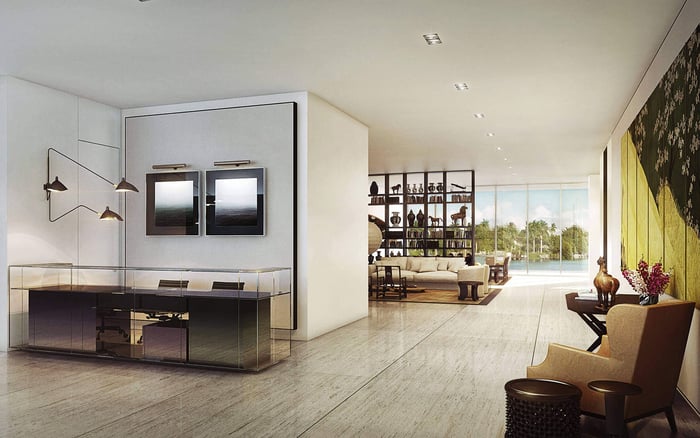
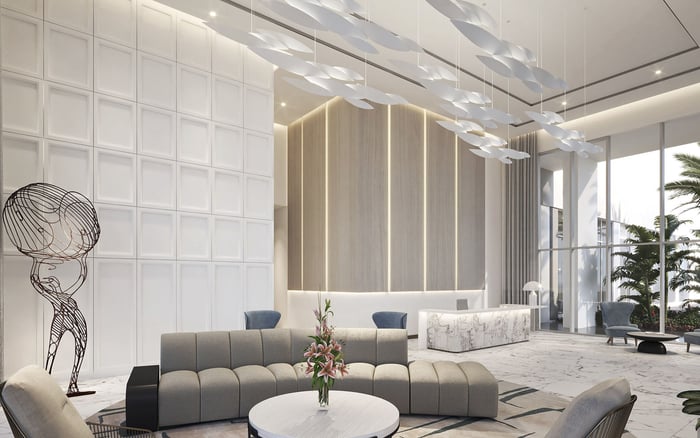
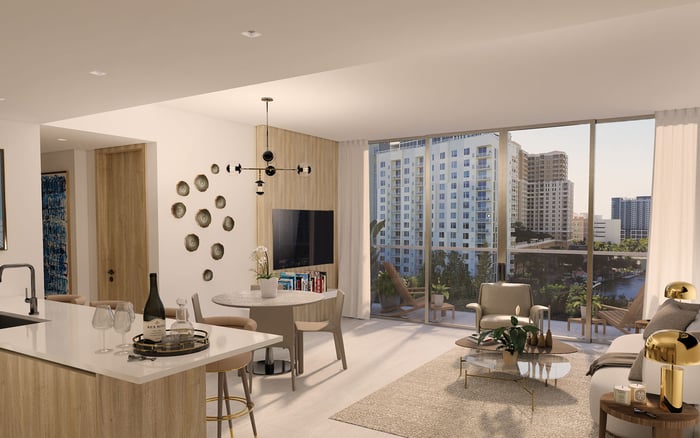
A practical due-diligence guide for buyers considering Riva Residenze and Sixth & Rio for art-collector living, with attention to floor plans, light, environmental control, installation access, insurance, and storm planning.
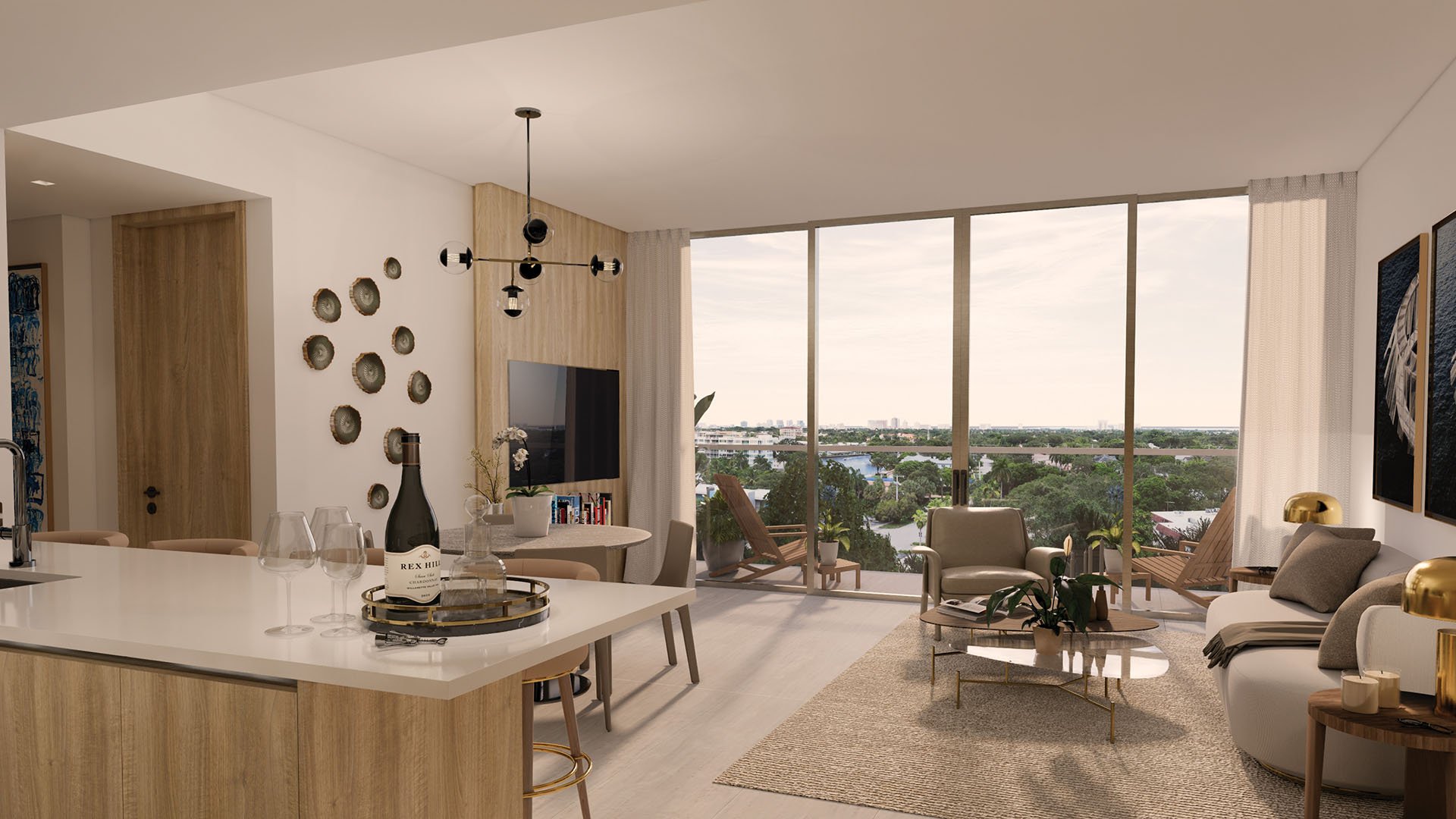
For a collector, a condominium must function as both a home and a setting for art. Architecture, natural light, circulation, climate, security, and daily routines can all affect how a collection is displayed and cared for.
Buyers comparing Riva Residenze Fort Lauderdale and Sixth & Rio Fort Lauderdale should evaluate the exact residence under consideration. Renderings, finish selections, and general project presentations cannot establish whether a particular floor plan will support a collection’s dimensions, materials, and installation needs.
Start with usable wall planes rather than total interior area. Identify where doors, glazing, millwork, switches, thermostats, vents, and circulation routes interrupt potential display locations. Then consider whether furniture placement leaves appropriate viewing distances for large works.
Map arrival, entertaining, and private spaces to determine where significant pieces could be seen without obstructing movement. A residence may feel open while offering relatively few resolved locations for paintings, photography, sculpture, or objects in vitrines.
A broader Fort Lauderdale review may also include Four Seasons Hotel & Private Residences Fort Lauderdale. Any comparison should focus on the selected residence and documented building procedures rather than assumed similarities among projects.
Create an inventory of oversized works, fragile media, sculpture, works on paper, powered pieces, and objects requiring secure cases. Assign possible locations on the floor plan before making design decisions.
Measure clear wall widths and heights while accounting for baseboards, soffits, outlets, controls, and door swings. Check corridor turns, doorway clearances, and viewing distances. For sculpture or unusually heavy objects, consult qualified professionals about placement and structural requirements.
Sightlines deserve equal attention. An important piece may benefit from a composed view from the entry, but its location should also be considered in relation to deliveries, gatherings, household traffic, and security.
Observe daylight conditions during a private tour and ask how orientation, glazing, and shading may affect display areas. Direct light, glare, reflections, and heat can influence both placement and the viewing experience.
Request technical information about glazing, window treatments, lighting, HVAC zoning, humidity management, monitoring, maintenance, and outage procedures. A conservator or other qualified specialist can assess the documentation against the needs of the specific collection.
Artificial lighting should be planned for flexibility as works rotate. Beam spread, heat, ultraviolet exposure, color rendering, fixture position, and control options may all require specialist review.
Confirm how art, crates, pedestals, and equipment would reach the residence. Review loading procedures, service-entry clearances, elevator dimensions and capacity, corridor turns, door widths, ceiling heights, contractor rules, and permitted installation hours.
Discuss wall construction, anchoring, reinforcement, electrical work, specialty lighting, and window treatments with the appropriate professionals. Determine which alterations require building approval and what documentation art handlers or contractors must provide.
Insurance should be reviewed alongside access and installation planning. Ask the collector’s broker and insurer about transit, installation, environmental expectations, emergency procedures, and any building-related requirements. Standard condominium procedures should not be assumed to address every collection’s value, medium, or scale.
Storm planning is part of art-focused due diligence in South Florida. Buyers should request applicable building procedures and independently review backup systems, climate continuity, emergency access, protective measures, and insurance obligations.
The goal is not to rely on a single feature or sales statement. It is to understand how the residence, building procedures, professional advisers, and collection-care plan would work together during both routine occupancy and disruptions.
An art adviser can help plan placement and future growth. A conservator can evaluate light and environmental needs. A specialist installer can test access and anchoring assumptions, while insurance, legal, design, and property professionals can review their respective areas.
The central buying principle is simple: judge each residence against the collection’s actual dimensions, sensitivities, installation requirements, and relationship to everyday life.
What should an art collector assess first? Begin with the collection inventory and the exact floor plan, then identify workable display locations, access constraints, and environmental requirements.
Why is usable wall area more important than total interior area? Doors, glazing, controls, vents, millwork, and circulation can reduce the space available for safe and visually coherent displays.
What measurements should buyers take during a tour? Record clear wall dimensions, ceiling heights, door widths, corridor turns, viewing distances, and relevant service-access clearances.
How can glazing affect art placement? Glazing may reduce wall area and introduce direct light, glare, reflections, or heat, so its performance should be reviewed for the specific collection.
Should buyers verify humidity and temperature control? Yes. Request documentation for HVAC zoning, monitoring, maintenance, humidity management, and continuity during an outage.
Why do elevator and loading details matter? Large works, crates, pedestals, and installation equipment may require specific clearances, capacities, routes, and scheduling procedures.
When should specialist installers become involved? Involve them before closing when the collection includes oversized, heavy, fragile, or technically complex pieces.
What insurance questions should collectors ask? Ask about coverage and requirements during transit, installation, occupancy, environmental disruption, and storm preparation.
Who can help evaluate a residence for art? Depending on the collection, the team may include an art adviser, conservator, specialist installer, insurer, attorney, designer, and relevant property professionals.
What is the key principle when comparing the two projects? Evaluate the exact residence and documented building procedures against the collection’s needs rather than relying only on project-level presentations.
To compare the best-fit options with clarity, connect with MILLION.
If branded residences are on your mind — as a home or as an allocation — we would be glad to share what we are seeing, privately.
Begin a quiet conversation