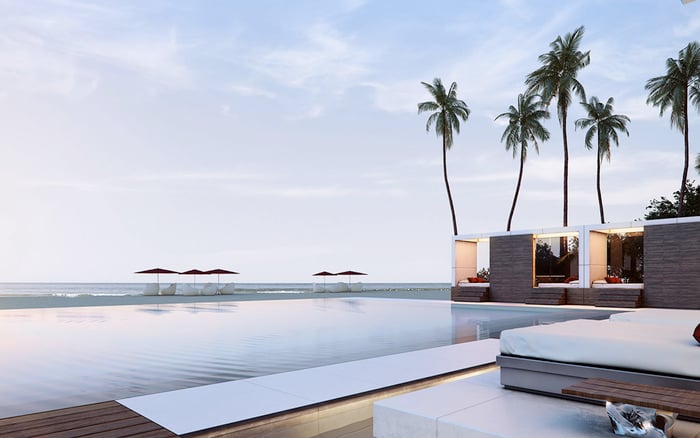
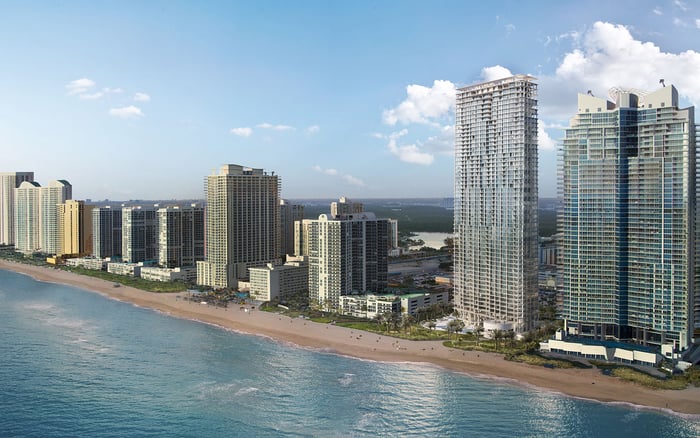
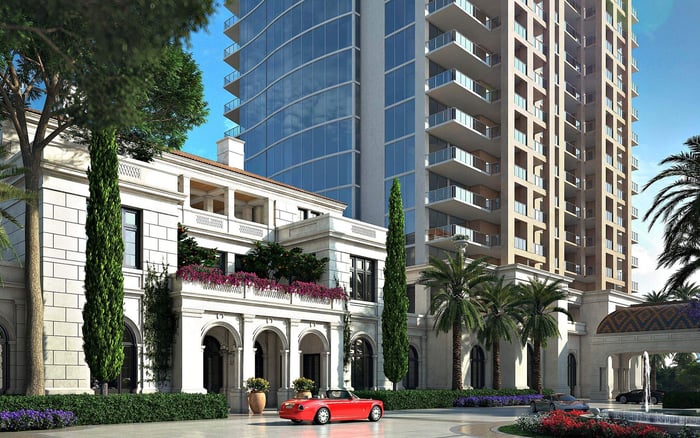
Muse’s advertised hospitality services deserve a closer look when entertaining is central to a purchase. Confirm private-space reservations, outside-catering access, event capacities, and current operating terms before treating them as ownership benefits.
For a buyer who values an elegantly managed dinner as much as an ocean outlook, hospitality amenities can shape a residence’s appeal. At Muse Residences Sunny Isles Beach, at 17141 Collins Avenue, advertised offerings include poolside food-and-beverage service and in-home food-and-beverage services exclusive to residents. These descriptions suggest convenience, but they do not establish the right to reserve a shared space, bring in a preferred caterer, or host a gathering of a particular size.
The central distinction is simple: access to a service is not authorization for an event. The available amenity descriptions do not confirm guaranteed private-dining access, outside-catering rights, or maximum event sizes. That uncertainty is neither a prohibition nor permission. For a purchase that hinges on entertaining, the evidence that matters is the current written policy governing the occasion you intend to host.
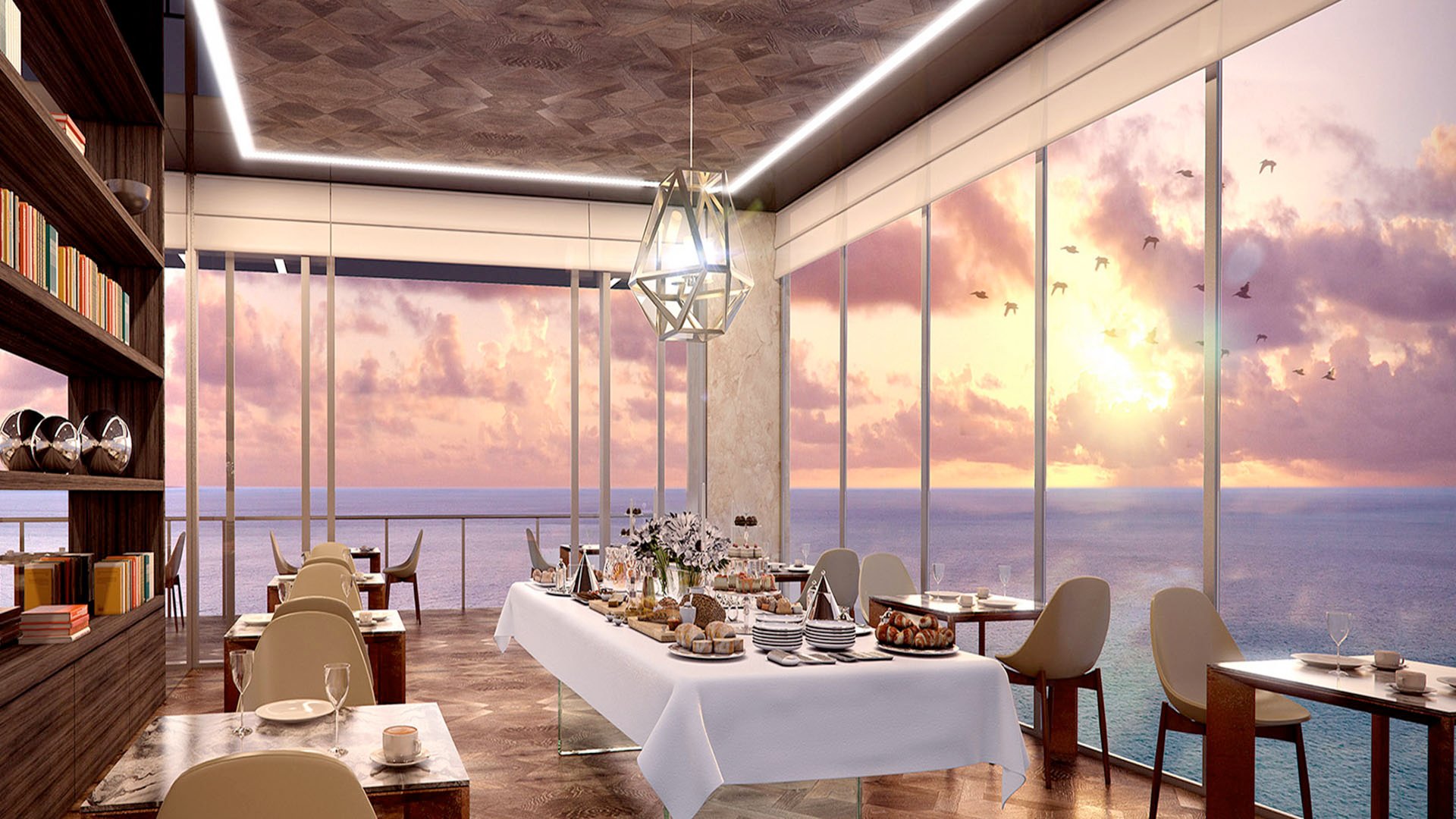
Muse’s advertised breakfast gallery occupies the mezzanine overlooking the Atlantic Ocean. The setting may appeal for entertaining, but its description does not establish whether residents can reserve it exclusively for private parties. Confirm whether it functions solely as a resident dining amenity, accommodates private reservations, or offers different arrangements at different times.
An on-site restaurant is also advertised. Its operator, current service scope, and availability for private buyouts remain unconfirmed. Distinguish a restaurant reservation from a private room booking and a full-space buyout. Each arrangement requires separate confirmation; the word restaurant does not establish all three.
Before assigning value to either space, request the applicable reservation agreement. Ask who approves an event, whether approval remains discretionary, and when a reservation becomes binding. Obtain written details on lead times, booking windows, exclusive-use fees, minimum spending, deposits, cancellation charges, and cleanup costs. The advertised concierge and dining descriptions establish none of these terms.
In-home dining and outside catering are different propositions. Muse’s resident-exclusive food-and-beverage description does not establish permission to engage an independent chef, catering team, or bartender. Nor does it specify requirements for vendor approval, insurance, licensing, deliveries, service-elevator use, or kitchen access. A familiar caterer’s willingness to work in the building is no substitute for management approval.
Present management with a realistic event brief: intended space, guest count, service style, outside personnel, equipment, and proposed timing. Ask whether the provider must be on an approved list and which documents are required. Establish where deliveries arrive, how equipment moves through the building, where food may be prepared, and who handles waste removal and final cleaning.
If your Sunny Isles Beach search also includes Jade Signature Sunny Isles Beach, use the same brief there rather than assuming comparable catering permissions. This is a comparison method, not a claim that either property offers a particular arrangement. The relevant question is whether each residence can support your preferred style of entertaining under its current rules.
No numerical event capacity is confirmed for the breakfast gallery. Other advertised spaces include a theater or screening room, game room, lounge, and bar/lounge, but their event capacities and reservation procedures are unspecified. Their presence should not be read as an inventory of private-party venues.
Ask for the approved guest limit for each intended space and event format. Clarify whether the count includes the host, children, service staff, or other residents, and whether a resident-to-guest ratio applies. Request guest-registration requirements, permitted hours, noise restrictions, and the approval process for changes to a confirmed event.
Capacity alone is not enough. A proposed gathering must also comply with the rules governing its use and duration. Request confirmation for the seated meal, reception, or screening you envision rather than relying on a general maximum occupancy figure.
Advertised round-the-clock concierge, valet, and security services do not establish permission to host large gatherings. Ask how guest arrivals and vendor access would be handled for your occasion, including any staffing or charges management identifies. The objective is an approved operating plan, not simply confidence in the building’s attentive service.
Poolside food-and-beverage service does not establish private-event booking rights beside the pool. Likewise, Muse’s advertised resident-only beach club does not establish permission for catered beach events. Ask separately whether guests, outside food service, furniture arrangements, or exclusive use are permitted in either setting. Do not assume approval for one area applies to another.
The described terrace summer kitchen includes an electric grill, mini refrigerator, and marble countertops. That description does not establish a shared, reservable building amenity. When touring, identify whether the feature belongs to the residence under consideration, then distinguish in-residence entertaining from use of common spaces.
For a buyer also evaluating Turnberry Ocean Club Sunny Isles, the same distinction belongs in the comparison: separate private-residence features, shared amenities, and confirmed event permissions. A compelling amenity description should begin the inquiry, not conclude it.
Request current condominium rules, amenity reservation agreements, vendor policies, and relevant board resolutions. Have your adviser or condominium counsel review how those materials address the uses that matter to you. A verbal assurance about an occasional dinner is not equivalent to written authorization for recurring catered events.
Ask management to confirm whether in-home dining and the restaurant are currently operating, what each service includes, and whether access can be suspended or policies changed. Identify which entity provides each service and which authorizes private use. A booking conversation is more useful when responsibility is clear.
Keep a concise written record for each intended use: proposed space, approved attendance, permitted vendors, total disclosed charges, hours, cancellation terms, and outstanding conditions. If entertaining is essential to the purchase, discuss with your adviser how to resolve those conditions before committing on that basis.
The conclusion is neither that Muse allows unrestricted entertaining nor that it prohibits private events. Its advertised hospitality offerings leave important event-specific terms unconfirmed. A buyer seeking quiet in-home meals has different requirements from one planning recurring catered receptions, and each deserves a precise answer.
Treat hosting capability as a purchase criterion only when the written terms support your intended use. The luxury worth securing is not simply an attractive place to gather, but confidence about when, how, and with whom you may use it.
For a discreet discussion of your South Florida property priorities, connect with MILLION.
If branded residences are on your mind — as a home or as an allocation — we would be glad to share what we are seeing, privately.
Begin a quiet conversationMuse Residences is at 17141 Collins Avenue, Sunny Isles Beach, FL 33160.
The advertised hospitality services do not establish guaranteed private-dining access. Confirm reservable spaces and booking rights in the current written policies.
The breakfast gallery is advertised on the mezzanine overlooking the Atlantic Ocean, but exclusive private-party reservations are not established. Ask management for the applicable reservation terms.
An on-site restaurant is described in sales materials, but its operator and private-buyout availability are not established. Confirm current operations and event arrangements directly with management.
Advertised in-home food-and-beverage services do not establish outside-catering permission. Obtain written confirmation of vendor approval and any insurance, licensing, delivery, or kitchen-access requirements.
The available amenity descriptions do not establish numerical event capacities. Request written limits for each proposed space and event format.
Ask about exclusive-use fees, deposits, minimum spending, cancellation penalties, cleanup costs, and any staffing charges. The advertised dining and concierge descriptions do not establish these terms.
Poolside food service and the advertised resident-only beach club do not establish permission for catered events. Each setting requires separate confirmation of guest and event rules.
The property-listing description does not establish a shared, reservable summer kitchen. Confirm whether the feature belongs to the residence being considered.
Request current condominium rules, amenity reservation agreements, vendor policies, and relevant board resolutions. Also obtain written confirmation that the intended services are operating and that the proposed use is permitted.