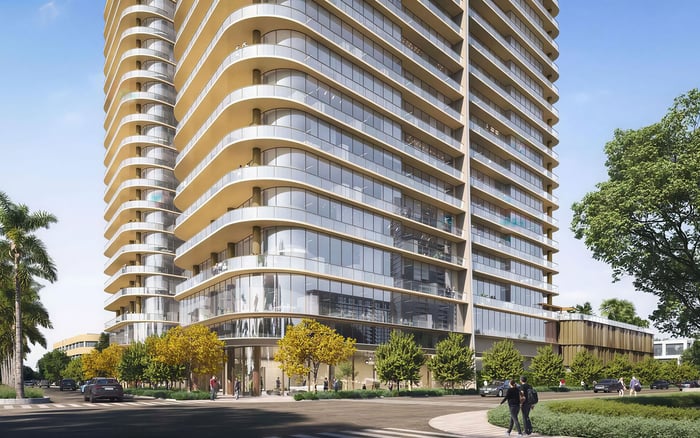
Before buying at Kempinski Residences Miami Design District, distinguish leak detection from water isolation and contractual damage response. This buyer-focused review identifies the documents, operating procedures, and insurance questions that should define protection beyond the amenities narrative.

At Kempinski Residences Miami Design District, the purchase conversation should extend beyond architecture and service to a quieter measure of ownership quality: what happens when water appears where it should not. In a residence with carefully selected finishes, protection deserves the same scrutiny as the floor plan.
This review does not verify a project-specific leak-detection system, automatic water-isolation specification, or guaranteed damage-response obligation. That does not establish that protection is absent. It does warrant requesting written specifications and enforceable obligations before treating protection as part of the purchase.
“Whole-unit” should describe a documented scope, not merely a reassuring phrase. Request the manufacturer, equipment model, plumbing plans, and a sensor map specific to the residence under consideration. The map should identify monitored locations and distinguish direct moisture detection from supply-flow monitoring.
Match any proposed protection plan to the actual plumbing and equipment layout rather than extrapolating from the number of bathrooms. A floor plan alone does not establish how many sensors are installed or which potential leak paths they cover.
Request explicit treatment of concealed plumbing, HVAC condensate, and terrace plumbing where applicable. Identify excluded areas and ask whether changes to cabinetry, appliances, or finishes require sensor relocation or recommissioning. A point sensor and a water-flow monitoring system serve different functions; neither label alone establishes complete protection.
For a buyer also considering EDITION Edgewater, the same document request provides a useful comparison framework without assuming either project has a particular installation.
Detection, notification, and shutoff are three distinct functions. A system may identify a condition without closing a valve, or it may require someone to authorize closure remotely. Establish whether operation is automatic, remotely initiated, or entirely manual, and obtain the answer in writing.
Next, determine what the valve actually isolates: the residence’s supply, a shared riser, a floor, or a larger building area. Request a diagram showing the valve location, the lines it controls, and any relevant exclusions. Confirm whether every monitored supply line falls within the shutoff boundary.
Shutting off supply is not the same as addressing the source of every possible water event. Have the design team explain how the proposed system responds to condensate, concealed piping, or water originating outside the residence, where applicable. A general claim of automatic shutoff does not answer those separate questions.
A Brickell comparison involving Cipriani Residences Brickell should use the same questions. Compare documented operating scope rather than relying on branding or assuming equivalence between residences.
A protection system should include a clear account of its behavior during power or network failures. Request written details on backup operation, lost-connectivity alerts, manual overrides, and the process for restoring normal service after a shutoff. Ask how nuisance shutoffs are investigated and who may bypass protection.
Commissioning records and a periodic testing schedule should support that operating description. Establish who tests sensors and valves, who retains the results, and how an owner learns that equipment is offline, disabled, or overdue for maintenance. Notifications should identify both the condition and the party responsible for resolving it.
Financial responsibility matters as much as the hardware. Confirm who pays for equipment, subscriptions, batteries, connectivity, testing, repairs, and replacement. Where costs are shared or incorporated into operating expenses, request the relevant maintenance allocation rather than assuming every component is included indefinitely.
For an owner who travels, an alarm is useful only if an authorized person can act on it. Obtain written after-hours escalation and unit-entry procedures that identify alert recipients, the person with shutoff authority, and the method of owner notification.
Establish what happens if the owner cannot be reached. Who can enter, under what authority, and how is access recorded? Clarify the role of any owner representative and whether a vendor needs separate approval before beginning mitigation. Resolve these questions before an emergency rather than improvising during one.
The same diligence applies when evaluating Coconut Grove alternatives such as Four Seasons Residences Coconut Grove. Compare written access and response arrangements, not presumed service capabilities.
Vendor availability is not equivalent to a damage-response commitment. Seek defined deadlines for alarm acknowledgement, on-site attendance, water isolation, extraction, drying, and incident reporting. Each stage should identify the responsible party and the event that starts the deadline.
Ask counsel to examine exclusions, authorization requirements, service availability, and the consequences of missed obligations. Clarify whether the arrangement covers emergency mitigation only or extends to restoration, and who approves expenditure when the owner is unavailable.
Restoration deserves its own contractual language. Determine how upgraded finishes, personal property, and consequential losses are treated; do not assume they are covered. Any entitlement to accommodation during repairs or reimbursement for displacement should appear in the relevant agreement rather than be inferred from hospitality amenities.
Have counsel and an insurance adviser review the declaration, maintenance matrix, master policy, HO-6 coverage, deductibles, and restoration obligations together. Establish how the governing documents and policies allocate responsibility among the owner, association, and other relevant parties.
Ask how any applicable utility-service boundary relates to private plumbing obligations, but do not treat it as a substitute for reviewing condominium repair liability. Confirm the relevant terms rather than assuming that responsibility for water service determines responsibility for damage.
Before committing, assemble three coordinated records: the detection specification, the shutoff operating scope, and the response agreement. Resolve differences between marketing language and binding documents, particularly where amenities or specifications remain subject to change.
The strongest purchasing decision does not depend on assuming every risk disappears. It rests on knowing what is monitored, what can be isolated, who must respond, and who bears the remaining cost.
For a discreet approach to evaluating South Florida residences, explore MILLION.
If branded residences are on your mind — as a home or as an allocation — we would be glad to share what we are seeing, privately.
Begin a quiet conversationThis review does not verify a project-specific installation. Request residence-specific specifications and a sensor map before treating whole-unit protection as included.
No, a floor plan alone does not establish sensor locations or monitored leak paths. Match the protection specification to the actual plumbing and equipment layout.
Request the manufacturer, equipment model, plumbing plans, sensor map, monitored supply lines, and exclusions. Address concealed plumbing, HVAC condensate, and terrace plumbing where applicable.
No, detection and water isolation are distinct functions. Obtain written confirmation of whether shutoff is automatic, remotely initiated, or manual.
Its documented boundary helps establish which supply lines the valve controls. Also confirm who has authority to operate it and which water sources fall outside its scope.
Request written details on backup operation, lost-connectivity alerts, manual overrides, and restoration of normal service. Confirm who handles equipment that is offline or disabled.
Seek defined deadlines and responsible parties for alarm acknowledgement, attendance, isolation, extraction, drying, and incident reporting. Clarify whether obligations include restoration or only emergency mitigation.
Confirm after-hours escalation, alert recipients, shutoff authority, owner notification, and authorized entry when the owner is unavailable. Establish who can approve emergency work and expenditure.
Review the condominium declaration, maintenance matrix, master policy, HO-6 coverage, deductibles, and restoration obligations with qualified advisers. Confirm how they allocate responsibility for repairs and losses.
No, do not infer a repair-related accommodation entitlement from hospitality amenities. Confirm any accommodation or reimbursement commitment in the relevant agreement.