A buyer-focused review of housekeeping scope, linen storage, furnishings, and personal-belongings privacy at Frida Kahlo Wynwood Residences, with the documents and written confirmations to request before purchase.

The appeal of a furnished Miami residence is effortless arrival: a considered interior, familiar comforts, and little to organize before settling in. At Frida Kahlo Wynwood Residences, marketed at 119 NW 29th Street in Wynwood, that promise warrants a precise operational review before purchase.
The residences are advertised as fully finished and furnished, ranging from studios to three bedrooms. Primary-bedroom closets are advertised with installed shelving and drawers, and built-in washers and dryers are listed among the residence features. These are useful starting points, but none establishes who cleans the home, where spare linens belong, or how personal possessions are protected while the owner is away.
The essential distinction is simple: turnkey delivery is not a housekeeping agreement. Gaps in public information should prompt a document request, not a conclusion that services or safeguards are absent.
“Move-in ready” describes an anticipated delivery condition. It does not establish recurring cleaning, laundry service, linen replacement, or access authorization. Treat each as a separate question requiring a written answer.
Ask whether housekeeping is offered, who provides it, and whether participation is optional. If service is available, request a task schedule that distinguishes routine cleaning from deep cleaning, arrival preparation, and departure service. Confirm whether making beds includes changing sheets, whether towels are laundered or exchanged, and who supplies consumables.
Frequency and pricing should be equally explicit. Ask about minimum charges, cancellation terms, additional visits, and any fees for service while the residence is unoccupied. Do not build an ownership budget around an unspecified service promise.
For a purchaser also considering ORA by Casa Tua Brickell, the useful comparison is each property's written service scope-not an assumption that similar lifestyle language means equivalent household support.
A beautifully organized wardrobe and a functioning housekeeping arrangement are different design achievements. The advertised primary-bedroom closet build-outs establish shelving and drawers, but not a dedicated housekeeping closet, a linen-closet count, or separate cleaning-supply storage.
Request the exact floor plan for the residence under consideration, with dimensions and cabinetry details. Then assign space for spare bedding, towels, laundry awaiting collection, a vacuum, cleaning products, and any owner possessions that will remain during an absence. Do not assume the washer-dryer enclosure has usable surplus storage.
Test the plan against the intended occupancy. A residence used by its owner alone may need a different linen arrangement from one regularly hosting family. Any proposed guest or rental use should remain conditional on permission under the governing documents.
If cabinetry must be added, ask whether alterations require approval and whether they affect the furniture layout. Resolve those questions before treating an attractive closet rendering as an operational solution.
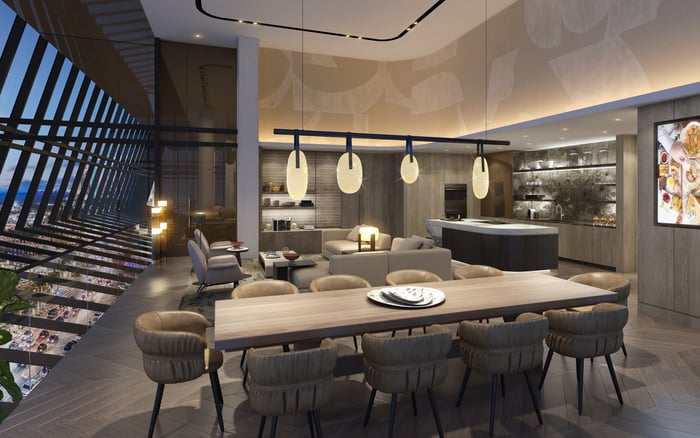
The furnished-residence description sits alongside a disclaimer stating that illustrated or depicted furnishings and décor are not included with the unit purchase. Those statements may concern different inventories. Neither should be treated as proof that the residence is unfurnished or confirmation that every displayed item will arrive.
Obtain the signed features and furnishings exhibit for the specific purchase. Request enough detail to distinguish included furniture from decorative styling, and determine whether bedding, towels, kitchen equipment, and storage accessories are included. Ask how substitutions are handled and which document controls if presentations differ.
For buyers comparing interiors with Casa Bella by B&B Italia Downtown Miami, apply the same discipline: evaluate contractual inclusions separately from visual presentation. This is a comparison method, not a statement that the projects share furnishing terms.
A precise inventory also helps identify which items belong to the owner and which, if any, fall under a service or management arrangement.
Housekeeping is as much an access decision as a convenience. Project-specific rules defining housekeeping entry permissions, personnel credentials, and service-access procedures remain unverified. Do not assume a particular key-control system or absent-owner protocol is included.
Request written procedures addressing who authorizes entry, whether consent is required for each visit, and whether routine cleaning may occur while the owner is absent. Ask how physical keys or digital credentials are issued, tracked, and revoked, and whether contractors may send substitutes. Distinguish routine service permissions from emergency-entry provisions in the governing documents.
Personal-belongings protection requires a separate review. An explicit project policy protecting possessions inside residences has not been established. Ask whether a lockable owner closet is permitted, who could access it, and whether a cleaner can be instructed to leave designated areas untouched.
A lockable compartment, permission to install one, and enforceable limits on staff access are separate matters. Seek confirmation of all three rather than relying on the presence of a closet door.
A private concierge medical care membership with an on-site center is advertised. Evaluate that offering on its own terms; it does not establish housekeeping provision, household staffing, or rights to enter a residence.
The same distinction should guide discussions of personal property. Ask who handles a complaint about a missing or damaged item, what documentation is required, and whether any applicable service agreement addresses responsibility. Review relevant coverage and exclusions with an insurance adviser rather than assuming building services automatically protect belongings.
Privacy becomes practical when instructions survive a change of personnel. If housekeeping is available, request clarity on how restricted areas, owner preferences, and service cancellations would be communicated and enforced. Discreet ownership depends on predictable procedures, not merely reassuring language.
Before committing, assemble the exact residence floor plan, condominium declaration and rules, features and furnishings exhibit, and any applicable service-access procedures. If rental or management participation is contemplated, obtain that agreement as well. Do not infer rental eligibility from furnished delivery.
Have counsel reconcile these documents with the intended ownership pattern. A frequent visitor may prioritize arrival preparation; an owner leaving possessions behind may prioritize restricted storage and access control. Either preference should translate into specific contractual questions.
The decisive test is whether the residence can support the buyer's intended life without unresolved assumptions about cleaning, storage, or entry. Request written clarification of material gaps before relying on assumptions in a purchase decision. An unanswered question is not evidence of a defect, but neither is it a confirmed benefit.
For a discreet review of South Florida residences through the lens of daily ownership, connect with MILLION.
If branded residences are on your mind — as a home or as an allocation — we would be glad to share what we are seeing, privately.
Begin a quiet conversationThe project is marketed at 119 NW 29th Street in Wynwood, Miami.
The project advertises fully finished and furnished residences ranging from studios to three bedrooms. Buyers should confirm the specifications for their particular residence.
Turnkey and move-in-ready descriptions do not establish a housekeeping service scope. Confirm availability, frequency, tasks, and charges in writing.
Built-in washers and dryers are listed among the residence features. Their inclusion does not establish laundry service or linen replacement.
Primary-bedroom closets are advertised with pre-installed shelving and drawers. That does not confirm dedicated linen or cleaning-supply storage.
A dedicated housekeeping closet, linen-closet count, and separate cleaning-supply storage area are not established. Request the exact floor plan and cabinetry details.
Do not assume so: a disclaimer excludes illustrated or depicted furnishings and décor from the purchase. Reconcile that language with the furnished-residence description through the signed furnishings exhibit.
Project-specific housekeeping entry permissions remain unverified. Request procedures defining consent, absent-owner entry, and control of keys or access credentials.
An explicit project policy protecting personal belongings inside residences has not been established. Confirm whether lockable owner storage is permitted and who could access it.
Request the exact floor plan, condominium declaration and rules, features and furnishings exhibit, and service-access procedures. Obtain any applicable rental or management agreement as well.