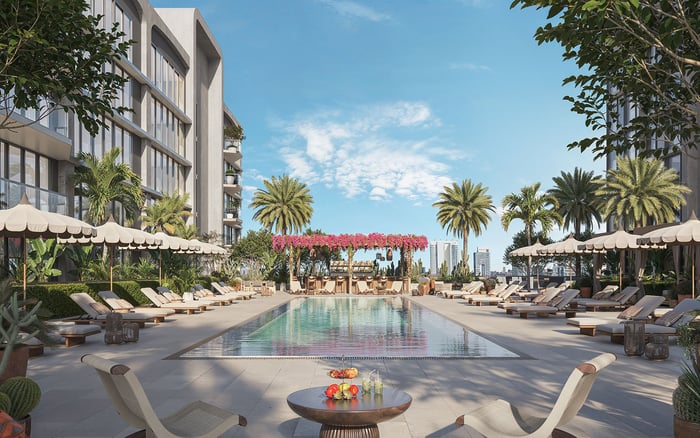
Brickell resale resilience requires more than an exceptional address. Buyers should test floor-plan scarcity, privacy, competing supply, and association finances against closed comparable sales and the full cost of ownership.
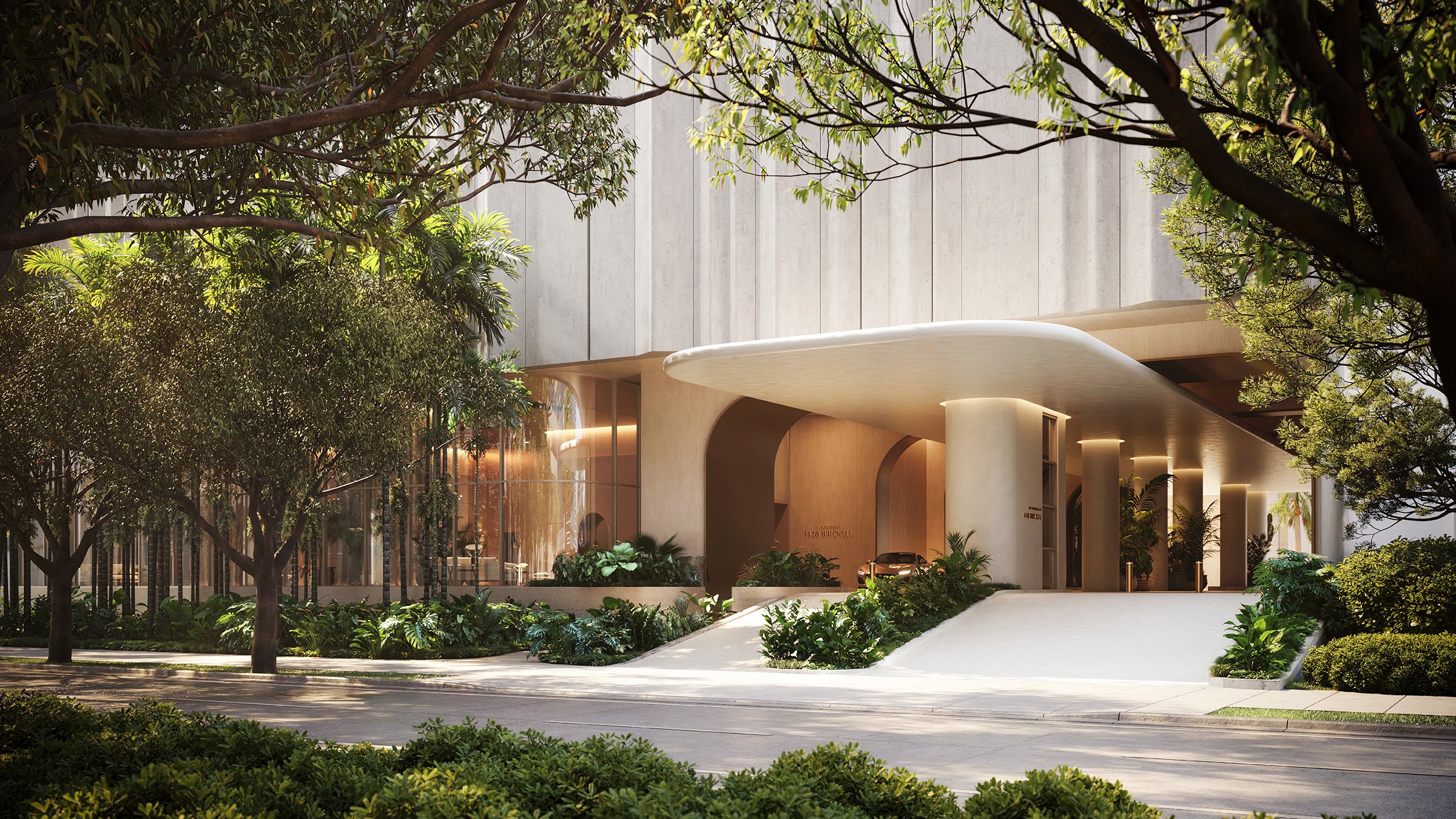
In Brickell, an exceptional residence can be a compelling place to live without being an effortless asset to resell. For the luxury buyer, that distinction matters. A generous floor plan, discreet arrival, and expansive outlook may justify a personal preference. Whether they support a durable resale premium requires a separate examination.
The strongest purchase thesis connects three questions: how difficult is the residence to substitute, how well does its privacy work in daily life, and how disciplined are the building’s finances? Neither an address nor a polished presentation can answer them. Scarcity is a hypothesis to test, not a promise embedded in the purchase price.
Brickell recorded 99 condo sales in the first half of 2025, compared with 157 a year earlier. Average pricing nevertheless rose from approximately $869 to $894 per square foot. That combination does not establish broad resilience: average pricing can hold firm even as completed transactions decline.
A June 4, 2025 inventory snapshot showed approximately 1,610 Brickell condos for sale, with 74 closed sales and 46 pending sales over the preceding 30 days. These figures cover a different period from the half-year totals and should not be combined into a single absorption calculation.
By December 2025, the Brickell Avenue area had 16.9 months of supply, indicating buyers’ market conditions. Average asking prices exceeded $1.3 million per residence, or approximately $865 per square foot. Asking prices are not achieved prices, and the Brickell Avenue area is not interchangeable with every definition of Brickell.
The first-half figures also recorded no sales above $10 million in either 2024 or 2025. For an ultra-premium acquisition, that warrants close scrutiny of the depth of relevant closed comparables-not a definitive ceiling on value.
Approximately 4,500 units were under construction against an existing Brickell condo base of roughly 26,500 units-a potential increase of about 17% upon delivery. That represents possible completed housing stock, not units necessarily entering the resale market at the same time.
The buyer’s question is narrower: how many alternatives could serve the same household? A large residence is not automatically rare if its circulation wastes space or its bedroom arrangement limits flexibility. Compare usable living areas, bedroom separation, storage, service access, and the relationship between interior rooms and terraces.
When evaluating The Residences at 1428 Brickell, apply that comparison to the specific residence under consideration. The project name identifies a candidate; it does not prove floor-plan scarcity. Request the plans and compare them with nearby alternatives before assigning a premium.
Then test the asking price against closed sales with similar size, condition, elevation, and outlook. If close matches are scarce, widen the comparison transparently. Do not treat the absence of evidence as evidence of exclusivity.
Fewer residences per floor and private elevators may appeal to buyers, but the market figures do not establish a measurable resale premium for either. Evaluate privacy across the complete arrival sequence: vehicle drop-off, lobby circulation, elevator access, vestibule exposure, and the routes used by deliveries and service personnel.
Inside the residence, inspect sightlines between neighboring interiors, terraces, and shared spaces. Ask how access controls operate and whether the layout separates entertaining from sleeping areas. These observations can clarify personal value even when they cannot establish market value.
A buyer considering Una Residences Brickell should apply the same unit-level test rather than infer privacy from positioning alone. The view’s exposure to future development deserves separate diligence: an attractive outlook today is not evidence that it is protected. Any claimed protection should be supported by relevant documentation and professional review.
Brickell association fees commonly range from approximately $900 to $2,500 monthly, with higher charges in newer luxury buildings and larger residences. Annualized, that represents $10,800 to $30,000 before property taxes, financing, owner-level insurance, and any assessments.
Dues fund exterior maintenance, landscaping, security, and amenity upkeep, among other expenses. Building insurance, reserves, management, and maintenance are also major budget components. Coastal insurance exposure and rebuilding costs can raise dues without adding any visible amenity.
A low fee therefore needs an explanation, not applause. As of September 21, 2026, the median monthly-equivalent fee across 16 active Brickell Place listings with usable fee data was $794, compared with a $975 Miami condo median. That listing-based comparison is neither a building-wide audited average nor proof of stronger reserves. Normalize residence size, services, and fee coverage before drawing conclusions.
For a residence at Cipriani Residences Brickell, distinguish anticipated operating costs from documented financial performance wherever applicable. A proposed budget and an established operating history answer different questions; neither should stand in for the other.
Request the current budget, reserve information, structural reports, insurance documents, assessment notices, and litigation disclosures. Review them together with qualified advisers. Florida structural-inspection and reserve-funding requirements can lead to higher dues or special assessments in older condominium buildings. Age alone is therefore an inadequate shortcut for judging risk.
Apply the same document discipline when evaluating 2200 Brickell. Compare the specific ownership obligations and available financial records rather than assuming a project’s identity establishes operating resilience.
Build an annual ownership schedule that separates recurring costs from known one-time obligations. Then consider the effect of higher insurance expense, increased reserve contributions, or a longer resale period. These are decision-making scenarios, not forecasts. The purpose is to assess whether ownership remains comfortable when the exit takes longer than planned.
Resale discipline begins with an honest distinction between personal utility and recoverable value. A buyer may gladly pay for an unusually effective layout or a more discreet arrival. The investment case must still identify which features comparable buyers have actually paid for in closed transactions.
The decision becomes clearer when each premium has supporting evidence: a floor plan that is difficult to replace, privacy verified through inspection, a view assessed for development exposure, and carrying costs supported by building documents. Where the evidence is weaker, negotiate accordingly rather than converting preference into certainty.
Brickell’s luxury proposition can remain compelling without assuming every exceptional residence will outperform. The more resilient purchase is one whose price, ownership burden, and eventual competition have been examined together.
Explore Brickell residences with a more discerning ownership lens at MILLION.
If branded residences are on your mind — as a home or as an allocation — we would be glad to share what we are seeing, privately.
Begin a quiet conversationThe first-half figures counted 99 sales versus 157 a year earlier, while average pricing rose from approximately $869 to $894 per square foot. Firmer average pricing does not establish that every residence retained its value.
No measurable premium is established by the supplied figures. Buyers should compare layout efficiency and competing alternatives, then validate the asking premium against closed comparable sales.
Inspect the arrival route, access controls, elevator and vestibule arrangements, and sightlines between neighboring spaces. Separate the personal benefit of privacy from any resale premium supported by transactions.
Approximately 4,500 units were under construction against an existing Brickell condo base of roughly 26,500 units, a potential increase of about 17% upon delivery. Those units would not necessarily become available for resale at the same time.
The 16.9-month supply figure applied to the Brickell Avenue area and indicated buyers’ market conditions. It should not be treated as a current figure or applied indiscriminately to all Brickell geographies.
Brickell fees commonly range from approximately $900 to $2,500 monthly, with higher charges in newer luxury buildings and larger residences. Obtain the actual fee and included services for the specific unit.
Not necessarily. Lower dues must be evaluated alongside reserve funding, maintenance obligations, insurance, and potential assessments.
Review budgets, reserves, structural reports, insurance documents, assessment notices, and litigation disclosures. Qualified advisers can help evaluate how those records affect ownership obligations.
No. Assess nearby development exposure and seek documentation and professional review for any claimed view protection.
Include association dues, property taxes, owner-level insurance, financing where applicable, and known assessments. Separate recurring expenses from one-time obligations and consider the cost of a longer resale period.
.jpg&width=700&height=438&fit=cover)