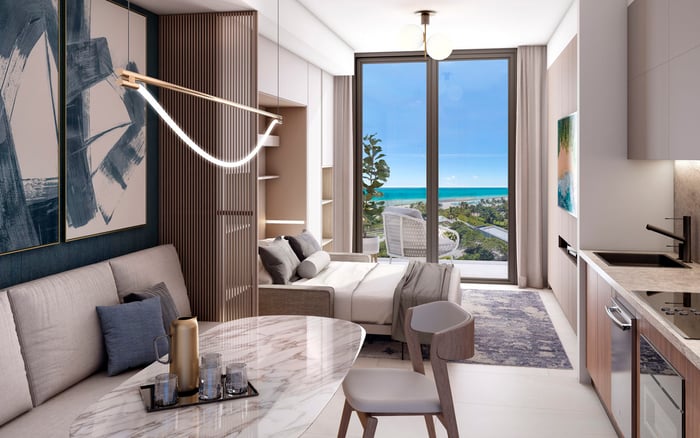
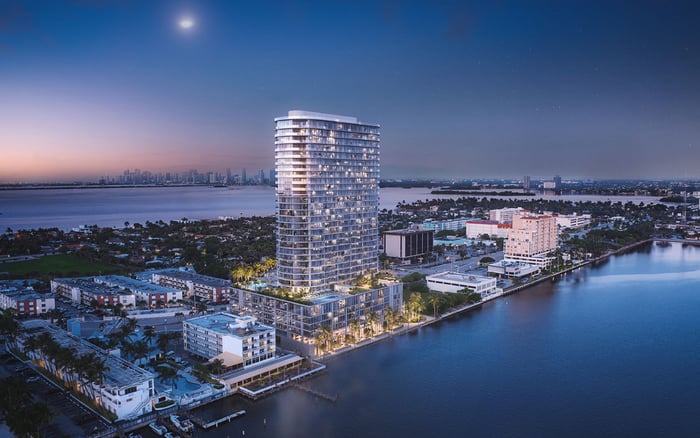
A due-diligence guide to evaluating amenity access at Tula Residences North Bay Village, with a focus on family use, guest permissions, reservations and written condominium rules.

When evaluating Tula Residences North Bay Village, families should examine how the governing documents define residents, approved occupants and guests. An amenity’s practical value depends on who may use it, whether accompaniment is required and how operating rules affect everyday routines.
Marketing language should not substitute for the declaration, association rules, purchase documents or written amenity policies. Buyers should identify which document controls if promotional descriptions and operating provisions differ.
Households should ask whether access standards vary by age, time of day or type of space. It is also important to determine whether caregivers, grandparents, children’s friends and visiting relatives are treated as ordinary guests or require separate authorization.
Parents may wish to confirm supervision requirements, age thresholds and any limitations that apply during busy periods. Written guidance should also explain whether an owner must remain present whenever a child or guest uses a shared area.
The term “resident-only” can carry different practical meanings. Buyers should ask whether it excludes all visitors, permits accompanied guests or allows approved visitors subject to registration and capacity controls.
A complete review should address identification procedures, advance notice, accompaniment, guest limits and any distinction between daytime visitors and event attendees. Owners who host frequently should also ask whether repeated visitors face separate restrictions.
Reservable spaces require a separate set of questions. Buyers should request details about booking windows, exclusive-use terms, attendance limits, deposits, cancellation procedures, cleanup obligations and possible charges.
The documents should also clarify whether outside vendors require approval and whether every attendee must complete a visitor check-in. If different spaces follow different systems, those distinctions should be provided in writing.
Waterfront-related rights should be reviewed independently from ordinary common-area permissions. Buyers should determine whether a particular privilege is attached to a residence, assigned by the association, licensed separately or subject to availability.
The review should also cover guest accompaniment, equipment handling, operating restrictions and transferability. A general reference to waterfront access should not be treated as confirmation of a specific private right.
A useful comparison focuses on governing language rather than renderings alone. Buyers considering Continuum Club & Residences North Bay Village or Shoma Bay North Bay Village can apply the same checklist to each property.
The comparison may also extend to nearby projects such as La Baia North Bay Harbor Islands. The goal is not to assume that similarly described spaces operate alike, but to identify how each project documents access, reservations, supervision and enforcement.
Buyers should request the declaration, association rules and regulations, purchase documents and any available amenity or guest policies. Questions should cover owners, tenants, approved occupants, children, caregivers, overnight visitors and event guests.
Written answers should identify current procedures, the authority responsible for enforcement and the process for changing rules. Buyers may also wish to ask how temporary closures, maintenance periods and capacity limits are communicated.
Careful review does not eliminate operating restrictions. It helps families decide whether the anticipated resident experience matches their routines, privacy expectations and hosting needs.
Does “resident-only” always exclude guests? Not necessarily. Buyers should rely on the governing documents for the project’s exact definition and any accompaniment requirements.
Which documents should buyers review? Review the declaration, association rules and regulations, purchase documents, and any written amenity or guest policies made available.
Should children’s access be confirmed separately? Yes. Ask about age thresholds, supervision requirements, permitted hours and any space-specific restrictions.
How may caregivers be treated under access rules? Caregivers may be classified differently from residents or ordinary guests, so their authorization and accompaniment requirements should be confirmed in writing.
What should frequent hosts ask about? They should ask about guest caps, registration, repeated visitors, event attendance and whether the owner must remain present.
What matters when reserving a private space? Confirm booking windows, exclusivity, fees, deposits, cancellation terms, cleanup duties and attendance limits.
Can outside vendors be used for private gatherings? That depends on the applicable rules. Buyers should ask whether vendors require advance approval, insurance or separate building access.
Should waterfront privileges be reviewed separately? Yes. Determine how each right is assigned, whether it is transferable and what restrictions apply to residents and guests.
Can amenity policies change? Operating rules may be subject to amendment. The documents should explain who has amendment authority and how residents receive notice.
How should buyers compare nearby projects? Apply the same document checklist to each property and compare definitions, access controls, reservation terms and enforcement procedures.
To compare the best-fit options with clarity, connect with MILLION.
If branded residences are on your mind — as a home or as an allocation — we would be glad to share what we are seeing, privately.
Begin a quiet conversation