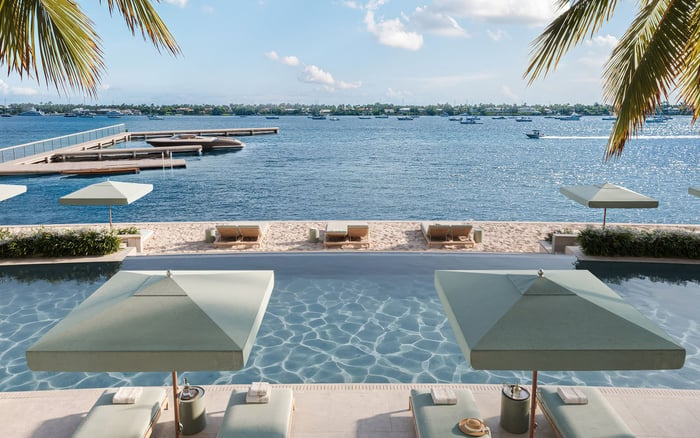
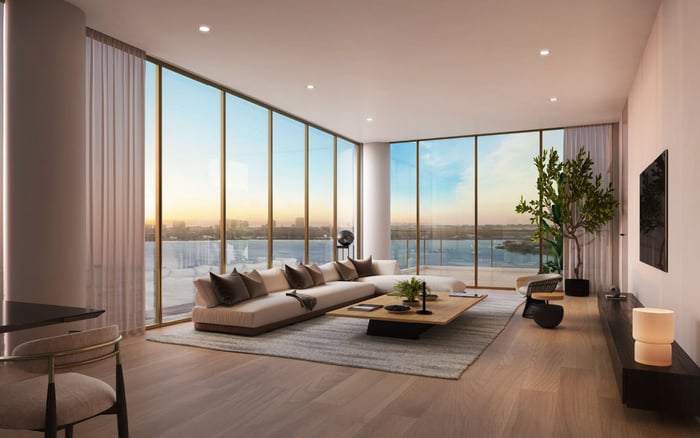
For Hamptons owners considering West Palm Beach, coastal due diligence should extend beyond the view. The essential review connects the current flood map, surveyed elevations, renovation history, association insurance, and unit-level coverage before contract deadlines expire.

For a Hamptons owner, West Palm Beach can feel familiar in its relationship to water, privacy, and seasonal living. Yet its transaction documents demand a distinctly Florida reading. Flood-zone designation, building elevation, critical-equipment placement, association insurance, and owner coverage should be examined as a connected risk profile-not as separate closing tasks.
This is especially important when comparing a waterfront condominium with an inland residence, or resale with new construction. AE and VE zones cover portions of the Intracoastal and coastal barrier areas, but proximity to water does not determine classification. The inquiry must begin with the exact address and current effective map.
The most useful flood review connects the map, the building, and the insurance boundary.
Buyers surveying West Palm Beach options such as Alba West Palm Beach or Forté on Flagler West Palm Beach should apply the same disciplined review to every candidate. A prestigious location, elevated residence, or recent construction date does not replace property-specific documentation.
Address-searchable tools and property records can identify flood-zone designation, coastal-erosion exposure, prior flooding problems, and natural floodplain functions. Buyers can also request available flood-zone information and records for a particular property through the local Flood Zone Request Line.
Confirm the effective FEMA panel, exact zone, and Base Flood Elevation, commonly abbreviated BFE. Zone AE is a Special Flood Hazard Area with a 1 percent annual chance of flooding, while Zone X generally represents lower mapped risk. Lower mapped risk does not mean no risk.
For properties in Special Flood Hazard Areas, federally backed lenders generally require flood insurance, including for applicable condominium units. A cash buyer may not face that lender condition but should still complete the same technical and insurance analysis. Future financing, resale expectations, and the owner’s risk tolerance remain relevant.
A flood map establishes the mapped hazard zone and BFE. An elevation certificate serves a different purpose: it records surveyed building and site elevations relative to that benchmark. Buyers should obtain the latest certificate and verify that it corresponds with the current map panel and the building as it exists today.
The review should encompass grade elevation, lowest floor, enclosures, equipment elevation, survey datum, and applicable BFE. Then compare the lowest occupied floor and critical mechanical, electrical, and plumbing equipment with the BFE. An MEP Equipment Certificate may also be accepted for qualifying standalone equipment, making it a useful request where relevant.
Since January 1, 2023, Florida surveyors and mappers have been required to submit digital elevation certificates to a statewide system. Even so, the existence of a certificate does not settle every question. Additions, enclosure changes, equipment relocation, or later renovations may require the paperwork to be reconciled with permits and current conditions.
This becomes particularly important for buyers planning a substantial redesign. Work in a mapped hazard area may require officials to reconcile the current flood map, BFE, surveys, permits, elevation records, and actual building conditions. Engage a licensed Florida surveyor and coordinate requirements with the appropriate city or county building office before treating a renovation concept as executable.
The phrase “master insured” can create false comfort. A Florida condominium master policy generally covers condominium property as originally installed, or replaced with like kind and quality under the original plans and specifications. It commonly protects the roof, exterior walls, shared structure, and common areas. That does not mean it will recreate a highly customized residence.
Owner improvements, betterments, personal property, and many interior components generally fall outside the association policy. Common exclusions may include floor, wall, and ceiling coverings; electrical fixtures; appliances; cabinets; countertops; window treatments; and owner upgrades. A buyer contemplating bespoke millwork or imported finishes should insure those improvements at replacement cost rather than assume the master policy will restore them above original specification.
“Drywall-out” is useful shorthand, but not an adequate insurance conclusion. Verify the actual boundary in the condominium declaration, bylaws, policy forms, and endorsements. Seek written clarification regarding windows, exterior doors, balconies, drywall, mechanical systems, interior finishes, and upgrades.
That distinction deserves particular attention when evaluating refined condominium offerings such as Mr. C Residences West Palm Beach and The Ritz-Carlton Residences® West Palm Beach. Architecture and service may shape the lifestyle; governing documents and policies determine the contractual allocation of loss.
A certificate of insurance is only a snapshot. Request the association’s complete property, windstorm, flood, and liability insurance package, including all forms and endorsements. Review limits, exclusions, definitions, deductibles, and the insured-value schedule. Compare stated values with current reconstruction costs and assess whether a large deductible could become a special assessment.
Association flood insurance may protect the structure without covering the owner’s contents or interior portion of the unit. A separate unit-level flood policy may therefore be necessary. Likewise, a standard HO-6 policy should not be assumed to cover flood damage. Confirm coverage for contents, interior build-out, loss assessment, and additional living expenses, while distinguishing flood protection from other covered causes of loss.
Price the HO-6 policy and any unit-level flood coverage during due diligence-not after a lender or closing agent requests evidence. Insurance terms can materially affect carrying costs and reveal gaps that warrant negotiation, added reserves, or a different acquisition decision.
A well-organized buyer file should include the effective panel, zone, BFE, current elevation certificate, relevant MEP certificate, permit history, and any substantial-damage or substantial-improvement determinations. For a condominium, add the declaration, bylaws, complete policies, endorsements, deductibles, limits, insured-value schedule, and written allocation of responsibility.
The aim is not to eliminate coastal exposure. It is to understand how the property is mapped, how the building sits relative to that map, and how repair obligations are divided between association and owner. For a Hamptons household establishing a second home in Palm Beach, that clarity supports a more confident investment and a better-protected waterfront lifestyle.
For discreet guidance on selecting and evaluating a South Florida residence, connect with MILLION.
If branded residences are on your mind — as a home or as an allocation — we would be glad to share what we are seeing, privately.
Begin a quiet conversationUse the exact property address, then confirm the effective FEMA panel, zone, and Base Flood Elevation.
Zone AE is a Special Flood Hazard Area with a 1 percent annual chance of flooding.
No. Zone X generally indicates lower mapped risk, not an absence of possible flooding.
The map identifies the hazard zone and BFE, while the certificate records surveyed building and site elevations relative to that benchmark.
Review grade, lowest floor, enclosures, equipment elevation, survey datum, and the applicable BFE.
It documents the elevation of qualifying standalone mechanical, electrical, and plumbing equipment.
Not necessarily. Owner improvements, betterments, personal property, and many interior components may require unit-owner coverage.
No. Confirm the boundary in the declaration, bylaws, policy forms, and endorsements, and obtain written clarification where possible.
Flood coverage should not be assumed. Confirm the scope of unit-owner coverage and whether separate flood protection is needed.
Request the full property, windstorm, flood, and liability policies, including endorsements, limits, exclusions, definitions, deductibles, and insured values.