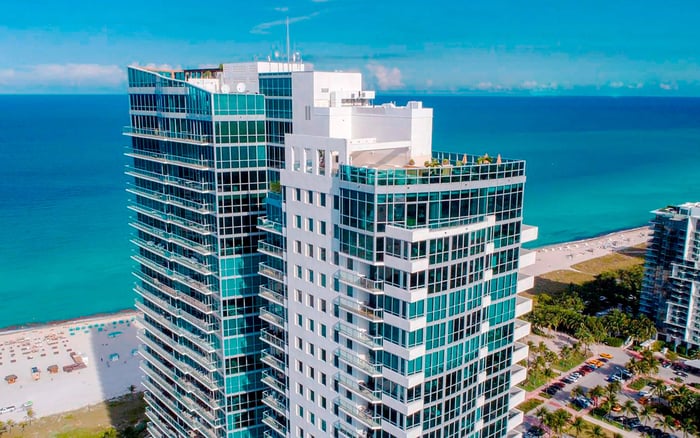
A buyer-focused framework for comparing branded-residence service promises, recurring assessments, optional charges, access rules, and the practical realities of daily ownership in Miami Beach and Miami.

At the highest end of South Florida real estate, a branded-residence promise should be evaluated as an operating model rather than a marketing phrase. Buyers need to understand how services are requested, who may use them, when they are available, which spaces are private, and which costs sit outside regular assessments.
A comparison of The Ritz-Carlton Residences® Miami Beach and Delano Residences & Hotel Miami should therefore begin with current governing and purchase documents. The goal is to translate each lifestyle presentation into clear answers about staffing, access, reservations, guest privileges, fees, and daily use.
A useful review starts with ordinary routines. Buyers can map how they expect to arrive, receive guests, request transportation, make dining or wellness arrangements, use shared spaces, and manage the residence while away. Each expected interaction should then be matched to written terms.
Ask whether a service is routinely available or subject to scheduling, capacity, eligibility, or a separate agreement. Also determine whether residents contact dedicated residential staff, hotel staff, an outside provider, or another operator. The practical value of a service depends on how reliably it fits the owner’s schedule.
This exercise should reflect the intended ownership pattern. Full-time residents may focus on daily staffing and predictable access, while seasonal or second-home owners may place greater weight on arrival preparation, absence care, guest permissions, and remote coordination.
The presence of a named amenity or service does not, by itself, explain how an owner may use it. Buyers should verify operating hours, reservation procedures, capacity limits, guest rules, age restrictions where applicable, and whether priority differs among residents, hotel guests, club members, or other users.
The same discipline applies when comparing other Miami Beach residential formats, including Shore Club Private Collections Miami Beach and Setai Residences Miami Beach. Project pages can help organize a comparison, but current documents should control conclusions about access, staffing, privacy, and cost.
A lifestyle presentation is not a fee schedule. Buyers should divide potential costs into clear categories and request written confirmation for each one.
Start with recurring association assessments and identify what the current budget assigns to operations, staffing, maintenance, insurance, reserves, and shared facilities. Then list optional or usage-based services separately. Depending on the applicable documents, the review may also need to address club, marina, transportation, dining, wellness, housekeeping, guest, gratuity, or other service charges.
The analysis should distinguish between an included service, an available service, and a service that can merely be arranged. Those descriptions can have different financial and practical consequences. Buyers should also ask how charges may change, which entity collects them, and whether taxes, minimums, cancellation terms, or third-party fees apply under the relevant agreement.
For a residence associated with a hotel, buyers should identify the boundary between private residential operations and hotel operations. Key questions include which spaces are residential-only, which are shared, how guests are handled, whether services follow different schedules, and who controls access.
If any rental or hotel participation program is relevant to a purchase, request the current agreement and review participation terms, owner-use procedures, housekeeping responsibilities, deductions, reservation requirements, and termination provisions. Do not infer these terms from branding or from practices at a separate hotel.
Any marina, boat-slip, shared-vessel, house-car, or transportation feature requires its own diligence. Buyers should verify whether the right is deeded, assigned, licensed, shared, reservation-based, or provided by a third party. Written materials should also explain eligibility, guest use, insurance, maintenance obligations, operating conditions, and charges.
These distinctions matter because ownership of a specific right is different from permission to request access. A buyer should understand both the legal structure and the real-world booking process before assigning value to a waterfront or transportation feature.
Before contracting, request the current offering materials, condominium declaration, association budget, reserve information, rules, insurance requirements, service menus, and any applicable club, marina, hotel, rental, or management agreements. Ask for written clarification whenever marketing language and operative documents appear to describe a benefit differently.
Organize the review in a simple matrix: service or amenity, eligible users, hours, booking method, guest rules, included cost, optional charge, responsible operator, and controlling document. This approach makes it easier to compare the two projects without relying on assumptions.
The strongest decision is not necessarily the property with the longest service list. It is the residence whose documented operations, costs, access rules, and service rhythm best match the buyer’s expected use in South Florida.
What should buyers compare first? Start with the current documents defining services, access, fees, guest privileges, and the parties responsible for operations.
Why separate recurring assessments from optional charges? The distinction helps buyers understand baseline ownership costs versus expenses created by personal use.
Does an available service mean it is included? Not necessarily. Confirm whether it is included, separately charged, reservation-based, or arranged through a third party.
How should a buyer assess daily convenience? Map expected routines and verify the request process, service hours, eligibility rules, and response expectations in writing.
What should second-home owners prioritize? They should examine arrival preparation, absence care, guest permissions, remote coordination, and any related charges.
How should shared hotel spaces be reviewed? Identify which areas are shared, who may enter them, what priority rules apply, and whether access has separate conditions.
What requires review in a hotel or rental program? Examine participation terms, owner-use procedures, housekeeping duties, deductions, reservations, and termination provisions.
How should waterfront or transportation features be valued? Verify the legal form of access, booking process, operating conditions, insurance obligations, guest rules, and costs.
Which documents should be requested before contracting? Request current offering, budget, reserve, insurance, rules, service, and applicable club, marina, hotel, rental, or management materials.
What is a practical way to compare the projects? Build a matrix covering eligible users, hours, reservations, fees, operators, guest rules, and controlling documents.
When you're ready to tour or underwrite the options, connect with MILLION.
If branded residences are on your mind — as a home or as an allocation — we would be glad to share what we are seeing, privately.
Begin a quiet conversation