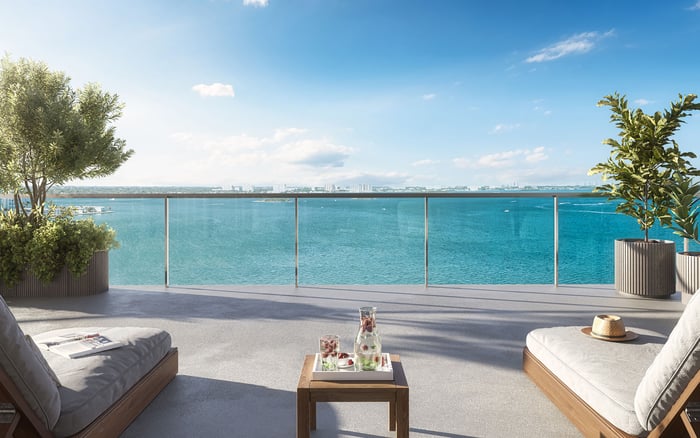
A due-diligence framework for comparing Continuum Club & Residences North Bay Village and Shoma Bay, with emphasis on yacht-owner convenience, recurring costs, access terms, and everyday use.

A useful comparison between Continuum Club & Residences North Bay Village and Shoma Bay North Bay Village begins with how each address would fit an owner's actual routine. For a yacht owner, the central issues are documented access, the trip from residence to vessel, operating limitations, and recurring expenses. For a buyer who boats less often, parking, storage, social spaces, wellness amenities, and nearby services may carry more practical weight.
Marketing language should be separated into three categories: what belongs to the condominium, what requires a separate agreement or membership, and what remains subject to future availability. That distinction helps prevent a waterfront setting from being mistaken for a guaranteed boating right.
Any marina-related promise should be tested against the governing documents and the agreement that controls access. Buyers should ask whether a slip or other docking privilege is deeded, leased, licensed, assigned, shared, or separately purchased. They should also confirm whether that right can be transferred with a residence or revoked under stated conditions.
Operational questions matter just as much. Written terms should address permitted vessel dimensions, draft, insurance, utilities, security, guest access, maintenance obligations, staffing, and restrictions on occupancy aboard a vessel. If a yacht club, beach club, dining venue, charter service, launch area, or watersports program is discussed, the buyer should determine who may use it, when it is available, and whether separate charges apply.
The relevant cost is not limited to a condominium assessment. A yacht owner may also face slip charges, club dues, utility costs, insurance requirements, service fees, maintenance expenses, and off-site dockage costs. Each item should be identified in writing, along with the party authorized to change it.
A side-by-side worksheet can separate mandatory expenses from optional services. It should also distinguish current obligations from projected or independently contracted costs. This makes it easier to compare the convenience of keeping a vessel close to home with the flexibility of arranging dockage elsewhere.
The strongest lifestyle fit depends on frequency. A buyer who expects regular departures, frequent provisioning, guest outings, or repeated watersports use may assign greater value to convenient water access. Someone who spends more time ashore may prioritize the residence-to-car route, deliveries, storage, fitness, dining, and social areas.
The comparison should be tested against a normal week rather than a vacation scenario. Buyers can map the time required for errands, parking, loading equipment, reaching a vessel, hosting guests, and returning home. Features that simplify those repeated movements may prove more valuable than amenities used only occasionally.
Nearby residential options can provide useful context without assuming that their ownership structures or amenity rights are equivalent. A focused tour might also include Tula Residences North Bay Village and Onda Bay Harbor, with every property evaluated through its own offering documents, budgets, rules, and contracts.
The final decision should rest on enforceable rights, total recurring costs, and realistic use. Renderings and broad lifestyle descriptions can help frame the experience, but they should not replace legal and financial review.
What is the first question a yacht owner should ask? Ask what written agreement, if any, creates the right to use a slip, dock, club, or boating service.
Does buying a waterfront residence automatically include dockage? No assumption should be made. Any docking right and its eligibility terms should be confirmed in the governing documents and applicable agreement.
Which marina costs should be reviewed? Review all stated slip, utility, insurance, maintenance, service, and membership charges, including how and by whom they may be changed.
Why does the legal form of a slip right matter? A deed, lease, license, assignment, or shared-use arrangement can carry different rules concerning duration, availability, and transfer.
What vessel details need written confirmation? Confirm permitted length, beam, draft, insurance requirements, utility access, guest procedures, and any restrictions on living aboard.
How should club access be evaluated? Determine whether access is included, optional, mandatory, separately contracted, or subject to capacity and operating rules.
What if a residence does not include on-site dockage? Compare off-site availability, travel time, operating restrictions, contract terms, and total cost before deciding whether the arrangement fits regular use.
How can buyers compare everyday convenience? Map recurring trips involving parking, deliveries, storage, groceries, equipment, guests, and vessel access during a typical week.
Which documents deserve priority? Prioritize the offering documents, association budget, rules, marina agreements, club contracts, and written disclosures applicable to the purchase.
What is the best way to shortlist comparable options for touring? Start with location fit, delivery status, and daily lifestyle priorities, then compare stacks and elevations to validate views and privacy.
For a tailored shortlist and next-step guidance, connect with MILLION.
If branded residences are on your mind — as a home or as an allocation — we would be glad to share what we are seeing, privately.
Begin a quiet conversation