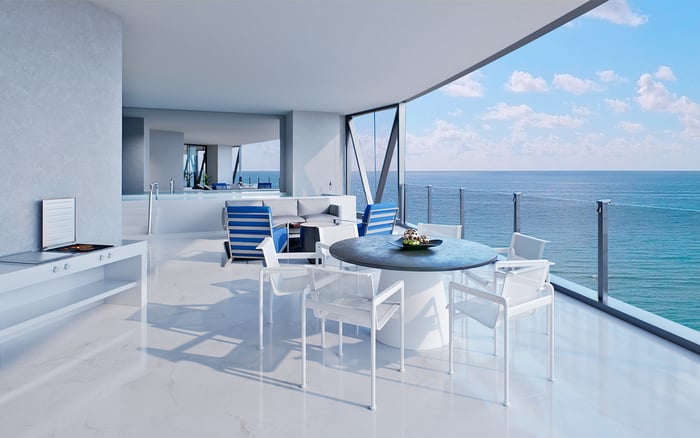
A careful buyer’s guide to distinguishing residential wellness amenities from clinical care, evaluating medical proximity, and reviewing the operating details behind Sunny Isles Beach’s resort-style offerings.

In Sunny Isles Beach, wellness amenities can influence how a luxury residence functions from day to day. Spas, fitness studios, treatment rooms, pools, and beach services may be valuable lifestyle features, but buyers should distinguish these spaces from licensed medical care.
That distinction matters for a primary residence, a seasonal home, or a property intended to support changing household needs. Amenity names alone do not explain how a facility will be staffed, maintained, scheduled, or funded. Careful ownership begins with written details about what will be delivered and how residents may use it.
Buyers considering branded and oceanfront properties can place St. Regis® Residences Sunny Isles, Bentley Residences Sunny Isles, and The Ritz-Carlton Residences® Sunny Isles on a consistent comparison worksheet. The purpose is not to count amenity names, but to determine which program best fits the household’s routine and expectations.
For each residence, request the applicable offering, governing, and operating materials. Compare the written description of every important amenity with the sales presentation, and confirm whether timing or availability could affect the purchase decision.
Ask who operates each wellness space, which services require appointments, and whether residents must engage independent providers. Confirm operating hours, reservation windows, guest rules, cancellation terms, age restrictions, staffing arrangements, and planned closures.
Costs also require careful review. Determine which facilities are covered by common charges and which may involve memberships, service fees, guest charges, or per-use costs. Buyers should also ask how maintenance and repairs could affect access to pools, steam rooms, treatment areas, studios, or other specialized spaces.
Privacy deserves equal attention. Review booking procedures, service-provider access, elevator routes, staff entry, and the handling of in-home appointments. If caregiver access or discreet personal services are important, confirm the building’s procedures in writing rather than relying on broad concierge language.
Medical proximity should be tested independently from the building’s wellness program. A nearby office, practice, or wellness provider should not be assumed to offer emergency, hospital, diagnostic, or specialist services.
Start with the household’s actual needs. Identify preferred emergency care, physicians, pharmacies, diagnostic providers, and specialists, then test travel routes from the residence at times that reflect the owner’s likely schedule. Consider alternative routes and backup providers without treating mileage alone as a complete measure of access.
Owners who anticipate ongoing care should verify appointment availability, insurance participation, transportation plans, caregiver entry, equipment deliveries, and urgent-access procedures directly with the relevant parties. Any service presented as medical coordination or in-home-care support should be documented clearly.
The residence itself should support the buyer’s intended lifestyle. Evaluate the arrival sequence, elevator access, circulation, bathroom layout, service entry, storage, and the practical use of rooms by residents, guests, or caregivers.
A strong fit depends on the relationship among the residence plan, amenity operations, privacy procedures, and access to the buyer’s preferred medical network. The most persuasive brochure cannot replace written verification and a household-specific review.
Does a condominium treatment room provide medical care? Not automatically. Buyers should confirm the room’s permitted use, provider requirements, and any claimed clinical services in writing.
Is a nearby medical office the same as a hospital? No assumption should be made from a name or location alone. Verify the services offered directly with the provider.
What should buyers verify about a spa or wellness area? Review its operating model, hours, staffing, fees, reservation rules, guest access, and maintenance procedures.
Why do operating hours matter? A limited schedule may reduce an amenity’s usefulness for full-time and seasonal owners. Compare access hours with the household’s routine.
Should medical proximity be measured only in miles? No. Test realistic travel times, routes, provider availability, and backup options.
Can concierge support be treated as medical coordination? Only if the specific service is clearly confirmed. Ask for written details about scheduling, transportation, caregiver access, and other support.
Are wellness amenities always included in common charges? Buyers should not assume so. Confirm memberships, service charges, guest fees, booking costs, and other potential expenses.
What matters beyond the number of amenities? Consider quality, capacity, privacy, maintenance, booking convenience, and alignment with the household’s actual habits.
How should buyers evaluate caregiver access? Review entry procedures, security coordination, elevator access, parking or arrival logistics, and space within the residence.
What is the central fine-print question? Determine whether the documented and operated experience fits the household’s lifestyle, privacy expectations, and care needs.
If you'd like a private walkthrough and a curated shortlist, connect with MILLION.
If branded residences are on your mind — as a home or as an allocation — we would be glad to share what we are seeing, privately.
Begin a quiet conversation