A vessel-first framework for evaluating Palm Beach waterfront property, including depth, bridge clearance, dock rights, permits, seawalls, inlet routes, and residential-use restrictions.
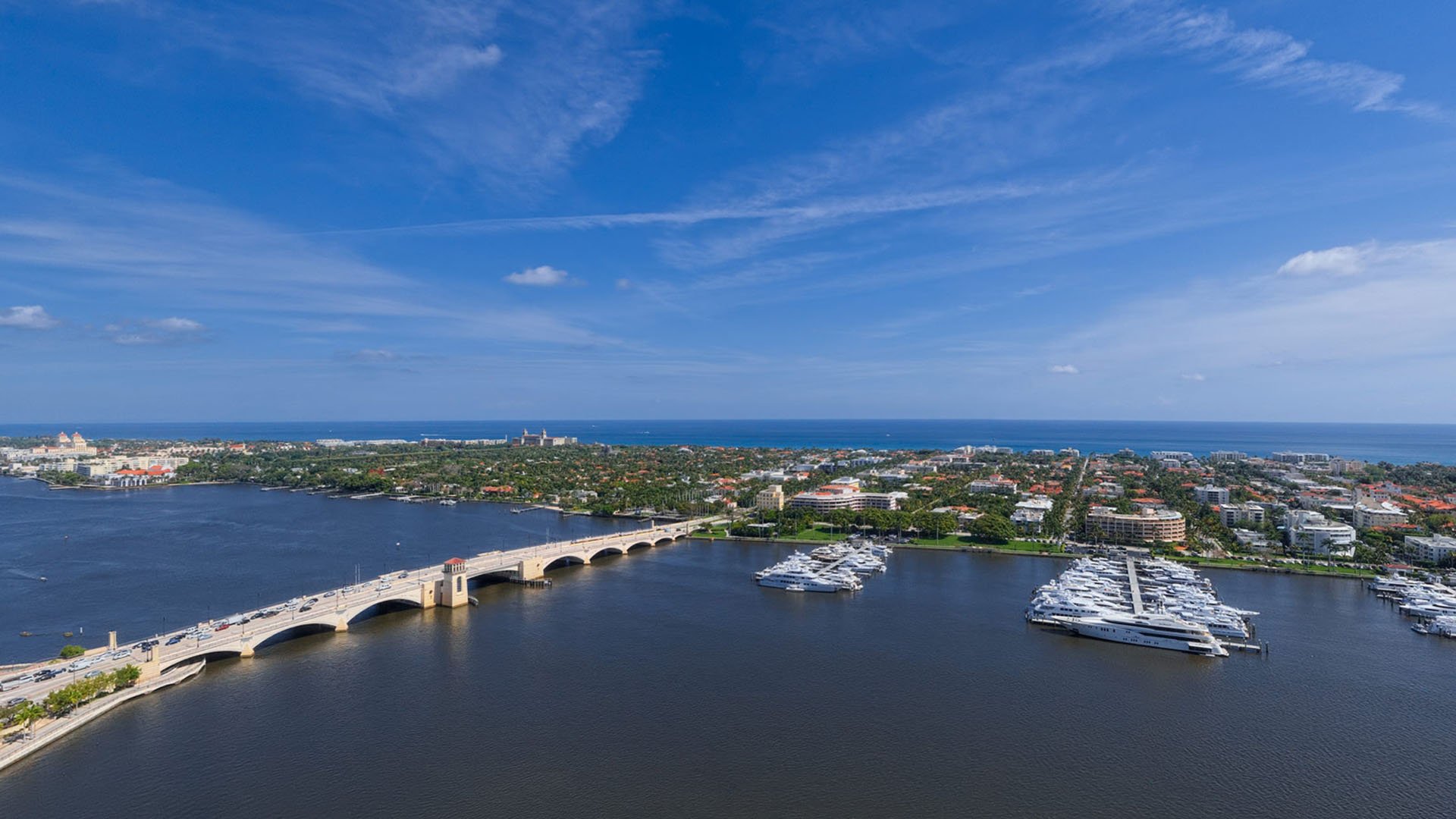
In Palm Beach, a broad water vista and private dock can create an immediate sense of possibility. For an owner who expects to keep a yacht at home, however, the decisive consideration is whether the route from berth to open water suits the vessel, schedule, crew, and intended use.
Waterfront frontage should not be mistaken for unrestricted access. A fixed bridge can impose an air-draft limit, while a movable bridge can affect timing. Even “no fixed bridges” does not necessarily mean that every trip will be immediate or that the entire route will suit a particular vessel.
That distinction matters across Palm Beach County. Buyers comparing waterfront estates with residences such as Palm Beach Residences should evaluate the marine plan separately from the residential plan.
A rigorous route analysis begins at the dock. It should identify the intended route, all fixed and movable bridges, applicable clearances, operating constraints, channel conditions, and potential points of delay.
Published information can provide an initial screen, but it should not replace property-specific and vessel-specific verification before closing. A captain or qualified marine professional can assess the yacht’s maximum air draft in its operating configuration, including raised equipment.
Owners considering Forté on Flagler West Palm Beach or Alba West Palm Beach can apply the same discipline: trace the complete route rather than infer practical access from a water view.
“Deep water” is not a substitute for measured depth. The vessel’s loaded draft should become a search criterion before properties are shortlisted, and required clearance should be determined for that vessel rather than inferred from a general description.
Depth should be evaluated at the proposed berth and along the relevant access route under suitably conservative conditions. The review should account for berth position, turning space, tidal variation, and localized shoaling. When practical, an on-water route assessment can reveal usability concerns that plans and listing descriptions may not show.
Shallow water should not be treated as automatically correctable. Before assigning value to possible dredging or other work, buyers should determine whether the work is permitted, which approvals may apply, and who would bear the cost. Buyers exploring The Ritz-Carlton Residences® Palm Beach Gardens may likewise wish to define their preferred balance between residential services and private-vessel logistics.
The physical dock is only one component of dockage. Counsel and marine specialists should review recorded rights, surveys, applicable permits, association documents, marina agreements, and any other materials governing use of the waterfront improvements.
The review should confirm the status of docks, lifts, davits, seawall work, and related improvements. It should also examine any rules affecting vessel placement, storage, occupancy, crew activity, or other intended operations.
Those restrictions can reshape the ownership plan. An owner anticipating frequent crew activity, charter operations, or living aboard should verify whether those uses are allowed rather than assuming that a vessel’s physical fit establishes permission.
Seawall construction, condition, and compliance deserve scrutiny alongside the residence itself. Due diligence should consider the seawall together with dock depth, flood exposure, insurance, access, and marine permits. A lift or generous waterfront dimension is useful only when its capacity, approvals, and suitability for the vessel have been verified.
Careful buyers can assemble a vessel-first file that records loaded draft, maximum air draft, overall length, beam, lift requirements, shore-power needs, crew plans, and expected frequency of trips. This turns an attractive waterfront proposition into a practical ownership assessment and helps distinguish a beautiful address from a usable home port.
What does “no fixed bridges” mean? It indicates that the route does not include an immovable bridge-height barrier. Movable bridges and other operating constraints may still affect passage.
Does waterfront frontage guarantee practical access to open water? No. Bridge conditions, route depth, channel geometry, and vessel dimensions all require separate review.
How much water depth should a buyer seek? The required depth depends on the vessel’s loaded draft and the desired safety margin. Buyers should rely on vessel-specific analysis and site-specific measurements.
Where should depth be checked? Evaluate depth at the proposed berth and along the full intended access route, including areas needed for maneuvering.
How should a buyer choose an inlet route? Compare the complete route from the property to open water, considering the vessel, bridges, channel conditions, timing, and intended operations.
Are published bridge clearances sufficient? They can help with preliminary screening, but current conditions and the vessel’s operating air draft should be independently verified before closing.
Which marine improvements warrant review? Examine the dock, lifts, davits, seawall work, utilities, and related improvements, together with their permits and governing documents.
Can a yacht extend beyond the apparent dock area? Do not assume that it can. Surveys, recorded rights, setbacks, association documents, and applicable rules should be reviewed for the intended vessel position.
Can an owner live aboard at a residential dock? That depends on the rules governing the property and intended use. Buyers should confirm occupancy and operating restrictions in advance.
What belongs in a vessel-first property brief? Include loaded draft, maximum air draft, length, beam, lift and utility needs, crew plans, and the preferred route to open water.
When you're ready to tour or underwrite the options, connect with MILLION.
If branded residences are on your mind — as a home or as an allocation — we would be glad to share what we are seeing, privately.
Begin a quiet conversation