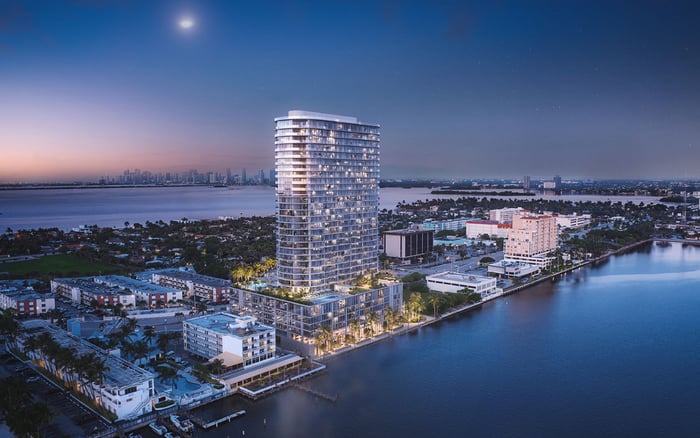
A disciplined North Bay Village purchase examines physical security, digital privacy, association rules, access procedures, and ownership routines before closing.

In North Bay Village, luxury buyers should distinguish a polished arrival experience from the written procedures that govern a residence. An entrance, staff presence, or technology platform does not by itself explain who may enter, what information is collected, or how an incident is handled.
A careful review treats physical protection, operational procedures, digital privacy, and owner routines as connected but separate subjects. This approach can guide the evaluation of a primary residence, second home, condominium, or private home. Buyers considering Continuum Club & Residences North Bay Village should review the documents and procedures applicable to the specific residence rather than rely only on general impressions.
Access control concerns how residents, guests, household staff, contractors, delivery personnel, and other visitors are admitted. Privacy concerns the information created through those interactions, including who may review it, how it is managed, and what choices are available to an owner.
Buyers should request details directly from the developer, association, or management company responsible for the property. When evaluating Shoma Bay North Bay Village, ask which security and privacy provisions are documented and which operational details may change.
Questions should address how credentials are issued, shared, revoked, and audited. If a property uses or contemplates mobile credentials, vehicle recognition, biometric tools, or other data-based systems, request the applicable notices, consent terms, and account procedures.
A security review can include association rules, access procedures, privacy notices, camera policies, delivery instructions, key-control rules, and smart-home transfer materials. Buyers can also ask for procedures covering move-ins, private events, vendors, overnight guests, parking operations, and lost credentials.
Operational questions often reveal where responsibility rests. Ask who may authorize household employees, whether owners can review relevant access records, what restrictions apply to unit-level devices, and how account control changes when a vendor or manager changes.
Review amendments and current versions rather than assuming that an earlier document remains controlling. A buyer should also avoid assuming that similar buildings, brands, or service models use identical procedures.
The physical inspection should cover doors, windows, locks, glazing, alarms, cameras, and any existing security alterations. Buyers should identify who owns each component, who may modify it, and whether association or governmental approval is required before work begins.
If an existing installation raises a compliance question, the contract, inspection, and closing review should clarify who will verify its status, who will complete any required work, and how responsibility will be allocated. Counsel and qualified inspectors can help evaluate the documents and physical conditions relevant to the transaction.
Building controls work best when paired with clear household routines. Owners can plan how keys, fobs, vehicles, deliveries, valuables, visitors, and household staff will be managed during ordinary occupancy and extended absences.
Part-time owners may benefit from a written departure and return checklist. That checklist can identify who monitors the residence, handles deliveries, manages service appointments, responds to alerts, and reports an incident.
For buyers assessing Tula Residences North Bay Village, tracing the complete route from arrival to the private residence can help organize questions about parking, common areas, elevators, amenities, and the boundary between shared and private systems.
Security due diligence should extend beyond equipment. Buyers can review the rules affecting access, parking, guests, vendors, alterations, and circulation at the particular property. For a private home, the review may also include current zoning and permitting records relevant to existing or proposed security work.
These subjects should remain separate files within the larger investigation. Building procedures, property compliance, account control, and owner habits may involve different documents and responsible parties.
Before closing, identify every physical key, digital credential, device account, administrator login, remote permission, and service agreement that may require transfer or replacement. The closing plan should address prior-user removal, credential revocation, account testing, and responsibility for any historical data associated with transferred systems.
The objective is controlled exposure: limited access, clear authority, documented procedures, orderly account transfer, and an incident plan understood by the owner and authorized representatives. A careful buyer confirms these details in writing wherever possible and seeks appropriate professional guidance when documents or obligations are unclear.
What security documents should a North Bay Village buyer request? Ask for current access, visitor, camera, delivery, privacy, key-control, and smart-home transfer materials applicable to the property.
Does a staffed entrance fully explain a building’s security procedures? No. Buyers should also review written rules for credentials, guests, vendors, data, and incident handling.
Why should access control and privacy be reviewed separately? Entry procedures govern admission, while privacy procedures govern the information generated by security systems and interactions.
Should buyers ask about biometric or mobile access? Yes. Ask whether such tools are used or contemplated and request the relevant notices, consent terms, and account procedures.
Why inspect existing security alterations? The inspection can identify ownership, approval, maintenance, and compliance questions that should be resolved before closing.
What should a part-time owner include in a security plan? Address keys, vehicles, deliveries, service visits, monitoring, alerts, and authorized incident response during absences.
Why trace the full arrival route? It helps buyers identify where procedures and responsibilities may change between parking, common areas, amenities, and the residence.
Should buyers rely on policies from a similar building? No. Obtain the current documents and procedures that apply to the specific property under consideration.
What should happen to smart-home access at closing? Administrator control should be transferred, prior users removed, remote permissions reviewed, and critical credentials tested.
Who can help review unclear security obligations? Buyers can consult appropriate legal, inspection, technology, and property-management professionals based on the issue involved.
To compare the best-fit options with clarity, connect with MILLION.
If branded residences are on your mind — as a home or as an allocation — we would be glad to share what we are seeing, privately.
Begin a quiet conversation