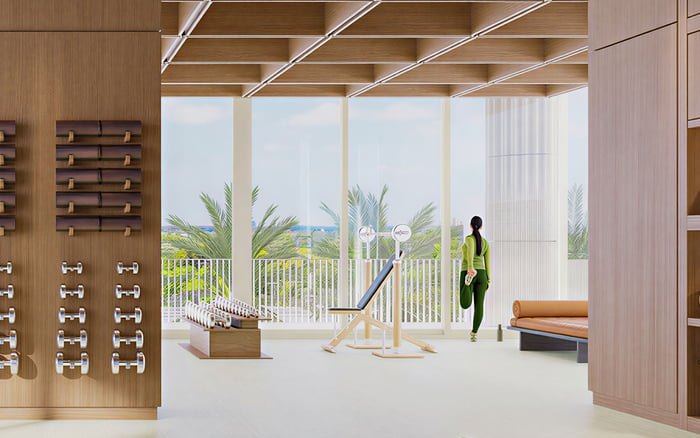
A collector-minded framework for evaluating a Midtown Miami residence, from art walls and storage access to lighting controls, climate systems, approvals, and contingency planning.
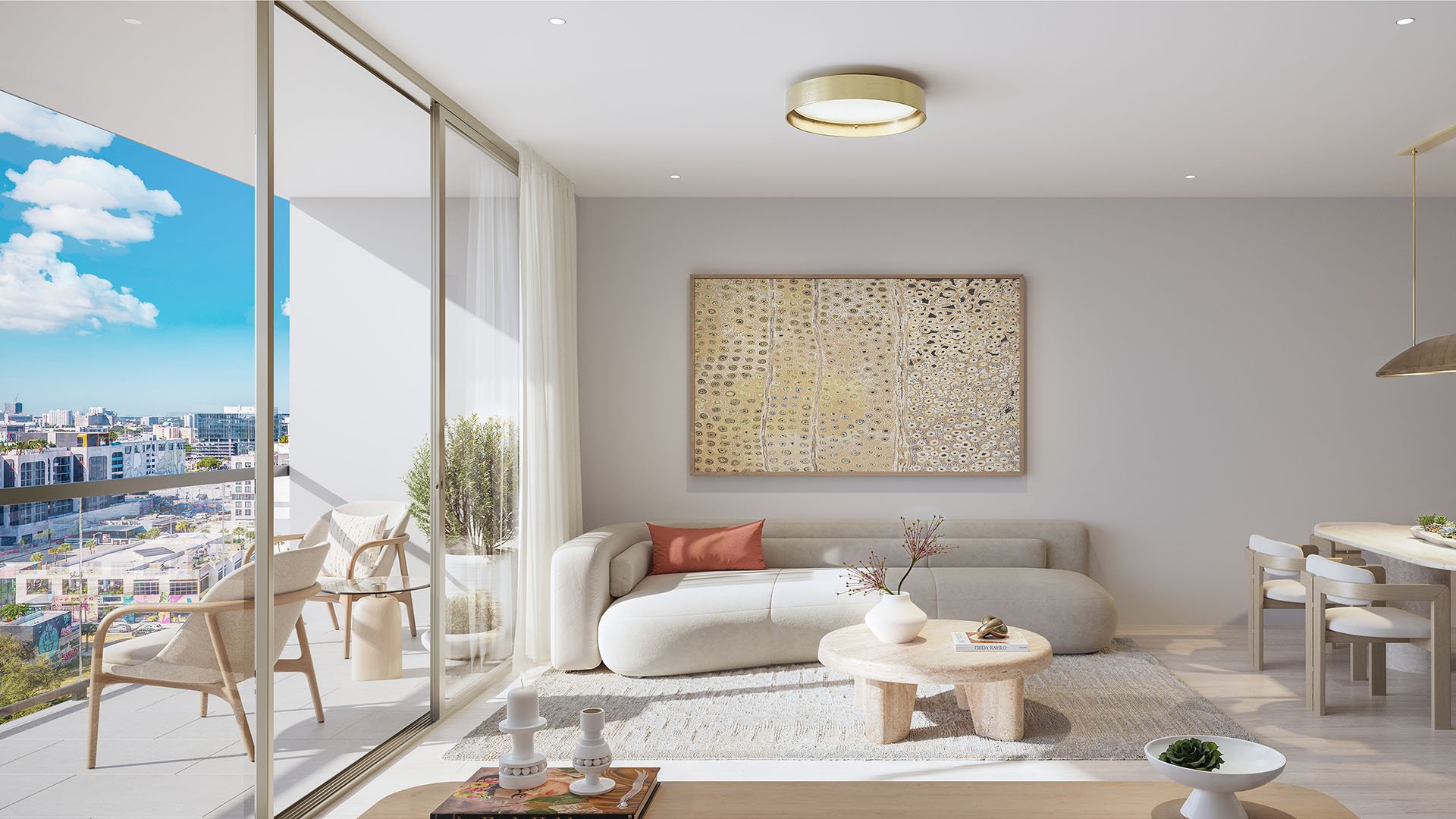
For a buyer who lives with meaningful art, the most persuasive residence is not necessarily the one with the most dramatic glass or the longest gallery wall. It is the one whose architecture, building systems, rules, and service culture align with the collection’s needs.
That distinction should shape due diligence in Midtown Miami. Before selecting finishes, create an inventory organized by format, scale, weight, sensitivity, installation method, and expected rotation. The purpose is not to establish abstract technical standards. It is to identify what the residence must support, what the building must permit, and what requires specialist review.
This is where a conventional showing becomes a collector’s inspection. Measure usable wall fields, not total wall length. Note doors, vents, switches, sprinklers, glazing, and built-ins. Trace the route from the loading area to the elevator and into the residence. Confirm dimensions in writing, and determine who controls access at every stage.
As part of broader buyer’s guide research, buyers may compare Midtown options with nearby Miami Tropic Residences, while treating each building as a separate documentary review rather than assuming comparable capabilities.
Art storage is more than an available closet. A buyer should determine whether the proposed room offers appropriate access, sufficient clear dimensions, a practical layout, and separation from household activities that could interfere with careful handling. The intended use should also be checked against condominium documents, plans, insurance requirements, and alteration restrictions.
Ask how framed works, sculptures, crates, and packing materials would enter and leave. A generous room can still be impractical if the approach includes a narrow turn, restricted elevator, low opening, or finish vulnerable to impact. For large pieces, request a complete route study based on actual measurements. Do not rely on visual estimates.
Operational questions matter equally. Who schedules deliveries? Are outside installers subject to approval? What protections are required in common areas? Are there limits on working hours, elevator reservations, or temporary crate placement? Assemble the answers into a written installation plan before a purchase or commission becomes difficult to move.
A buyer considering the Design District and Wynwood as part of a collection-oriented lifestyle can also study Kempinski Residences Miami Design District and Frida Kahlo Wynwood Residences as distinct residential alternatives, without treating project branding as a substitute for technical verification.
A polished evening presentation does not reveal how art will be experienced throughout the day. Request the reflected ceiling plan, fixture schedule, control information, and glazing specifications available for the exact residence. Then review them against the collection plan.
Map each intended artwork to its likely light sources. Ask whether fixtures can be aimed, changed, serviced, or supplemented, and whether controls support distinct scenes for daylight, entertaining, cleaning, and quiet viewing. Confirm what is included with the residence, what is an upgrade, and what would require an approved alteration.
Daylight warrants room-by-room observation. Visit at different times if access permits, noting how exposure changes across walls and circulation areas. Assess window treatments as part of the display strategy, including their controls, pockets, power, maintenance access, and visual effect when open or closed.
This is fundamentally a design and architecture review, but it is also an operational one. A sophisticated specification has limited value if replacement parts, programming access, or qualified service remain unclear.
Climate-control discussions should begin with documentation, not assumptions. Request the mechanical design information available for the residence, and identify the location of equipment, thermostats, sensors, returns, supply points, and service access. Determine which components are privately maintained and which depend on building operations.
A conservator or qualified collection specialist can translate the inventory into appropriate environmental criteria. A mechanical professional can then assess whether the proposed residence and any dedicated storage area can be operated accordingly. Buyers should avoid prescribing a universal setting or accepting verbal assurances that the system is adequate.
The review should also address monitoring. Ask which conditions can be observed, how data can be retained, who receives alerts, and what happens during an equipment fault, utility interruption, leak event, or prolonged absence. For a second-home buyer, remote oversight and a clearly assigned response protocol may be as important as the equipment itself.
When comparing new-construction choices, EDITION Edgewater can be included in the wider search, but plans, specifications, contracts, and permitted modifications should be examined for the particular residence under consideration.
The decisive fine print may sit outside the sales presentation. Review declarations, rules, alteration procedures, insurance provisions, delivery policies, contractor requirements, and emergency protocols with the appropriate legal, insurance, design, and collection advisers.
Focus on permissions and responsibility. Can walls be reinforced? May lighting circuits or controls be modified? Can mechanical work serve a dedicated room? Who approves penetrations, shades, sensors, or supplemental equipment? Which party maintains each relevant component? Obtain written clarification wherever the documents are ambiguous.
Finally, create a closing file containing approved plans, equipment records, control credentials, installer contacts, photographs, inventories, and response instructions. Careful ownership is not a single specification. It is a coordinated system of architecture, permissions, monitoring, maintenance, and accountable people.
Should art storage be evaluated before making an offer? Yes. An early review can reveal dimensional, access, approval, and building-rule questions that may influence suitability.
Is a large closet automatically suitable for art storage? No. Its dimensions, access, layout, intended use, surrounding conditions, and applicable rules all require separate review.
What lighting documents should a buyer request? Request available ceiling plans, fixture schedules, control information, glazing details, and records of included or optional work.
Why visit the residence at different times of day? Multiple visits allow the buyer to observe how daylight and reflections interact with proposed display walls and circulation spaces.
Who should define environmental criteria for a collection? A qualified collection specialist or conservator should advise based on the actual works rather than a generic target.
What should be confirmed about the HVAC system? Confirm available design information, control locations, service responsibilities, monitoring options, and procedures for faults or interruptions.
Do condominium rules affect art installation? They can govern deliveries, elevator use, contractor access, working hours, alterations, and protection of common areas.
Should heavy artwork be discussed with an engineer? Structural and attachment questions should be directed to qualified professionals and addressed through required building approvals.
What matters for an occasionally occupied residence? Buyers should establish remote monitoring, authorized access, named responders, maintenance routines, and clear escalation instructions.
Is a developer presentation enough for collection planning? No. Buyers should reconcile presentation materials with governing documents, residence-specific plans, contracts, and professional assessments.
For a tailored shortlist and next-step guidance, connect with MILLION.
If branded residences are on your mind — as a home or as an allocation — we would be glad to share what we are seeing, privately.
Begin a quiet conversation