For careful luxury buyers in Boca Raton, evaluating resale depth means looking beyond the asking price to the likely future buyer pool, the scarcity of a residence’s line or lot, the defensibility of its view, and the condition and finances of the property or building.

Luxury ownership in Boca Raton rewards precision. A residence may be beautifully finished and compelling to its current owner yet still appeal to a limited audience when it returns to market. Resale depth reflects the size and quality of the plausible future buyer pool for that specific property type, price position, location, condition, access profile, and outlook.
Broad market conditions can provide context, but they cannot determine the resale prospects of an individual property. The practical question is straightforward: if the residence returned to market after several years, how many credible alternatives might a buyer consider at the same time?
Citywide averages can conceal meaningful differences among Boca Raton properties. A buyer should narrow the comparison set by residence type, location, condition, lot or line quality, waterfront characteristics, amenities, and access.
Resale depth can become more difficult to judge when few genuinely comparable properties are available. In that setting, buyers should resist treating a singular asking price as proof of lasting scarcity. The stronger approach is to identify the closest substitutes and determine why a future buyer would choose the subject property over each one.
A disciplined comparison should also distinguish personal utility from broad market appeal. A highly customized residence may be ideal for one owner without attracting the same premium from the next buyer.
In an attached residence, line selection is more than a floor-plan preference. It shapes orientation, privacy, light, exposure, sightlines, and the number of close substitutes. Buyers comparing Alina Residences Boca Raton with other Boca Raton opportunities should map each candidate against units in the same stack, neighboring stacks, and competing buildings.
A high floor is not inherently scarce. The relevant test is whether the residence combines a desirable outlook, functional proportions, privacy, appealing light, and limited duplication. At Glass House Boca Raton, as with any condominium under consideration, buyers should distinguish the appeal of the building from the defensibility of the particular residence.
Line-level analysis should account for both current enjoyment and future competition. If several residences deliver nearly the same layout and outlook, a buyer should be cautious about paying a premium based on perceived uniqueness.
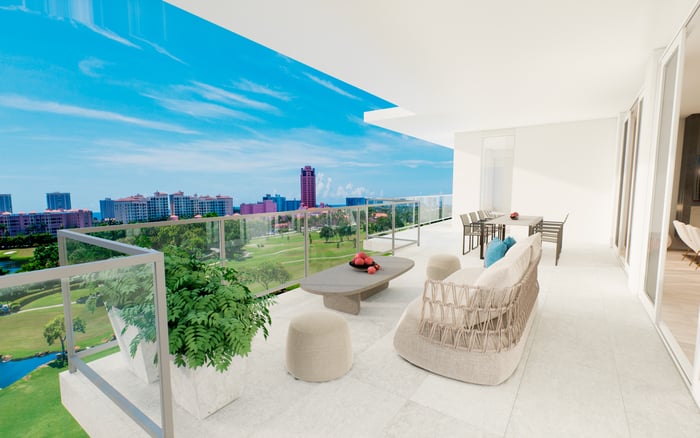
A view is an experience; view scarcity is an investment consideration. Scarcity depends on factors such as permanence, angle, breadth, elevation, foreground quality, privacy, and the number of competing residences with a substantially similar outlook.
A waterview description alone is not enough. Buyers should examine what occupies the sightline, whether nearby properties could affect it, how the outlook changes with light and weather, and whether adjacent residences share the same visual proposition.
The same reasoning applies when considering Mr. C Residences Boca Raton or The Residences at Mandarin Oriental Boca Raton. A building’s identity may establish the initial frame, but the specific line, outlook, privacy, layout, and competing supply should guide the assessment of an individual residence.
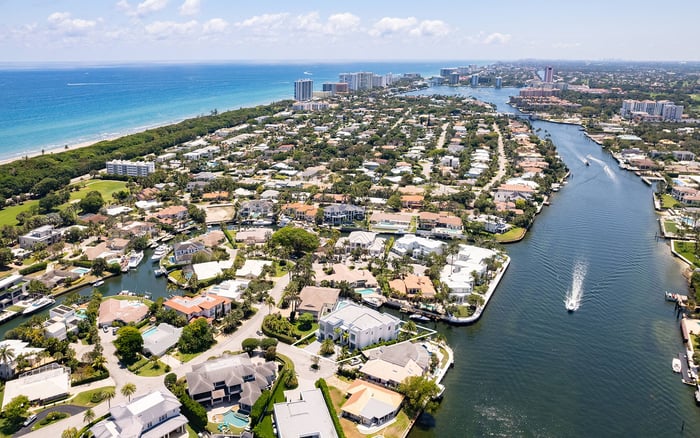
Waterfront property should be analyzed through its practical utility as well as its visual appeal. Buyers should examine the type of waterfront, orientation, privacy, access characteristics, exposure, lot configuration, and the availability of comparable properties.
For a single-family acquisition, it is useful to separate the value of the structure from that of the lot, water position, orientation, and access profile. Two visually similar homes may not be close substitutes if their parcels or waterfront utility differ. A high asking price does not establish scarcity; the number and quality of credible alternatives provide a more useful test.
A desirable condominium line cannot fully isolate an owner from building-level concerns. Buyers should review association finances, reserves, assessments, insurance obligations, maintenance requirements, and other documents relevant to ownership and resale.
These issues belong in the acquisition analysis rather than being deferred until the end of a transaction. A residence with exceptional design or views may still face a narrower future audience if building-level costs or obligations reduce its appeal.
Negotiation should therefore account for both the pleasures and the constraints of ownership. The appropriate offer depends on the property’s condition, scarcity, pricing history, competition, documents, and the buyer’s own objectives rather than on a standard discount formula.
A disciplined acquisition memo should identify the likely future buyer, the closest substitutes, the property’s difficult-to-replicate attributes, its correct comparison set, and a realistic resale strategy. It should also distinguish improvements that may support broad demand from highly personal finishes whose cost may not be reflected in a future sale.
The strongest purchase is not necessarily the least expensive or the most visually dramatic. It is the residence whose utility remains compelling, whose scarcity can be demonstrated, and whose risks are understood before ownership begins.
What does resale depth mean in Boca Raton luxury real estate? It describes the likely size and quality of the future buyer pool for a specific property, considering its type, location, condition, price position, access, and outlook.
Why are broad Boca Raton market averages insufficient? Citywide figures can obscure differences among property types, locations, conditions, waterfront characteristics, lots, and condominium lines.
How should buyers identify the correct comparison set? Start with properties that share the most important characteristics, then compare condition, layout, location, access, views, amenities, and credible alternatives.
Does a high floor guarantee stronger resale appeal? No. Elevation should be assessed alongside privacy, orientation, layout, light, sightlines, and the number of similar residences.
How should buyers compare condominium lines? Compare orientation, privacy, proportions, natural light, view durability, functionality, and competing units within the building and nearby market.
What makes a view scarce? A scarce view is difficult to replicate because of its protection, breadth, angle, elevation, foreground quality, privacy, or limited competing supply.
How should waterfront utility be evaluated? Review the type of waterfront, access characteristics, orientation, exposure, privacy, lot configuration, and available substitutes rather than relying on scenery alone.
Which building considerations can affect future resale? Association finances, reserves, assessments, insurance obligations, maintenance requirements, and other ownership documents can influence future demand.
Should buyers apply a standard negotiation discount? No. An offer should reflect the specific property’s condition, scarcity, pricing history, competition, documents, and the buyer’s objectives.
What belongs in an ownership thesis? It should identify the likely future buyer, closest substitutes, difficult-to-replicate features, relevant risks, and a realistic resale strategy.
For a discreet conversation and a curated building-by-building shortlist, connect with MILLION.
If branded residences are on your mind — as a home or as an allocation — we would be glad to share what we are seeing, privately.
Begin a quiet conversation