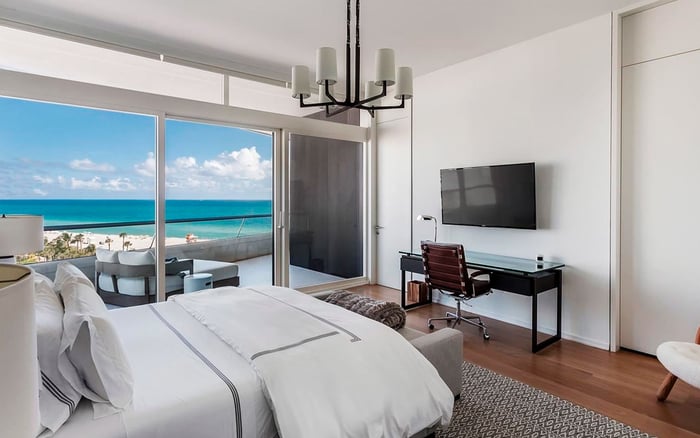
In Bay Harbor Islands, lifestyle value depends on operating details that broad amenity labels may not explain. Careful buyers should test routes from the actual entrance, distinguish club benefits from ownership rights, and review the rules governing private dining, guests, fees, and resale.

In Bay Harbor Islands, phrases such as “walkable,” “club access,” and “private dining” can leave important ownership questions unanswered. Buyers should determine how each feature works in practice, which documents govern it, who may use it, and what costs or restrictions may apply.
A buyer considering The Well Bay Harbor Islands should request the documents controlling any membership or club-related benefit rather than relying on a broad description. The same discipline applies to dining spaces, guest privileges, reservations, and services.
Walkability should be evaluated from the residence’s actual entrance. Buyers can test likely routes at the times they expect to use them, noting crossings, access points, and the return journey rather than relying on a neighborhood label.
When evaluating Onda Bay Harbor, begin with the entrance and the destinations relevant to your routine. Repeat the exercise for dining, errands, guest arrivals, and any other route that influences the purchase decision.
The practical value of proximity depends on the buyer’s own schedule and mobility preferences. A route that appears short should still be walked before convenience is assigned a premium.
Club access, resident benefits, and building amenities should be reviewed as separate concepts. Buyers should ask whether a benefit is connected to occupancy, ownership, a separate membership, or an operator agreement.
The governing materials should clarify eligibility, household access, guest privileges, fees, suspension rights, transferability, and treatment at resale. Complimentary access should not be assumed to be deeded, permanent, or transferable unless the controlling documents say so.
When comparing Alana Bay Harbor Islands with Origin Bay Harbor Islands, use the same checklist for each property. Similar amenity language does not by itself establish identical rights, service levels, or recurring obligations.
Private dining may refer to a resident entertaining space rather than a staffed restaurant or included food-and-beverage service. Buyers reviewing La Baia North Bay Harbor Islands should determine how any relevant space is reserved, operated, staffed, and charged.
Ask about booking windows, reservation priority, guest limits, event fees, catering requirements, approved vendors, cleaning charges, operating hours, insurance, and security. Also confirm whether residents can use the space independently or must arrange staff or vendors.
The value of a dining amenity depends on usability, privacy, governance, cost, and fit with the owner’s expected pattern of residence. The label alone is not enough to establish that value.
Create a line item for every lifestyle feature under consideration. Record the provider, eligible users, governing document, direct fee, possible shared cost, change mechanism, guest policy, and resale treatment.
With appropriate legal and financial advisers, review the applicable condominium documents, budgets, house rules, membership terms, management agreements, and operator agreements. Written terms should control the analysis when they differ from general marketing language.
Compare the entire amenity package against expected use and recurring costs. This approach helps a buyer distinguish an attractive concept from a benefit that is practical, documented, and suitable for careful ownership.
Where should a Bay Harbor Islands walkability test begin? Start at the residence’s actual entrance and follow the routes you expect to use.
Why should buyers test routes at different times? Access points, crossings, and the experience of returning home may matter differently depending on the buyer’s schedule.
Does club access automatically create an ownership right? No. Buyers should verify whether access is tied to ownership, occupancy, a separate membership, or another agreement.
Should complimentary access be assumed to be permanent? No. Eligibility, duration, fees, and change provisions should be confirmed in the controlling documents.
Can a club benefit transfer at resale? Transferability should not be assumed and must be checked in the applicable terms.
What can private dining mean in a condominium? It may describe a reservable entertaining space rather than a staffed restaurant or included dining service.
What booking terms should buyers review? Review reservation windows, priority rules, operating hours, guest limits, and the treatment of private events.
What costs can accompany a dining space? Buyers should ask about staffing, catering, vendors, cleaning, security, insurance, and event charges.
Why compare the full amenity package? A feature’s practical value depends on its rules, service level, governance, cost, and expected use.
Which documents should careful buyers review? Review the applicable condominium documents, budgets, house rules, membership terms, management agreements, and operator agreements with appropriate advisers.
To compare the best-fit options with clarity, connect with MILLION.
If branded residences are on your mind — as a home or as an allocation — we would be glad to share what we are seeing, privately.
Begin a quiet conversation