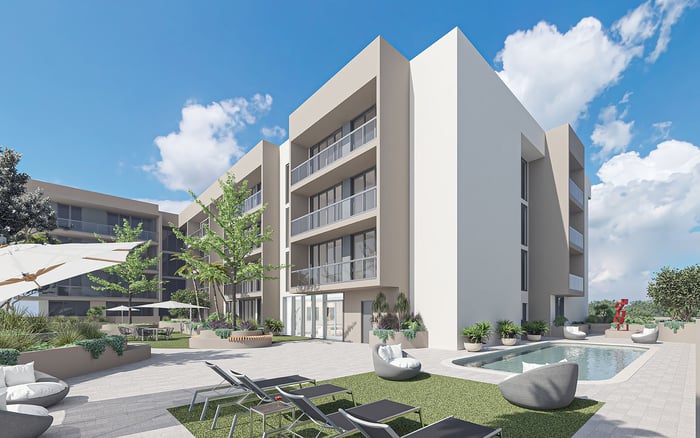
A buyer-focused examination of how deeded parking, limited common elements, and revocable licenses create different levels of control, transferability, and resale certainty at Ziggurat Coconut Grove.

At Ziggurat Coconut Grove, the phrase “two parking spaces” may sound definitive. Legally, it is only the beginning of the inquiry. A numbered stall, reserved sign, permit, sales description, or valet assurance does not establish what a purchaser owns or controls. The governing instruments do.
For buyers evaluating Coconut Grove property, parking can shape daily convenience, EV-charging plans, transfer rights, and future marketability. This Buyer's Guides analysis therefore treats parking as a substantive property right, not an amenity footnote. The supplied materials do not establish how parking spaces at Ziggurat Coconut Grove are classified, so every promised space must be verified against the recorded documents.
Deeded parking
Is owned as real property. It generally provides the strongest control and lowest reassignment risk, although the condominium declaration may restrict a separate sale or transfer. Counsel should confirm whether the stall has its own legal description, appears in the deed, and can transfer independently of the residence.
A limited common element, commonly called an LCE, remains part of the condominium’s common elements but is reserved in the declaration for the exclusive use of specified units. The owner typically receives an exclusive use right rather than separate fee-simple title to the stall. When the LCE is appurtenant to a residence, the right ordinarily passes with that residence; any separate transfer must follow the declaration’s procedures.
A license or assignment is less durable. The developer or association may retain authority to move, revoke, or reprice the space when permitted by the governing policy or agreement. Common-element parking may also be first-come, first-served or subject to board reassignment. Exclusive use in practice is not necessarily permanent exclusive use in law.
This hierarchy matters throughout the neighborhood, whether a purchaser is considering Four Seasons Residences Coconut Grove, The Well Coconut Grove, or another new project. The answer must come from that property’s own documents.
The review should begin with the recorded declaration and extend through amendments, plats, parking exhibits, unit schedules, the deed, and any separate easement or license agreement. Together, these materials should reveal whether a space is separately owned, designated as an LCE for a particular unit, or merely assigned under revocable rules.
For an LCE, verify the precise unit-to-stall allocation and whether the right is described as appurtenant. Determine who may approve a transfer, whether reassignment is possible, and what amendment threshold could alter the arrangement. Informal usage does not automatically establish a protected LCE. A private arrangement between owners may create only a license if the declaration does not authorize a permanent transfer.
For licensed or assigned spaces, examine duration, renewal, fees, termination rights, relocation powers, and whether the arrangement survives a resale. Valet and guest-parking privileges should be assessed separately from self-parking rights.
A single residence can carry different parking rights. The first stall might be an appurtenant LCE, while a second could be licensed, assigned, or provided through valet operations. A purchase contract should therefore identify each space, its legal classification, and the instrument creating the right. Merely repeating the total number leaves the central issue unresolved.
The same discipline applies when comparing Opus Coconut Grove or planning a pre-construction acquisition. Parking schedules and final recorded exhibits warrant close attention before contractual deadlines pass, particularly when a household expects permanent access for multiple vehicles.
Ask counsel to confirm, in writing:
Whether each stall has a separate legal description or appears in the deed.
Whether each LCE is expressly allocated and appurtenant to the residence.
Whether the board or developer can assign, relocate, revoke, or reprice it.
Whether a separate transfer is allowed, restricted, or prohibited.
Whether the right passes automatically upon resale.
Which recurring charges, valet terms, and guest-use rules apply.
Whether the location accommodates the intended vehicle and access needs.
What rights, approvals, costs, and procedures govern EV-charger installation.
Buyers planning an EV charger should confirm that the relevant parking right, governing documents, and approval procedures support the intended installation before relying on that use.
Parking certainty can shape liquidity as much as convenience. A purchaser expecting a permanent second stall may value the residence differently if that stall can be moved, repriced, or withdrawn. Clear deeded ownership typically provides the strongest position; a documented LCE offers protected exclusive use within the condominium framework; and a revocable license offers the least certainty.
The objective is not to favor one structure automatically, but to price, negotiate, and plan with precision. Contract language should align with the recorded framework, and closing documents should deliver exactly the rights the buyer expects.
Does a contract promising two parking spaces prove ownership? No. It does not establish whether either space is deeded, an LCE, or a revocable assignment.
What is a limited common element parking space? It is a common element reserved in the declaration for the exclusive use of a specified unit or units.
Is an LCE the same as deeded parking? No. An LCE generally provides exclusive use, while deeded parking is owned as real property.
Does an LCE normally transfer with the residence? It may transfer with the residence when it is appurtenant to the unit, while any separate transfer must follow the declaration.
Can a board reassign a parking space? It may be able to do so when the declaration or assignment policy grants that authority.
Does a reserved sign create a permanent right? No. Signs, permits, and stall numbers do not determine the legal classification.
Can two spaces attached to one residence have different classifications? Yes. Each promised space should be reviewed independently under its governing instrument.
What documents should a buyer examine? Review the declaration, amendments, plats, exhibits, deed, and any easement or license agreement.
How should EV-charging plans be reviewed? Confirm the parking classification, governing documents, approval procedures, costs, and installation requirements before relying on charger access.
Which parking structure offers the greatest certainty? Deeded ownership generally offers the strongest control, followed by an LCE and then a revocable license.
For a discreet conversation and a curated building-by-building shortlist, connect with MILLION.
If branded residences are on your mind — as a home or as an allocation — we would be glad to share what we are seeing, privately.
Begin a quiet conversation