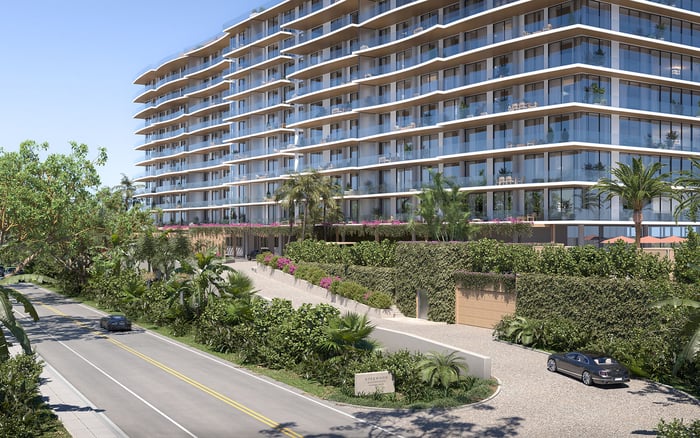
Airport proximity at Rosewood Residences Hillsboro Beach should be evaluated under the conditions that matter to each buyer, including peak traffic, holidays, and event weekends. Repeated door-to-terminal tests can reveal more than a single estimated drive time.

At Rosewood Residences Hillsboro Beach, airport access deserves to be examined as part of the ownership experience rather than reduced to a single drive-time estimate. A map can establish broad proximity, but it cannot show how a particular trip will perform during the periods when an owner, guest, or staff member is most likely to travel.
That distinction is especially important for buyers whose schedules depend on commercial flights, private aviation appointments, or tightly coordinated arrivals. The relevant question is not simply whether an airport appears nearby. It is whether the complete transfer remains practical under the conditions that matter to the buyer.
Airport access is best judged by time, route, and occasion.
A quoted airport drive time can be useful for initial orientation, but it should not be treated as a dependable door-to-terminal schedule. Traffic volume, departure time, road conditions, bridge activity, weather, holidays, and local events can all affect the journey.
The starting and ending points also matter. A route measured to an airport boundary does not represent the same experience as a trip ending at the correct terminal or departure area. Buyers should therefore define the measurement before comparing results.
The practical standard is repeatability. If a route performs well only under light traffic, that result may have limited value for an owner who usually travels during busy periods. A broader set of tests can reveal whether access is relatively predictable or highly dependent on timing.
Event weekends deserve their own evaluation because ordinary routing assumptions may not apply. Increased local traffic, temporary controls, crowded gathering areas, and navigation changes can affect the first portion of an airport trip before the traveler reaches a major regional road.
This does not mean every event will disrupt every transfer. It means buyers should avoid using a normal-condition estimate as the answer to an event-day question. Checking local notices and live navigation before departure is prudent, but advance testing offers a better understanding of the available options.
A useful exercise is to identify more than one viable route and note where each route is vulnerable to delay. The goal is not to predict every disruption. It is to understand how much flexibility the location offers when the preferred route becomes less attractive.
The strongest due diligence process reflects the buyer’s actual travel habits. Someone who regularly departs on weekday mornings should test that window. A second-home owner arriving for weekends should examine the periods that commonly frame those visits. Holiday travel and local-event evenings should be reviewed separately rather than folded into an average.
Each test should begin at the residence and end at the relevant terminal or pickup area. Buyers should record the departure time, route, major delays, and total duration. Repeating the exercise can help distinguish an isolated result from a recurring pattern.
Four scenarios are particularly useful:
A typical weekday departure during a busy travel period
A Friday arrival or departure
A holiday travel window
A local-event weekend or evening
The purpose is not to produce one definitive number. It is to establish a realistic operating range and identify the circumstances that require a larger margin.
Buyers can place Rosewood within a broader South Florida comparison set. Nearby alternatives include Armani Casa Residences Pompano Beach and The Ritz-Carlton Residences® Pompano Beach. Farther south, Four Seasons Hotel & Private Residences Fort Lauderdale offers another point of reference.
These comparisons should not be reduced to whichever route produces the shortest result on a single test. Buyers should consider consistency, alternate routing, terminal-specific travel, and the fit between each location and their own calendar.
For branded residences, service may make a transfer more comfortable and better coordinated, but it cannot guarantee a fixed journey time. Transportation planning remains part of the practical evaluation even when a driver, concierge, or household team manages the details.
Rosewood’s appeal should be considered alongside the buyer’s tolerance for variation in road travel. Some owners may accept additional planning as part of choosing a more private coastal setting. Others may place greater value on the most predictable possible route to frequent flights or business commitments.
Neither priority is universally correct. The decision depends on how the residence will be used, who will travel most often, and how much schedule flexibility is available. Buyers should include family members, staff, and regular guests in the analysis when their routines will shape the ownership experience.
The same reasoning applies to return trips. An outbound test alone does not show how evening arrivals, weekend pickups, or holiday traffic may affect the transfer back to the residence. Testing both directions creates a more complete picture.
The fine print is straightforward: an advertised airport drive time is best treated as an orientation point under unspecified conditions. It is not a peak-period commitment, an event-weekend guarantee, or a substitute for personalized testing.
Before making a purchase decision, buyers should repeat the relevant journeys, allow appropriate departure margins, review local conditions, and understand the available alternatives. The most useful result is not the fastest observed trip but a realistic range for ordinary and disrupted days.
At this level of the South Florida market, access merits the same disciplined review as design, service, and the broader ownership experience. Rosewood may fit a buyer’s priorities exceptionally well, but that conclusion should follow a travel test built around the buyer’s real schedule.
For discreet guidance on Rosewood and South Florida’s coastal market, consult MILLION.
If branded residences are on your mind — as a home or as an allocation — we would be glad to share what we are seeing, privately.
Begin a quiet conversationTesting helps buyers understand how the complete transfer performs under the conditions that match their travel routines.
No. It is best treated as an orientation point because traffic, timing, events, and route conditions can change the journey.
It should begin at the residence and end at the relevant terminal, pickup area, or departure area.
Useful scenarios include busy weekday periods, Friday travel, holidays, and local-event weekends.
Events may increase traffic or alter normal routing assumptions, making an ordinary-condition estimate less useful.
Yes. Comparing viable alternatives can show how much flexibility is available when the preferred route is delayed.
Buyers should repeat the journeys that reflect their typical schedule rather than relying on one unusually fast or slow result.
They should note the departure time, route, major delays, destination point, and total journey duration.
No. Services can improve coordination and comfort, but they cannot guarantee road or traffic conditions.
The best standard is a realistic travel range based on repeated, route-specific tests under ordinary and disrupted conditions.