Maison d’Or’s advertised private arrival experience raises a separate buyer question: how would the systems behind that access handle personal information? A measured guide to visitor records, resident-app terms, conditional biometric access, and Florida’s privacy protections.

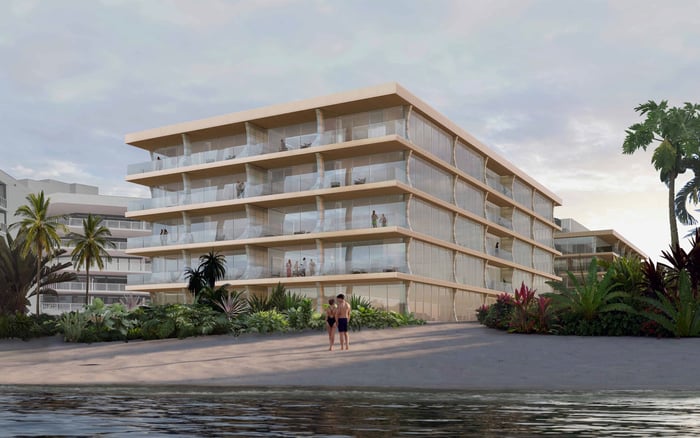
At Maison D'Or South Flagler in West Palm Beach, the advertised arrival experience is distinctly private: access-controlled elevators open into individual residential elevator lobbies. Direct Intracoastal Waterway access through a newly constructed private boat dock and slips adds another dimension to that promise of discretion.
For a buyer, physical privacy and information privacy deserve separate consideration. An elevator may restrict who reaches a residence without explaining whether entry events are recorded, who can inspect them, or when those records are deleted. The question is not whether access control belongs in a luxury building, but whether its information practices are as carefully defined as its physical boundaries.
Neither biometric entry nor a particular resident-app vendor, visitor-registration configuration, or internal retention schedule is established here. These are due-diligence questions, not evidence of a breach, improper surveillance, or misuse.
The online terms describe access to “Services” as personal and nontransferable, subject to an agreement and privacy policy. They also prohibit collecting or harvesting personally identifiable information from those Services. That restriction does not describe what a building’s security systems collect.
The privacy language recognizes that cookie-derived information may become personally identifiable when combined with other information. It also allows de-identification through aggregation or removal of identifiers such as names, distinguishing the resulting information from personal data.
Those provisions matter within their stated scope. They do not establish that the same policy governs elevator credentials, visitor records, or a future resident app. Buyers should request the governing document for each proposed system rather than treat one online policy as a complete account of residential operations.
The practical distinction is straightforward: ask which agreement covers browsing, which covers occupancy-related technology, and which entity is responsible under each.
Begin with a hypothetical visit, not a technical specification. Ask the sales or management team to explain how a dinner guest, household employee, contractor, and overnight visitor would receive entry authorization.
Would registration require only a name, or also a telephone number, photograph, identification document, or vehicle details? Would staff collect the information, the resident enter it, or the guest submit it directly? These are questions to resolve, not descriptions of Maison d’Or’s configuration.
Next, separate authorization from recordkeeping. Ask whether a credential’s expiration also removes the associated record. Request the retention period, permitted uses, staff access rules, and procedure for correcting an inaccurate entry.
A buyer also considering Alba West Palm Beach can use the same questions for a consistent comparison. The useful benchmark is the clarity of each property’s written answers-not an assumption that neighboring residences use equivalent systems.
If a resident app is proposed, request its name, operator, privacy notice, and applicable agreement before evaluating its convenience. Ask whether essential building access would depend on accepting optional functions or permissions.
A useful review separates the information an app needs to perform a requested service from information it might collect for other purposes. Ask whether any proposed location, contact, camera, or notification permissions are necessary, optional, or avoidable through another service channel. No such permissions are established for Maison d’Or here.
Responsibility should be equally explicit. Would the association, manager, or technology vendor answer a privacy request? Who could export records? What would happen to an account and its history after a sale or vendor change?
For a household seeking unobtrusive service, an alternative to app-only interaction is worth discussing. Confirm its availability rather than assume it.
Private, access-controlled elevators do not establish facial recognition or fingerprint entry. Buyers should first ask whether biometric authentication is contemplated at all. Only then does a more detailed review become relevant.
If biometric access is proposed, request a description of the information captured and retained, its purpose, storage arrangements, access permissions, and deletion process. Ask whether enrollment would be optional and whether a non-biometric credential would provide comparable access. Request separate explanations for residents, household staff, and visitors.
Florida’s 2023 Digital Bill of Rights legislation includes biometric data processed to uniquely identify an individual within its definition of sensitive data. That classification makes legal scope an important question; it does not establish that every association or access vendor falls within the legislation.
The objective is not to reject a technology by category, but to understand the proposed arrangement before treating enrollment as a routine part of ownership.
Florida’s Information Protection Act, section 501.171, requires covered entities to protect personal information and provide breach notifications under specified conditions. The Digital Bill of Rights provides access, correction, deletion, and data-copy rights for consumers dealing with covered controllers.
Neither statement amounts to an unconditional promise that a particular condominium association or vendor must delete a buyer’s information on request. Counsel should assess the relevant entity, data, service, and applicable obligations. Contractual commitments deserve attention alongside statutory protections.
Buyers should ask for a stated retention period suited to each record category, with any exceptions explained. A clear policy should address routine expiration, account closure, and any circumstances permitting longer retention. The goal is an understandable lifecycle, not merely reassuring language about security.
Owners dividing time between residences should ask how delegated access would work. Could a household representative authorize visitors without receiving broader account access? How would temporary permissions be revoked? Who would receive notices when a privacy policy or vendor changes?
Apply the same discipline when evaluating Forté on Flagler West Palm Beach. This is a comparison of questions buyers should ask, not a claim about either property’s technology or privacy practices.
Before making a purchase decision, request a concise written package: the proposed system inventory, applicable policies, responsible entities, retention rules, and available alternatives. Distinguish confirmed commitments from features or procedures still under consideration.
Maison d’Or’s advertised private lobbies and waterfront arrival offer a compelling physical expression of discretion. The buyer’s next step is to seek equal precision about any information collected along the way. Luxury is not only control over who enters, but clarity about what that entry leaves behind.
For a considered perspective on South Florida luxury ownership, explore MILLION.
If branded residences are on your mind — as a home or as an allocation — we would be glad to share what we are seeing, privately.
Begin a quiet conversationThe project advertises private, access-controlled elevators opening into individual residential elevator lobbies. It also advertises direct Intracoastal Waterway access through a newly constructed private boat dock and slips.
No biometric deployment is established here. Facial recognition and fingerprint entry should be treated as questions to investigate, not announced features.
A particular resident-app vendor is not established here. Buyers should request the operator’s identity and the applicable terms if an app is proposed.
The online terms do not establish that they govern elevator credentials or entry records. Buyers should request the policy applicable to each building system.
Ask what information would be required, who would collect it, who could access it, and how long it would remain. Also clarify whether credential expiration removes the associated visitor record.
It recognizes that cookie-derived information may become personally identifiable when combined with other information. This does not establish how building-access data would be handled.
Section 501.171 requires covered entities to protect personal information and provide breach notifications under specified conditions. Applicability to a particular entity requires a coverage assessment.
No automatic entitlement is established here. The Digital Bill of Rights provides specified consumer rights for dealings with covered controllers, not necessarily every association or vendor.
Buyers should request a retention period for each record category and an explanation of any exceptions. The policy should address credential expiration, account closure, and circumstances permitting longer retention.
Request the proposed system inventory, governing privacy policies, responsible entities, retention rules, and available access alternatives. Separate confirmed commitments from arrangements still under consideration.