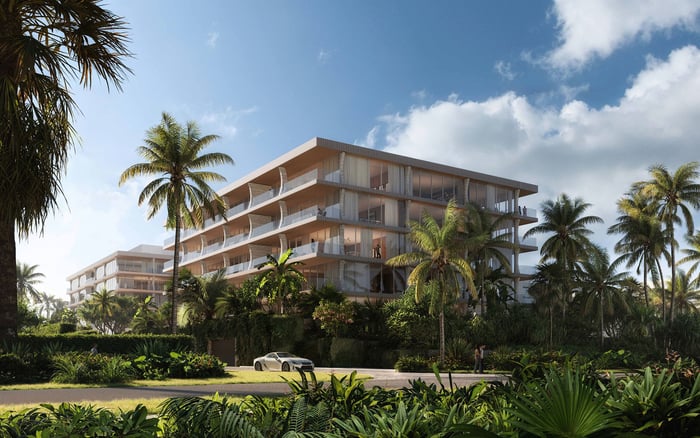
A quoted association fee is only one part of the ownership-cost analysis at Forté on Flagler. Buyers should determine whether the figure reflects recurring operations, reserve planning, insurance, the residence’s allocation of common expenses and any temporary developer support.

At Forté on Flagler West Palm Beach, an association-fee quote should begin the diligence process rather than end it. The amount presented in a listing, sales discussion or estimate may reflect a particular residence, budget period and stage of operations. It should not be treated as a permanent building-wide promise without support from the governing and financial documents.
The title’s central issue is an important distinction: an initial developer contribution, subsidy or operating guarantee can reduce the amount owners are asked to fund during a limited period. That does not establish that such support currently applies at Forté. Buyers should request written confirmation instead of assuming that a quoted fee either includes or excludes temporary support.
The most useful HOA number is the one that can be reconciled with the budget, the unit allocation and the services being funded.
If support exists, its terms matter more than its label. Buyers need to know which expenses it covers, when it ends, whether it declines in stages and how the association expects to replace it. If no support exists, the inquiry shifts to whether current owner collections are sufficient for the adopted service and reserve plan.
A stabilized association cost is the recurring owner-funded amount needed after temporary contributions and startup conditions no longer affect the budget. It may include staffing, maintenance, utilities, contracts, insurance, administration and reserve contributions, depending on the condominium documents and adopted budget.
The key word is recurring. A first-year estimate can be internally consistent while still differing from later actual expenses. Contracts may be finalized, insurance costs may be updated and the association may gain a clearer view of routine maintenance. None of those possibilities proves that a specific increase will occur; they explain why a point-in-time quote requires context.
Buyers comparing Forté with South Flagler House West Palm Beach or The Ritz-Carlton Residences® West Palm Beach should avoid ranking the choices by monthly fee alone. A useful comparison aligns the expense categories, allocation method, reserve approach and included services for each residence under consideration.
Start with the current adopted budget. It should show expected income, operating expenses and the assessments required from owners. Then review the most recent financial statements available for the same period. The budget presents assumptions; financial statements help show how actual activity compares with those assumptions.
Next, identify the residence’s percentage interest or other documented allocation of common expenses. A quote attached to one home may not apply to another. The condominium declaration and related schedules should explain the allocation method, while the assessment statement should connect that method to the amount being charged.
Reserve planning also deserves separate attention. Buyers should review the applicable reserve materials, contribution schedule and any stated exclusions. The goal is not to predict a special assessment. It is to understand which longer-term capital needs are addressed through recurring contributions and which may remain outside the current plan.
Insurance should be reviewed as its own budget category. The relevant questions include what coverage the association maintains, which deductibles apply and whether the adopted budget reflects the premiums in effect for that budget period. A buyer should also distinguish association coverage from insurance and upkeep that remain the individual owner’s responsibility.
Finally, request any written developer-support agreement, operating guarantee or subsidy document. The file should identify the duration, covered expenses, termination conditions and process for replacing the contribution. Verbal descriptions are not a substitute for the controlling documents.
A disciplined review can be completed in a logical order:
Identify the exact legal residence and the governing condominium documents.
Match the quoted assessment to that residence and budget period.
Confirm the documented allocation of common expenses.
Compare the adopted budget with the latest available financial statements.
Review reserve planning, insurance and major service contracts.
Ask in writing whether any developer contribution or operating guarantee applies.
If support exists, model the owner obligation after it expires.
This sequence helps separate confirmed costs from assumptions. It also creates a consistent framework for comparing Forté with another West Palm Beach option such as Alba West Palm Beach without implying that the projects share the same budget structure or service program.
Professional review can add context. A Florida real estate attorney can interpret governing documents, while an accountant or other qualified adviser can help evaluate budgets and financial statements. The buyer’s objective is not to obtain a guarantee that expenses will never change, but to understand what supports the current figure and what could alter the owner-funded amount.
An association assessment is only one component of condominium ownership. A personal budget may also account for property taxes, residence-level insurance, financing, interior maintenance and services arranged directly by the owner. Keeping those categories separate prevents a comparatively simple monthly quote from obscuring the broader obligation.
The most reliable conclusion is therefore document-based. Determine what the current assessment funds, confirm how the residence’s share is calculated and establish whether any temporary support affects the amount. Only then can a buyer judge whether the projected cost aligns with the desired ownership experience and financial horizon.
For confidential guidance on distinguished South Florida residences, connect with MILLION.
If branded residences are on your mind — as a home or as an allocation — we would be glad to share what we are seeing, privately.
Begin a quiet conversationIt is a point-in-time amount associated with a particular residence, budget period and set of assumptions. The governing and financial documents provide the necessary context.
This article does not establish that a current subsidy exists. Buyers should request written confirmation of any developer contribution or operating guarantee.
Temporary support can reduce the amount owners fund during a defined period. The owner-funded obligation may differ after that support ends.
It is the recurring owner-funded cost after temporary support and startup conditions no longer affect the budget. It should reflect the association’s ongoing expense and reserve structure.
Begin with the current adopted budget, then compare it with the latest available financial statements and the governing documents.
The documented allocation determines that residence’s share of common expenses. An assessment quoted for one home may not apply to another.
Reserve materials help show how the association plans for applicable longer-term capital needs. Buyers should examine contributions, schedules and stated exclusions.
Review the association’s coverage, deductibles and the premiums reflected in the applicable budget. Also distinguish association coverage from the owner’s individual responsibilities.
Compare expense categories, allocation methods, reserve approaches and included services rather than relying only on the monthly assessment.
No point-in-time quote should be treated as a permanent ceiling. Buyers should evaluate the documents supporting the current amount and the conditions that may affect future budgets.