A disciplined purchase plan at Ponce Park separates construction-stage deposits, closing liquidity, and association reserves. Conflicting public fee estimates make written budget confirmation and contract-specific timing essential.
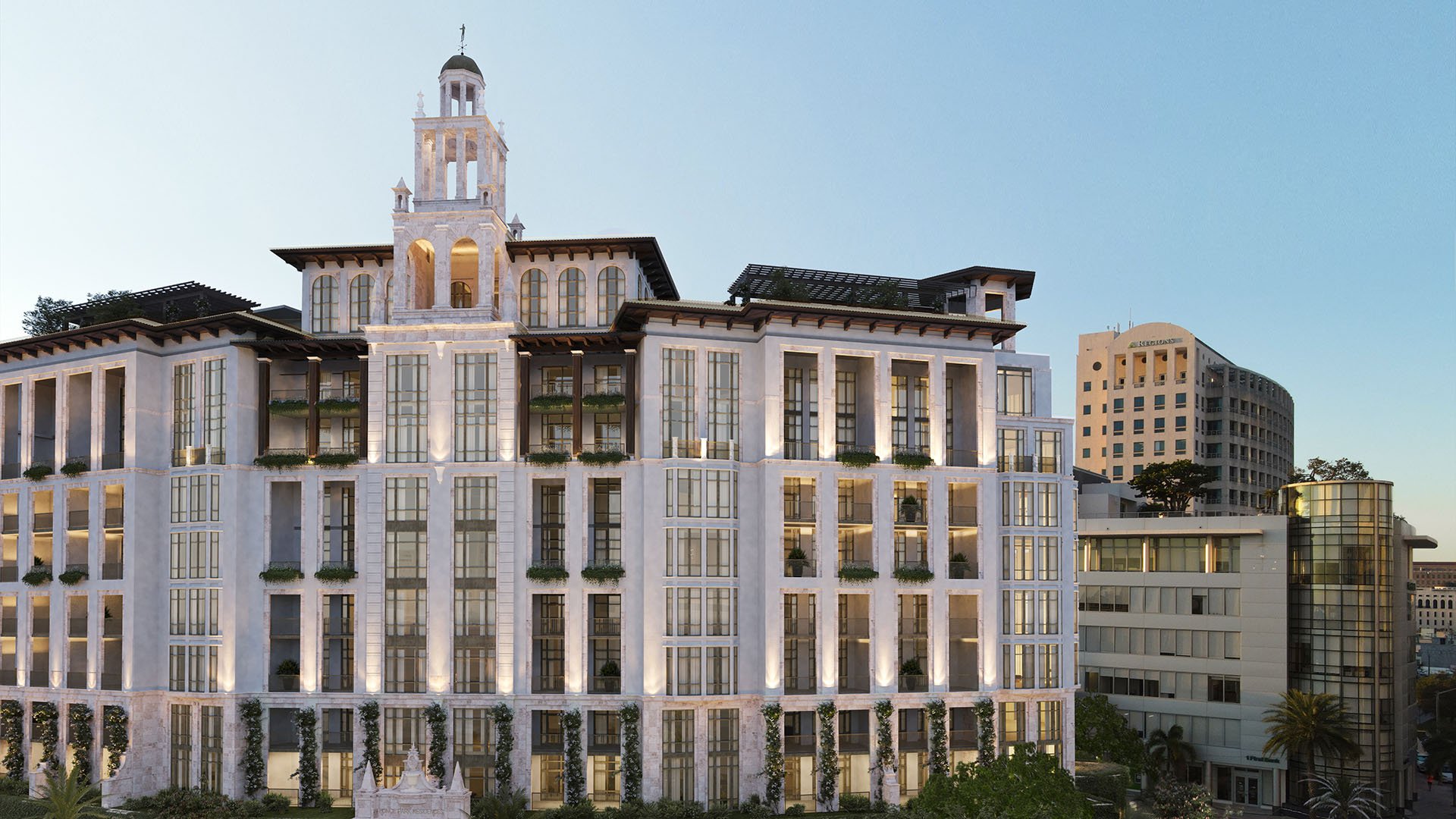
For a buyer considering Ponce Park Coral Gables, the financial question extends beyond the acquisition price. The planned Allen Morris Company condominium at 3000 Ponce de Leon Boulevard is marketed as approximately 58 residences. That scale invites a considered approach to ownership, with as much attention to the balance sheet as to the residence itself.
The essential distinction is among three pools of money: purchase installments, personal liquidity retained for ownership, and association reserves. Each serves a different purpose; none is interchangeable with the others. A published deposit schedule describes purchase obligations. It does not establish the association’s future capital requirements or investment policy.
Q1 2028 is an advertised closing target, not a binding delivery guarantee. A sound plan accounts for milestone payments and uncertainty over when the final balance becomes due.
One published schedule calls for 5% at reservation, 15% at contract, 10% at groundbreaking, 10% at top-off, and 60% at closing. That puts 40% of the purchase price due before closing and leaves 60% to be funded at closing, before additional closing costs.
An earlier public schedule differed: 5% at reservation and 10% each at contract, groundbreaking, and top-off. Neither historical terms nor a marketing summary should substitute for the buyer’s executed agreement. Before committing funds, confirm the applicable percentages, each payment trigger, and the notice requirements.
Translate the contract into a working calendar with four entries for each installment: the amount, the contractual trigger, the required notice, and the designated funding source. Groundbreaking and top-off are milestones, not fixed calendar dates in the published schedule.
Ask counsel to explain deposit treatment, escrow provisions, extension rights, and the consequences of a missed payment. The objective is to know precisely when capital must be accessible, without relying on an assumed construction pace or an anticipated asset sale.
A buyer’s liquidity cushion is private capital. Association reserves are a separate financial matter. Paying purchase deposits does not, by itself, establish how much reserve funding will be available for the condominium’s future needs.
Build the personal funding plan around the remaining purchase balance, separately estimated closing expenses, expected ownership costs, and a discretionary contingency. If financing is contemplated, confirm its timing and conditions with the lender rather than assuming it will cover the entire closing balance. Coordinate planned securities sales or other realizations with tax and investment advisers.
Stress-test timing in both directions. If a contractual payment falls due before the buyer’s preferred funding event, identify an alternative funding source. If delivery moves later, consider the implications for temporary housing, financing arrangements, and the length of time capital remains committed. These are planning scenarios, not predictions about Ponce Park.
For a buyer also considering The Village at Coral Gables, the useful comparison is the cash each transaction requires at each stage. An attractive purchase price alone does not capture the liquidity burden.
Public maintenance figures for Ponce Park are inconsistent. One estimate places monthly maintenance at $0.90-$1.10 per square foot, with coverage that includes building insurance, common-area maintenance, amenities, security, valet, concierge services, and reserves. It does not separately quantify the reserve contribution. Another advertised HOA figure is $2.00 per square foot; confirm its billing basis before making a comparison.
Individual unit figures add another layer. Unit 701 shows $6,925 quarterly. Unit 504 shows $5,937 quarterly, equivalent to $1,979 monthly. Unit 602 shows $4,057 quarterly, displayed as approximately $1,352 monthly. These are listing amounts, not an adopted association budget.
Do not average these figures or use the lowest as a working assumption. Request a unit-specific written estimate identifying the applicable area, billing frequency, included services, and reserve allocation. Ask which figures are preliminary and when updated projections will be available.
Apply the same discipline to a comparison with Cora Merrick Park: normalize the underlying assumptions before comparing recurring charges. This is a budgeting framework, not a claim that the projects share fee structures or services.
An association’s investment policy addresses how its funds may be held and managed. A reserve funding plan addresses how much money is expected to be needed and when. Both matter. Neither can be inferred from a maintenance estimate that simply includes the word reserves.
No adopted Ponce Park association investment policy, reserve balance, funding schedule, or permitted investment list is established here. Buyers should request the applicable documents or written clarification of their status rather than assume a particular funding level or investment approach.
The review should address preservation of principal, access to funds, permitted holdings, maturity limits, custody, approval authority, and reporting. Ask how investment maturities would align with anticipated spending and who would authorize changes. These are diligence questions, not descriptions of an existing Ponce Park policy.
A higher projected investment return is not a substitute for adequate contributions. Nor does a conservative investment approach establish that reserves are sufficient. Funding assumptions and the handling of funds warrant separate scrutiny.
The project’s approximately 58-residence scale does not reveal how a future assessment would be allocated. Request the governing allocation provisions rather than dividing a hypothetical building expense equally among residences.
Purchase installments are not condominium special assessments. The published pre-closing schedule addresses acquisition payments. No verified calendar or amount for future association capital calls is established here. The absence of that calendar should not be read as a promise that assessments will never occur.
The developer’s approximately $2 million commitment to improvements at city-owned Ponce Circle Park belongs in a different category. It is a public-park commitment, not stated funding for condominium reserves. Neighborhood investment and association capitalization should remain separate in the buyer’s analysis.
Before making a deposit, seek written confirmation of the projected association budget, reserve assumptions, any special assessments, the applicable deposit schedule, and delivery provisions. Have advisers distinguish contractual obligations from estimates and identify what must be revisited as the transaction progresses.
The strongest purchase plan does not require certainty about every future expense. It requires clarity about known obligations, disciplined treatment of estimates, and enough flexibility to avoid forced financial decisions. At Ponce Park, that means separating the purchase calendar from the association’s long-term finances-and keeping both under review.
For a discreet conversation about aligning a South Florida residence with your purchase priorities, connect with MILLION.
If branded residences are on your mind — as a home or as an allocation — we would be glad to share what we are seeing, privately.
Begin a quiet conversationPonce Park is a planned condominium at 3000 Ponce de Leon Boulevard in Coral Gables, developed by Allen Morris Company.
The project is marketed as approximately 58 residences. That number alone does not establish how future association expenses would be allocated.
One published schedule specifies 5% at reservation, 15% at contract, 10% at groundbreaking, 10% at top-off, and 60% at closing. Buyers should confirm the schedule in their own agreement because historical terms differ.
The published schedule totals 40% before closing. The remaining 60% is payable at closing, before considering additional closing costs.
No. Q1 2028 is an advertised target rather than a binding delivery guarantee; buyers should review contractual delivery and extension provisions.
Public figures include a monthly estimate of $0.90–$1.10 per square foot and a separate advertised HOA figure of $2.00 per square foot. Obtain a unit-specific written estimate confirming billing frequency, included services, and reserve contributions.
No adopted policy, reserve balance, funding schedule, or permitted investment list is established here. Request written clarification and the applicable documents.
No. Purchase installments fund the acquisition, while condominium special assessments are separate association obligations; no verified future assessment calendar or amount is established here.
The approximately $2 million commitment concerns improvements to city-owned Ponce Circle Park. It is not stated condominium reserve funding.
Seek written confirmation of the projected association budget, reserves, special assessments, deposit schedule, and delivery timeline. Review the contractual obligations and preliminary estimates separately with your advisers.