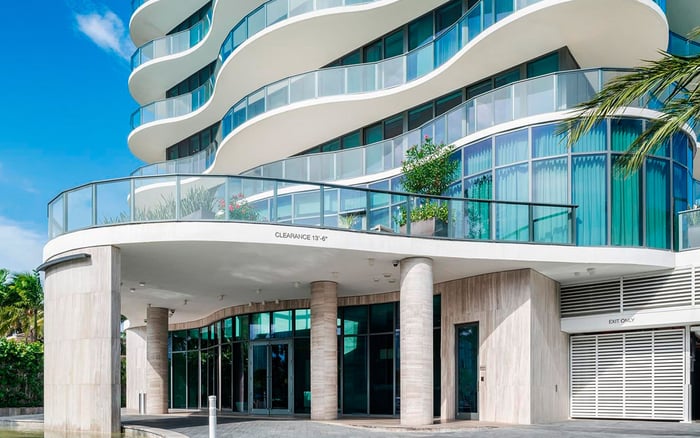
In Sunny Isles Beach, luxury due diligence should extend below the residence itself. Buyers can assess storm resilience by reviewing flood-barrier coverage, critical-equipment locations, documented generator loads, emergency procedures, and the protocol for restoring access after a storm.

In Sunny Isles Beach, a residence may sit far above the shoreline while important shared building systems remain much closer to grade. Garage ramps, loading areas, service doors, utility rooms, pumps, generators, and mechanical equipment can therefore deserve as much attention as the residence itself.
The useful question is not which property makes the broadest resilience claim. It is which building can provide clear documentation showing how vulnerable openings are addressed, essential systems are protected, emergency power is allocated, and access is restored after a storm.
Buyers comparing properties such as Bentley Residences Sunny Isles can make this operational review part of the initial document request rather than leaving it until the final stages of a purchase.
A high residential floor does not establish the resilience of shared building systems.
Request the available plans and records that identify the garage, lobby, loading areas, utility spaces, principal mechanical rooms, and emergency equipment. Review each area separately. An elevated residential floor does not answer questions about pumps, electrical components, access controls, or equipment located elsewhere in the building.
Where an elevation certificate, floodproofing documentation, engineering plan, or equipment schedule is available, include it in the technical review. The objective is to replace broad descriptions with documents that identify locations, elevations, protected openings, and assigned responsibilities.
Mixed-use towers may require closer attention because residential, commercial, service, and utility areas can have different layouts and protection strategies. Buyers should ask which spaces are covered by each document and whether any area depends on a separate system or procedure.
A flood-barrier review should consider the complete low-level perimeter rather than only the primary entrance. Ask for a marked plan identifying garage ramps, loading areas, service doors, utility-room entrances, ventilation points, and secondary access routes.
If removable components form part of the plan, practical details matter. Buyers can ask who deploys them, where they are stored, how the installation process is organized, and whether management keeps inspection or drill records. Photographs, diagrams, maintenance records, and written assignments can provide a clearer picture than a general statement that barriers are available.
For a resale residence, ask whether the property has added, replaced, or revised any protective components. The goal is not to infer performance from a building's age. It is to understand the current strategy and the records supporting it.
The review should identify where equipment essential to building operations is installed. Relevant items may include pumps, electrical infrastructure, controls, elevator-related equipment, emergency lighting components, and other systems management considers important to assessment or recovery.
If equipment is located in a lower part of the property, request the available engineering details describing its protection. A verbal assurance that a room is protected should not replace plans, specifications, inspection records, or other building-specific documentation.
Buyers considering service-intensive properties such as St. Regis® Residences Sunny Isles or The Ritz-Carlton Residences® Sunny Isles should apply the same document-led standard. A hospitality identity and an engineered recovery strategy are separate matters, and each warrants its own review.
The presence of a generator does not reveal which systems it supports. Ask for a written load schedule or another building document that identifies the equipment connected to emergency power.
Review elevators, pumps, emergency lighting, access systems, communications equipment, and any other function important to the buyer. Clarify whether the documentation describes all available generator loads or only selected building operations. If a particular function matters to the purchase decision, seek confirmation specific to that system rather than relying on the phrase backup power.
The physical setting of the generator and related components also belongs in the review. Ask where the equipment is located, how it is protected, who oversees testing, and what records are maintained. These questions connect the existence of emergency power with the building's ability to use it as planned.
A written emergency plan can show how management prepares the property, communicates with residents, assesses conditions, and decides when building access can resume. Buyers should examine how notices are delivered, who conducts inspections, which systems are checked, and how owners receive updates while away.
Re-entry should be treated as a process rather than a single announcement. Management may need to evaluate access routes and shared systems before normal occupancy or services resume. Ask whether different areas can reopen separately and how residents are informed about restricted access, service interruptions, or follow-up inspections.
The review should also distinguish public instructions from building-level decisions. A property's own assessment and restoration procedures may affect when residents can return to their units or expect normal operations.
A practical matrix can help buyers compare Sunny Isles Beach properties consistently. Suggested headings include barrier coverage, low-level openings, critical-equipment locations, documented protection measures, generator-supported systems, deployment responsibility, testing records, resident communications, damage assessment, and re-entry criteria.
Record whether each point is supported by a plan, specification, certificate, maintenance record, written policy, or verbal response. Unanswered questions can then be directed to management, the condominium association, the seller, or an appropriate technical professional before closing.
The objective is not to assume that any coastal property can remove every storm-related concern. It is to understand the building's present strategy, determine how clearly responsibilities are assigned, and evaluate whether the available documents support an orderly path from preparation through return.
For discreet guidance in evaluating Sunny Isles Beach residences, connect with MILLION.
If branded residences are on your mind — as a home or as an allocation — we would be glad to share what we are seeing, privately.
Begin a quiet conversationEarly review gives buyers time to request building documents and direct unanswered questions to management or an appropriate technical professional.
The review can include garage ramps, loading areas, service doors, utility-room entrances, ventilation points, and secondary access routes.
Ask who deploys them, where they are stored, how installation is organized, and what inspection or drill records are available.
Their locations help buyers identify which protection plans, specifications, or engineering details should be requested.
Available plans, equipment schedules, certificates, engineering details, maintenance records, and written emergency procedures can support the review.
Request a written load schedule or another building document identifying the systems connected to emergency power.
No. Buyers should verify coverage for each system that matters to their purchase decision.
It should explain property preparation, resident communications, condition assessments, access decisions, and the distribution of updates.
Look for clear assessment responsibilities, access criteria, communication methods, and any process for reopening different areas separately.
Use a consistent matrix covering barriers, equipment locations, generator loads, testing records, communications, assessments, and re-entry criteria.