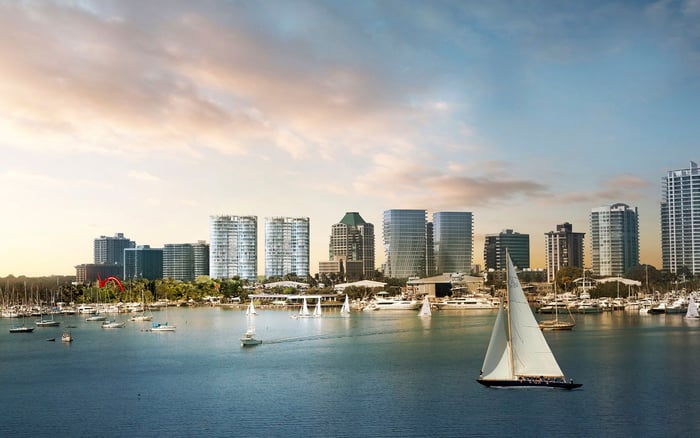
A waterfront purchase in Coconut Grove deserves a second due-diligence track focused on the shoreline. Setbacks, seawall condition, permit history, dredging limits, maintenance obligations, and insurability can shape both immediate ownership and long-range plans.
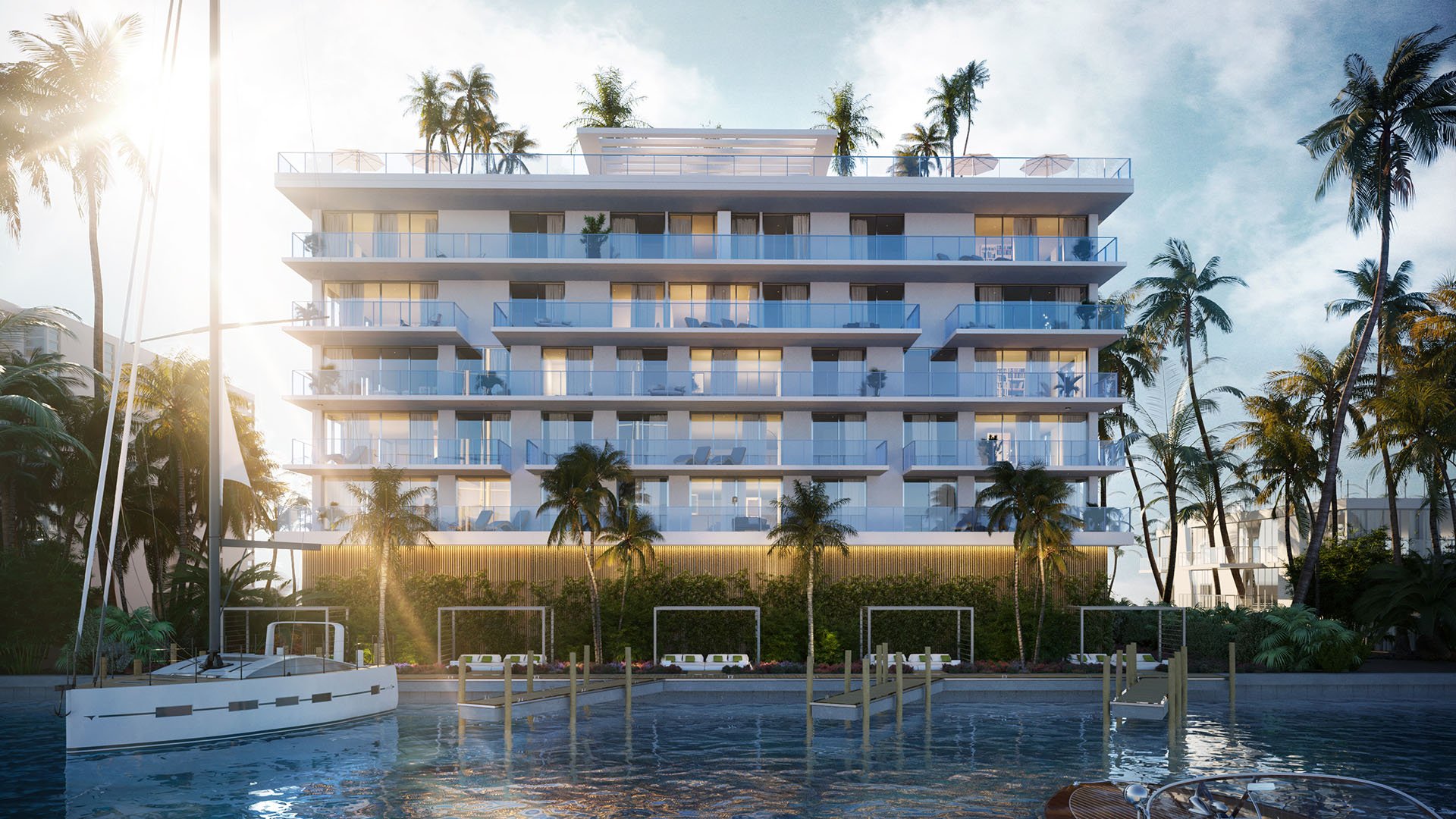
A Coconut Grove residence may reveal itself through architecture, gardens, privacy, and direct contact with Biscayne Bay. Yet its most consequential component may be the least glamorous: the engineered and legal edge between land and water. A seawall is more than a landscape boundary. Its condition, elevation, permit history, and maintenance obligations can shape a buyer's evaluation of future improvements, boating plans, insurance, and the property's long-term stewardship.
Waterfront due diligence should therefore begin alongside title, survey, structural, and financing review-not after them. The objective is not to diminish the romance of bayfront ownership, but to determine whether the physical shoreline and the buyer's ambitions are compatible before contractual deadlines narrow the available choices.
The most valuable waterfront review begins at the line where the survey meets the water.
Miami's waterfront standards generally call for a 50-foot setback measured from the mean high water line. The apparent lot area shown on a survey may not, therefore, translate directly into buildable area. For waterfront lots under 200 feet deep, the framework generally allows a setback calculated at 25% of lot depth. Certain transect zones follow different standards, including 20-foot minimums for T3 and T4-R properties.
These distinctions make three inputs essential: the verified mean high water line, lot depth, and applicable transect zone. A buyer considering an addition, replacement residence, expanded terrace, pool reconfiguration, or detached structure should have the design team test those inputs before assigning value to the site's redevelopment potential.
The survey should serve as the beginning of the inquiry, not its conclusion. Planning counsel, an architect, and a surveyor can assess how waterfront rules apply to the specific parcel. For an estate or single-family acquisition, even a beautifully proportioned site may support a materially different building envelope than its dimensions initially suggest.
The adopted ordinance establishes top elevations for new seawalls east of US-1, excluding the Miami River: +5.00 feet NGVD north of Rickenbacker Causeway and +6.00 feet NGVD south of it. Because these elevations use NGVD, they should not be compared directly with NAVD-88 figures unless a surveyor or coastal engineer has reconciled the datums.
A separate draft revision proposed a 6.0-foot NAVD-88 minimum for new shoreline protection, with designs capable of being raised to 8.0 feet NAVD-88. It connected adaptable design to high-tide flooding and projected sea-level-rise conditions through 2070. Because the language remains a draft proposal, buyers should not treat it as the controlling parcel standard without confirming current requirements. It is nonetheless a relevant engineering prompt: Can the shoreline system be adapted if future rules or site conditions demand it?
Commission a dedicated seawall assessment covering elevation, caps, panels, piles, tie-backs, rotation, cracking, erosion, sinkholes, and evidence of overtopping. A visual home inspection alone may not answer these questions. The engineer should also determine whether repairs can remain within the existing alignment or whether the contemplated scope could trigger more extensive review.
The Class I framework in Miami-Dade regulates the construction, repair, and replacement of seawalls and bulkheads. Associated filling or dredging is limited to what is necessary for installation at the mean high water line or no more than 18 inches waterward of the existing location. Environmental rules separately govern fixed and floating docks, piers, davits, boat lifts, and related structures.
For a buyer envisioning a deeper berth, larger vessel, relocated lift, or reconfigured dock, visible water frontage does not confer unrestricted rights. Obtain parcel-specific records for prior seawall, dock, lift, shoreline, and dredging work. Compare those approvals with the existing improvements and proposed boating program.
The 2025 framework includes streamlined short-form eligibility for qualifying seawall work, with an 18-inch waterward limit for the wall and primary supports and a 14-inch limit for piles, without exceeding 18 inches overall. Substantial realignment, extension, or dredging may require broader review. A marina-oriented lifestyle should therefore be tested against permits and physical conditions, not assumed from dockage alone.
Florida does not provide a single statewide rule allocating responsibility for every seawall. Although maintenance is commonly treated as the waterfront owner's obligation, the documents controlling a particular property may establish shared rights, easements, association duties, or agreements with neighboring owners.
Review the deed, title exceptions, recorded easements, HOA materials, and any shared-wall agreement. Determine who may inspect, repair, access, replace, or raise the structure-and how costs are divided. If a seawall spans more than one parcel, clarify decision-making before a repair becomes urgent. A clean title review should be paired with a practical answer to a simple question: Who authorizes and funds the work?
This distinction matters across ownership formats. Buyers comparing a private home with residences such as Park Grove Coconut Grove, Four Seasons Residences Coconut Grove, Mr. C Tigertail Coconut Grove, or Vita at Grove Isle should examine how shoreline responsibilities are allocated in each set of governing documents rather than presume one structure is inherently simpler.
Insurance belongs early in the transaction timetable. Request pre-bind indications for homeowners, windstorm, and flood coverage, and confirm whether separate policies are required. Ask whether the carrier requires an elevation certificate, seawall inspection, completed repair, or another condition. If financing is involved, establish whether the lender imposes additional elevation, inspection, repair, or coverage requirements before closing.
A particular seawall condition cannot be assumed to reduce premiums or ensure coverage. The useful question is narrower: Can the buyer secure acceptable terms for this property, in its current condition, before the relevant contingency expires? That is especially important for a second-home purchase, where occupancy assumptions and risk tolerances may differ, and for an investment decision that depends on predictable carrying obligations.
The strongest buyer's-guide principle is coordination. Ask the surveyor, coastal engineer, land-use adviser, title professional, insurance adviser, and lender to work from the same survey and proposed use. The closing file should reconcile the building envelope, shoreline condition, permit history, ownership obligations, boating plan, insurance conditions, and any required repairs.
A sophisticated resale review is not a search for perfect infrastructure. It is a disciplined effort to price known work, identify approvals that may be required, and prevent an assumed right from becoming a post-closing surprise. In Coconut Grove, the shoreline deserves the same scrutiny as the residence itself.
For discreet guidance on South Florida luxury property, connect with MILLION.
If branded residences are on your mind — as a home or as an allocation — we would be glad to share what we are seeing, privately.
Begin a quiet conversationIts condition, elevation, permits, and repair obligations can affect improvement plans, boating use, insurance, and closing requirements.
The general standard is 50 feet from the mean high water line, subject to parcel-specific rules and exceptions.
For waterfront lots under 200 feet deep, the setback may generally be calculated as 25% of lot depth.
Yes. Certain transect zones, including T3 and T4-R, can be subject to 20-foot minimum waterfront setbacks.
It should address elevation, caps, panels, piles, tie-backs, rotation, cracking, erosion, sinkholes, and overtopping.
No. A surveyor or coastal engineer should reconcile the two elevation datums.
No. Dredging and shoreline alterations are regulated, and prior permits should be reviewed before planning a deeper berth.
Yes. Fixed and floating docks, piers, davits, boat lifts, and related structures are separately regulated.
Responsibility is often associated with the waterfront owner, but deeds, easements, HOA documents, and shared-wall agreements must be checked.
Before contractual deadlines expire, with separate confirmation of homeowners, windstorm, flood, lender, inspection, and repair requirements.