In Bal Harbour, elegant dining amenities do not automatically confer broad hosting rights. Buyers should examine the governing documents, operational policies, vendor protocols, fees, and peak-season reservation practices before contractual review periods close.
In Bal Harbour, private dining can be woven into the architecture of daily life: breakfast delivered to the residence, a chef-led dinner, or an intimate celebration in a dedicated salon. Yet the presence of a dining room, catering kitchen, concierge, or hotel operator does not, by itself, define what an owner may reserve, when it is available, or how many guests may attend.
That distinction deserves attention before contractual review periods expire. The controlling terms typically lie beyond the marketing presentation, in the declaration, bylaws, current rules, amenity policies, vendor guidelines, fee schedules, and recent board amendments. For a second-home purchaser planning holiday gatherings, the practical value of an amenity may depend as much on operating protocol as on design.
The most valuable entertaining amenity is one whose access rules are understood before closing.
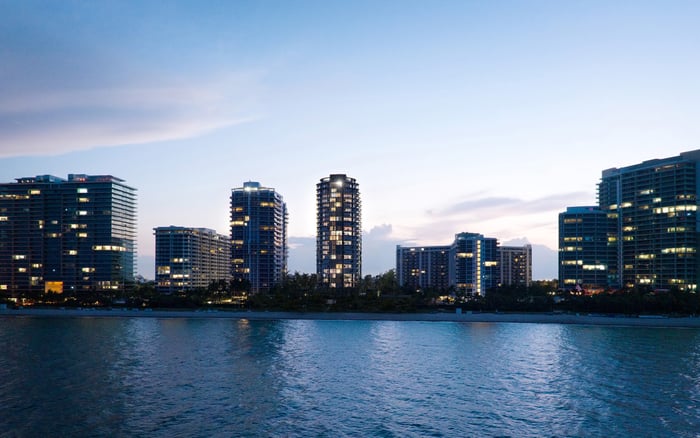
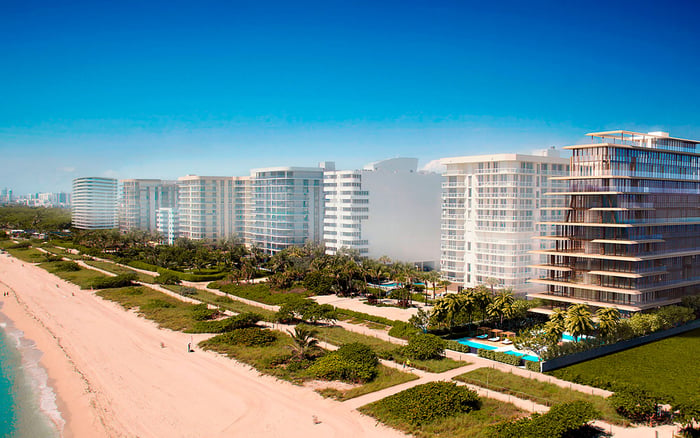
Bal Harbour offers more than one hospitality model. Oceana Bal Harbour is associated with a grand salon for entertainment events, complete with a chef's kitchen and bar. It also offers a 24-hour concierge and poolside restaurant and is marketed with a private restaurant. The stated amenity program, however, does not define the salon's guest limits, booking sequence, cancellation terms, or outside-caterer requirements.
The St. Regis model emphasizes hotel-integrated service. Residents are offered 24-hour in-room dining and access to oceanfront dining. Services also include in-room catering, professional-chef access, multiple dining venues, a bar, butler service, and resident-oriented amenities such as a private pool and exclusive concierge.
These are materially different forms of access. A residential event salon may be governed by association reservation rules, while a resort restaurant or private room may be controlled by an operator's inventory and service policies. Neither format should be treated as unlimited permission to host. Condominium rules, nuisance provisions, life-safety requirements, and operator procedures may still apply.
The same analysis belongs in comparisons involving newer Bal Harbour offerings such as Rivage Bal Harbour. Buyers should evaluate each property's documents and operating structure independently rather than carry assumptions from one building to another.
The first legal and operational question is whether a dining room, lounge, salon, or catering kitchen is a common amenity, a limited common element, or a privately controlled commercial or hotel space. That classification can determine reservation priority, permitted guests, insurance obligations, vendor access, deposits, and enforcement.
Ask management to identify the controlling document for every space central to the purchase decision. Then request written clarification of maximum guest counts, permitted event hours, resident-accompaniment requirements, amplified-music restrictions, alcohol rules, security staffing, deposits, cleaning charges, minimum spends, cancellation penalties, and the number of reservations an owner may make.
This is particularly important for branded residences, where polished hospitality services may coexist with several layers of authority. Buyers considering nearby branded environments, including The Surf Club Four Seasons Surfside or St. Regis® Residences Sunny Isles, should apply the same principle: service availability and event permission are separate issues, resolved only by the applicable documents and written policies.
Outside catering is often where an elegant plan meets building operations. A condominium association may require caterers, entertainers, tent suppliers, and other vendors to provide certificates of insurance naming the association as an additional insured. Designated loading areas may be mandatory, and open-flame cooking may be prohibited.
These are not necessarily the rules of a particular Bal Harbour building. They are reasons to obtain the target condominium's current requirements. A careful buyer should confirm:
Whether chefs and caterers require advance approval or approved-vendor status
Required licenses, insurance limits, additional-insured endorsements, and workers' compensation coverage
Loading-dock hours, elevator reservations, service-corridor routes, and delivery windows
Whether the amenity kitchen supports preparation, finishing, reheating, or service only
Restrictions involving flame, fuel, smoke, odors, music, décor, and alcohol
Cleanup timing, waste removal, staffing charges, damage deposits, and overtime fees
These details can determine whether a dinner for invited guests remains effortless or becomes operationally impractical. They also belong in the buyer's financial review because security, housekeeping, valet, engineering, and building-staff charges may fall outside the stated reservation fee.
Peak season changes the value equation. St. Regis dining and concierge services do not, by themselves, establish guaranteed restaurant priority, holiday availability, blackout dates, or owner priority for private rooms. A concierge may facilitate a request without controlling the inventory.
Before closing, ask for written answers about booking windows, owner priority, holiday procedures, blackout periods, minimum spends, private-room allocation, cancellation treatment, and typical concierge lead times. Determine whether residence owners compete with hotel guests for restaurant reservations and whether in-room dining or professional-chef service remains available during the dates that matter most.
A lifestyle promise should be translated into a calendar test. If Christmas week, New Year's, major cultural events, or a family anniversary drives the purchase, ask management how that exact scenario would be handled under current policy. The answer need not be a permanent guarantee to be useful, but it should reveal who decides, how far ahead an owner may act, and which restrictions currently apply.
Event expectations require added caution when a residence may be rented. A St. Regis Bal Harbour condominium may prohibit events under the applicable booking terms, illustrating that even a spacious luxury residence may carry a no-event rule.
Village requirements also sharply limit high-turnover use. Vacation-rental activity requires a Village Business Tax Receipt, occupancy for fewer than six consecutive calendar months is prohibited, and no more than two Vacation Rental Certificates may be issued for a dwelling during a 12-month period. These constraints make it unwise to assume that a residence can support short stays organized around parties or formal events.
Owners should have counsel confirm the current municipal framework alongside condominium restrictions and any operator agreement. The stricter applicable rule may control. Event rights, rental rights, and amenity rights should therefore be reviewed as separate questions rather than folded into a general understanding of ownership.
Within MILLION's Buyer's Guides, private dining deserves the same disciplined review as views, floor plans, carrying costs, and reserve information. The buyer's team should request all current documents early, identify recent amendments, and send management a written scenario covering the number of guests, preferred date, chosen space, caterer, music, alcohol service, delivery plan, and required staffing.
The goal is not to eliminate discretion from a luxury residential environment. It is to understand where that discretion sits and how it is exercised. In Bal Harbour, the strongest purchase is protected by clarity about the experiences the owner values most.
For discreet guidance on evaluating South Florida's premier residences, connect with MILLION.
If branded residences are on your mind — as a home or as an allocation — we would be glad to share what we are seeing, privately.
Begin a quiet conversationMarketing can identify an amenity without defining guest limits, booking priority, vendor rules, or fees. Current governing documents and written policies clarify how the space may actually be used.
No. A building may require advance approval, specific insurance, approved-vendor status, loading procedures, or restrictions on food preparation.
No. Dining access and concierge support do not establish guaranteed priority, holiday availability, private-room access, or freedom from blackout dates.
Confirm guest caps, event hours, deposits, booking windows, cancellation rules, music and alcohol policies, staffing charges, and resident-accompaniment requirements.
A common amenity and a hotel-controlled venue may follow different reservation, guest, insurance, vendor, and enforcement rules.
Depending on the building's rules, vendors may need certificates of insurance, additional-insured endorsements, and workers' compensation coverage.
Verify loading hours, elevator reservations, service routes, cooking restrictions, kitchen capabilities, cleanup duties, waste removal, and overtime charges.
No. Condominium, operator, rental, safety, nuisance, or booking-specific restrictions may prohibit or limit events regardless of a residence's size.
Vacation-rental activity requires a Village Business Tax Receipt, stays under six consecutive calendar months are prohibited, and certificate issuance is limited.
Request the declaration, bylaws, current rules, amenity-reservation policies, vendor guidelines, fee schedules, operator terms where applicable, and recent board amendments.